Personal Branding in 2026: 7 Brutal Truths LinkedIn Influencers Won’t Post

TLDR:
- Personal branding is the real reason LinkedIn influencers get attention. Talent, timing, and luck matter less.
- The LinkedIn algorithm rewards posts people read and discuss, and it quietly punishes engagement bait.
- LinkedIn engagement comes from conversations you start and join, so posting and logging off doesn’t count.
- Authenticity only works when it’s specific. Vague vulnerability reads like a hostage statement.
- Every habit on this list can be copied. None of them require you to cry on camera.
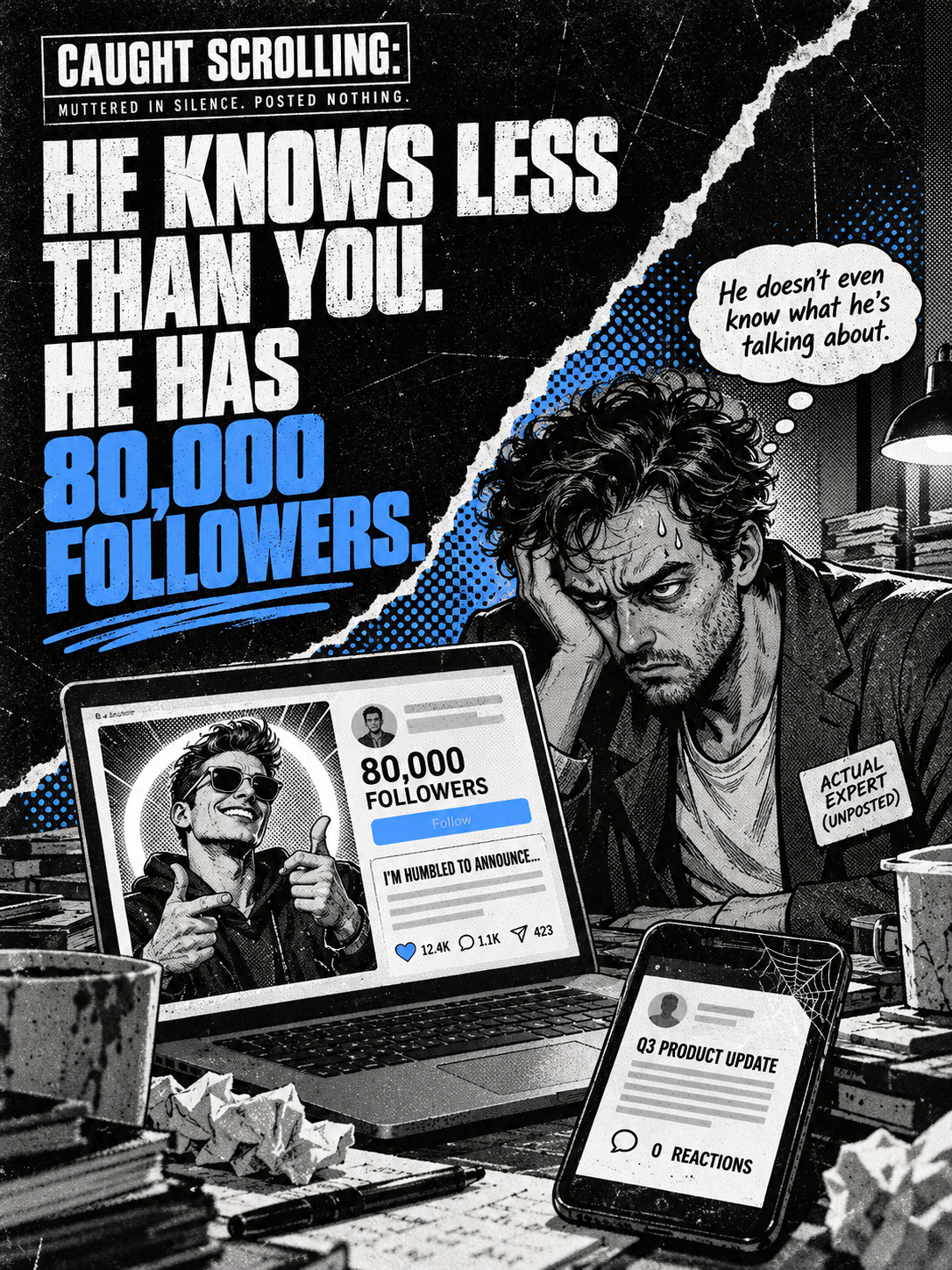
I’ve watched this exact scene play out in client meetings more than once. A founder with real, earned expertise pulls up some LinkedIn influencer’s profile, scrolls in silence for a while, then mutters, “He doesn’t even know what he’s talking about.”
And honestly? He’s usually right. That guy still has 80,000 followers.
Here’s the part that stings. The influencer didn’t beat you on knowledge. He beat you on personal branding. He decided what he wanted to be known for, said it loudly and often, and let the LinkedIn algorithm do the rest while you were busy being “too professional” to post. (Professional is a fine thing to be. It’s also invisible.)
So let’s open the vault. These are the things LinkedIn influencers know and absolutely won’t put in a carousel.
Truth #1: LinkedIn Influencers Treat Personal Branding Like a Business Asset
Most people treat personal branding like a hobby. They post when inspired, which means never. LinkedIn influencers treat it like inventory. Every post is a deliberate brick in one very specific reputation, built around one or two topics they’ll happily talk about until the end of time.
Is the brand 100% them? Mostly. There’s a filter on it, sure, picked because it performs. But the core has to be real, because nobody can fake a personality on a public feed indefinitely. The cracks show. They always show. (I’ve seen the drafts that got deleted. Some of them should’ve stayed deleted.)
And here’s why it works so well. When a company page replies to you, you feel nothing. When a person you recognize replies? You feel seen. That emotional gap is the whole business model of personal branding, and it’s the same reason founders who stay quiet end up ignored. We broke that down into why boring personal brands get ignored, if you need the extended scolding.
The competition is also weaker than it looks. Edelman and LinkedIn’s B2B Thought Leadership Impact Study found 88% of decision-makers believe thought leadership improves their perception of a company, but only 17% rate most of it as very good or excellent. Let me translate this for you: the room is full of people talking, and almost none of them are worth listening to.
Truth #2: How the LinkedIn Algorithm Picks Whose Posts Get Seen
The LinkedIn algorithm gets talked about like a cursed slot machine. It’s really a bouncer with one question: did anybody actually care about this?
The strongest signal it reads is conversation. Metricool’s LinkedIn algorithm guide notes that comments outweigh likes, especially when they turn into real discussions, and that regular posting does more for you than one viral fluke. A like costs half a second. A thoughtful comment means someone stopped, read, and had a feeling about it. Guess which one the bouncer lets in. metricool
Posts that tend to make it past the rope are:
- Aimed at a clear audience (your future clients, not literally everyone with Wi-Fi)
- Published on a rhythm you can sustain
- Worth reading all the way to the last line
- Posted when your people are actually online
- Built to provoke a response with a real question or an opinion someone will push back on
Truth #3: How to Write LinkedIn Posts That Build Your Personal Brand
Quick confession from inside the industry. A big chunk of the LinkedIn influencers you admire don’t write their own posts. (Shocking. Clutch your pearls. Then move on, because it doesn’t matter who types it as long as the ideas are theirs.)
Whoever’s writing yours, the formula’s simple and the execution is brutal:
- The first line does all the work. If it starts with “I’m humbled to announce,” nobody’s tapping “see more.”
- Tell a story with a cost. The client you lost. The hire you regret. The pitch that bombed in the room.
- Give the eyes a break. Short paragraphs, white space, an image if it actually adds something.
- Kill the filler. Every sentence that’s there to sound impressive is making you sound worse.
- End with a nudge. A question, a hot take, something that makes people want to reply.
And please skip the post about your minor product update. Nobody cares, including your product team. Post the story you’d tell a friend after two drinks. That’s the one that builds a personal brand.
Truth #4: How to Be Authentic on LinkedIn Without It Feeling Staged
Everyone says “be authentic.” Nobody explains it, which is why the feed is full of people being authentic at you, aggressively, with stock-photo sunsets.
Here’s the working definition: authentic means specific. Name the actual mistake. Describe the actual moment. Explain what you’d do differently, in plain words, without a dramatic pause in every other line. Audiences forgive almost anything except feeling manipulated, and the fake “I was broke, then I found my why” arc trips that alarm immediately.
Your values, your mission, your real path to where you are, messy middle included. Mix those with honest examples from your work and turn each one into a lesson someone can use. Even an obvious lesson lands harder from someone people trust. This is also where trust compounds over time, and it’s why brand trust is quietly rewriting how coverage gets earned.
Oh, and when people comment on your vulnerable post? Answer them. Posting your heart out and then ignoring the replies is a weird flex.
Truth #5: How to Increase LinkedIn Engagement Without Begging for It
Real LinkedIn engagement is a two-way street, and most people only drive one direction.
On your own posts, reply to comments like a human being. If you’re swamped and use a quick template reply, fine, but be honest about it and circle back with something personal later. People notice.
On everyone else’s posts, show up with substance. Join the threads and groups your audience already reads. Add a data point, a counterpoint, a story. Do it often enough and your name starts carrying weight in rooms you’ve never posted in. (Unless your comments are bland. Then your name carries “Great insights!” energy, and nobody wants that.)
Keep the tone generous, too. A few people make a living as the professional grump, and yes, it can pay, but it’s a risky lane and the fall is public. For everyone else, thanking people and crediting good ideas is free and makes people root for you.
Truth #6: How Often to Post on LinkedIn for Personal Branding
Brace yourself. You aren’t posting enough. You post in bursts, three times in a row when you feel inspired, then vanish like a dad who went out for milk.
Personal branding runs on repetition. Each post reinforces what you stand for, and over time your audience starts expecting you to show up. Some will even look forward to it. That expectation is the whole point.
A few posts a week is a realistic starting point for most founders. The right number is the one you can keep up without resenting it, so choose sustainable over heroic. Batching several posts in one sitting and scheduling them saves your sanity.
Consistency pays off with buyers too. According to Demand Gen Report’s coverage of the Edelman-LinkedIn research, 79% of decision-makers are more likely to champion a vendor that consistently publishes quality thought leadership.
Truth #7: How to Network With LinkedIn Influencers the Right Way
Figuring out which LinkedIn influencers matter in your industry is mostly detective work. Who do your clients follow? Who gets quoted in your trade press? Whose comment sections are full of your competitors trying to look smart? Those are your people.
BUT. Every one of them gets a flood of DMs that start with “Love your content!” and end with a sales pitch. They’ve built a reflex for deleting them. You don’t want to trigger it.
So go in with zero agenda. Comment on their work with a real perspective. Reshare with your own take attached. Treat them like an interesting colleague instead of a lead. The relationships worth having are built slowly and without a pitch attached, and the opportunities show up when you’ve stopped chasing them.
How to Start Building Your Personal Brand Like a LinkedIn Influencer
Every LinkedIn influencer who’s currently out-posting you once had a feed full of tumbleweeds. They got better by staying consistent, getting specific, playing fair with the LinkedIn algorithm, and treating personal branding like a real part of the business. You can do the same, and if you want to see where that consistency leads, here’s how thought leadership turns your posts into press coverage.
Don’t Be A Little Pitch builds personal brands people still remember after they scroll. If yours isn’t one of them yet, let’s change that.
FAQ
What is personal branding?
Personal branding is how you intentionally shape the way people see you professionally: your expertise, values, personality, and what you want to be known for. It shows up in what you post, how you engage, and how consistently you communicate across platforms.
Why is personal branding important for business owners?
People tend to trust individuals more than companies. A strong personal brand makes it easier to attract clients, partners, media opportunities, and talent, because people already know who you are and what you stand for before they reach out.
How do I build a personal brand on LinkedIn?
Choose one or two topics you want to be known for, optimize your profile around them, post consistently, share real experiences and opinions, and engage with others in your industry. Consistency and specificity matter more than follower count.
How do you become a LinkedIn influencer?
Most LinkedIn influencers grow by posting valuable content in a clear niche, engaging actively in comments, and building relationships with others in their industry. There’s no follower threshold. Influence comes from a specific audience trusting you on a specific topic.
How does the LinkedIn algorithm work?
LinkedIn shows a new post to a small group first, then expands its reach based on how people respond. Meaningful comments, reading time, and genuine conversations count more than likes. Posts that ask for engagement just to boost reach get less visibility.
How can I increase my LinkedIn engagement?
Write strong opening lines, share specific stories, ask genuine questions, and reply to every comment you can. Commenting thoughtfully on other people’s posts also raises your visibility and brings more people back to your profile.
60-Day Performance Guarantee
PR only works if it builds momentum fast. If we do not secure 2 meaningful earned media features and line up 3 additional opportunities within 60 days, you get a full refund.

Free Authority Score Checker
Check your online reputation and authority score for free and see how you stack up and get custom tips to improve instantly.