Brand Trust Is Quietly Rewriting Every PR Trend Worth Watching

TLDR:
- Brand trust has quietly overtaken reach as the metric that actually predicts coverage
- The PR trends worth watching aren't loud. They're the quiet structural ones already deciding who gets covered
- Founder branding now outperforms institutional messaging, and the gap is not subtle
- AI has changed how brands get discovered, and most content still isn't built for it
- The brands adapting early aren't reacting to change. They're already several steps ahead of it
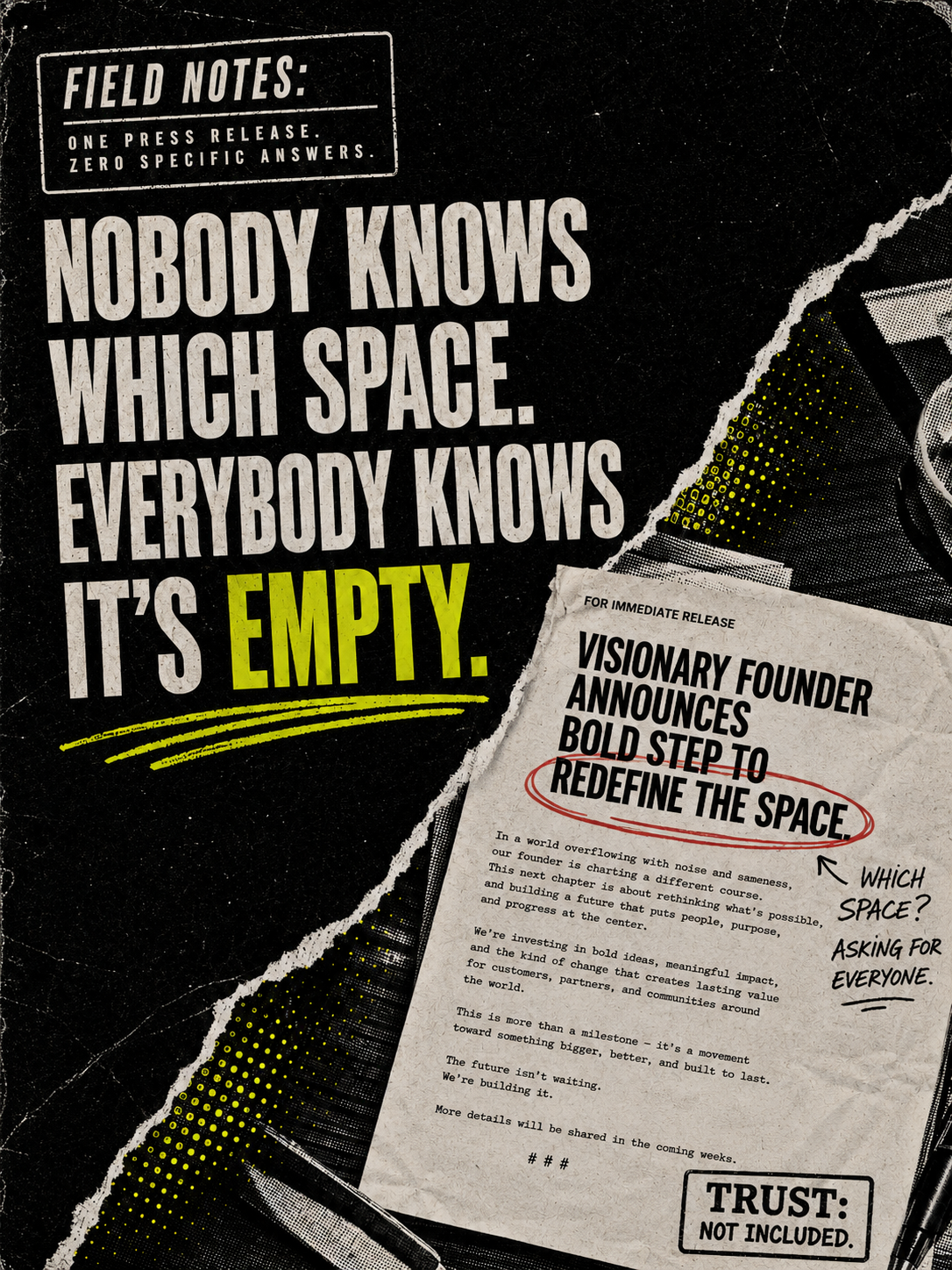
A press release crossed a desk recently announcing a company was "redefining the space." It was not clear which space, or what redefining meant in practice, and it remains unclear whether anyone on the sending end noticed. This is, increasingly, the norm. Markets aren't unstable. They're sorting.
And the brands struggling most tend to be the ones optimizing for visibility while brand trust, the metric actually deciding who gets covered, keeps quietly compounding somewhere else entirely.
Five changes are already deciding who wins attention this cycle. None of them are dramatic. All of them are being ignored by people who insist they're "keeping an eye on things."
Why Brand Trust Has Quietly Become the Real PR Currency
Visibility without credibility no longer holds much value, a fact that hasn't stopped a great many brands from optimizing exclusively for visibility. Brand trust compounds over time and outperforms raw reach in the long run, which sources might interpret as an argument for patience, a quality not evenly distributed across marketing departments.
The compounding effect is not theoretical. Companies practicing radical transparency have seen measurable jumps in customer confidence and drops in complaint volume, according to research covered in our breakdown of PR strategy and honesty, while spin-heavy messaging keeps producing coverage that evaporates roughly on schedule. 53 percent of consumers say they trust a product recommendation less once they learn the influencer behind it was paid, according to public relations research from Sprout Social, which is a fairly direct measure of how quickly undisclosed spin erodes the exact currency brands are chasing.
Trust, unlike a single placement, does not need to be refreshed every quarter to keep working.
The PR Trends Worth Actually Watching This Cycle
Audiences haven't disappeared. They've become selective, which is a more inconvenient problem than scarcity, because selective audiences can be reached, they just choose not to be reached by most of what's sent their way. Only messaging that reads as relevant and intentional gets through, which raises the bar for clarity considerably higher than most brand teams have priced in.
Interestingly, the response from a large share of the industry has been to publish more, not better. That approach has a name, and it isn't a strategy. Of the current PR trends worth actually tracking, this filtering effect is the one most brands still measure incorrectly, mistaking lower engagement for a reach problem when it's usually a relevance problem.
Founder Branding Is Outperforming Corporate Messaging, Not Subtly
Human voices are outperforming institutional ones, and the gap has widened past the point of being politely ignored. Founder branding creates accountability and relatability that a company logo structurally cannot, and it builds authority faster than any campaign a communications team can produce on its own timeline.
The campaign appears to work because audiences trust a specific person admitting a specific thing far more than they trust a brand voice reciting talking points. This is not a controversial finding. Organizations with strong leadership visibility see roughly 35 percent higher earned media recall than brands relying on corporate messaging alone, according to PR trend research from Advent PR. It has simply been inconvenient for organizations built around the opposite assumption.
AI Discovery Is Rewriting Who Gets Found
Search and visibility are no longer governed by keywords alone. AI systems now weigh structure, clarity, and demonstrated expertise well ahead of density, and content still built for older search behavior is quietly becoming invisible to a discovery layer it was never written for.
It remains unclear whether most content teams have registered how far along this AI discovery change already is, especially given that 76 percent of PR professionals now use generative AI in some part of their workflow, according to PR statistics from Avaans Media, while the content those workflows produce often still isn't structured for how AI systems actually extract and cite information.
If a pitch or article still reads like it was optimized purely to satisfy a keyword count, this breakdown of why AI-written pitches sound like bots covers exactly the structural problem quietly costing brands their discoverability.
Cultural Timing Still Decides Who Gets Covered
Relevance is contextual, not universal. Brands that understand cultural timing earn attention without forcing it, while brands that force it tend to produce the exact cringe moment everyone in the room could see coming except, apparently, the brand itself.
The Wild Cards Nobody's Actually Budgeting For
A few risks sit just outside the main trends, quietly waiting for the brands unprepared for them.
Authenticity failures are becoming more common as AI-generated visuals, bots, and tone-deaf creator content multiply the number of ways a brand can misjudge a moment. A PR disaster, at this point, is usually just one small misalignment away from happening in public.
Regulatory attention is intensifying. Platforms and governments continue tightening enforcement around content moderation, copyright, and data privacy, and brands treating this as background noise are the ones who will be caught flat-footed by it.
Audience deflation during economic pressure remains underdiscussed. When budgets tighten, spending on live events, merchandise, and discretionary purchases contracts first, which means leaner funnels and more imaginative value propositions aren't optional extras, they're the actual plan.
The Bottom Line on Brand Trust and Where PR Trends Are Headed
None of this is a warm-up. It is a checkpoint, and the brands treating it as one are already several moves ahead of the ones still explaining why their last campaign underperformed.
Brand trust is the quiet variable underneath nearly every one of these current PR trends, and the brands still optimizing purely for reach are the ones who will spend next cycle explaining a credibility gap nobody warned them about.
Don't Be A Little Pitch exists because most brands can sense something's changed about how coverage works, they just haven't pinned down what to do about it yet.
FAQ
Why does brand trust matter more than reach in PR right now?
Reach without credibility tends to produce short-lived visibility, while trust compounds and continues generating coverage and referrals well after an initial placement, making it a more durable metric than raw reach.
What are the biggest PR trends brands need to know right now?
The most significant current trends are brand trust outperforming reach as a success metric, founder-led branding overtaking corporate messaging, and AI systems changing how content gets discovered and cited.
How is AI changing how brands get discovered in search and media?
AI systems now weigh content structure, clarity, and demonstrated expertise alongside traditional keyword signals, and increasingly cite sources based on how easily they can extract and verify specific claims.
Why does founder-led branding outperform corporate messaging?
Audiences trust specific, accountable individuals more than institutional voices. A founder willing to speak directly and specifically builds credibility faster than brand messaging built around a company logo alone.
What risks should brands be watching for in PR beyond the main trends?
Authenticity missteps involving AI content or influencer disclosure, tightening regulation around data and content moderation, and reduced consumer spending during economic pressure are all near-term risks brands should be actively planning around.
60-Day Performance Guarantee
PR only works if it builds momentum fast. If we do not secure 2 meaningful earned media features and line up 3 additional opportunities within 60 days, you get a full refund.

Free Authority Score Checker
Check your online reputation and authority score for free and see how you stack up and get custom tips to improve instantly.




.png)