Safe Messaging Is Killing Your Brand Communication (And You Don't Even Know It)

TLDR:
- "We're revolutionizing the synergistic ecosystem" said every brand nobody has ever covered. Ever.
- Safe messaging is the reason journalists delete you before they finish the subject line.
- Clear messaging isn't a personality risk. It's the only brand communication strategy that actually scales.
- Say the thing. Say it fast. Say it like you mean it. Everything else is just noise with good punctuation.

You know what never trends? "We're excited to announce our innovative solution to disrupt the PR industry."
Nobody's excited. Nobody's disrupted. And certainly nobody's covering that.
If your brand communication reads like it was drafted by a committee of lawyers and marketers in a beige co-working space with a kombucha tap, you've already lost. Safe messaging might feel "on brand." It's also completely off the radar of every journalist whose inbox you're desperately trying to land in.
Here's the uncomfortable truth: trying to please everyone is the fastest way to become invisible.
Why Safe Messaging Gets Your PR Pitch Deleted Immediately
Most pitches don't fail because the product is bad or the founder isn't interesting. They fail because nobody knows what the hell you're actually saying.
You wrapped your message in so many buzzwords, hedges, and "thoughtful context" that the only thing that came through was static. According to a TrustRadius survey of business professionals, corporate jargon is one of the primary reasons brand communication loses its audience entirely. And journalism research consistently shows that nearly 75% of journalists find most pitches irrelevant before they even respond. The problem isn't volume. It's safe messaging that refuses to say anything real.
Let's look at a few offenders in the wild:
"We're revolutionizing user-centric platforms for digital transformation." What do you actually do? Are you selling software, consulting, or philosophical enlightenment?
"We help businesses unlock their full potential with our scalable, data-powered solutions." This could be anything from AI to therapy.
"We're proud to be at the forefront of reimagining the future of [category] through synergy and innovation." You said a lot. You also said nothing.
Safe messaging is obsessed with sounding smart. Clear messaging is obsessed with being understood. Guess which one gets the reply?
Safe Brand Communication Isn't Professional. It's Just Scared.
Let's call it what it is: most safe messaging isn't strategic. It's scared.
Scared to offend. Scared to sound too casual. Scared to take a side. Scared to tell the truth in a voice that might actually resonate.
But clear messaging isn't unprofessional. It's effective. No journalist has time to decode your "disruptive ecosystem enabler." They're scanning inboxes for something worth writing about, not solving a branding riddle.
If your pitch doesn't get to the point within the first sentence, you're out. That's not harsh. That's reality. You've got five seconds. Say what you do, why it matters, and give them a reason to care. And if your brand positioning is painfully boring, journalists already know it before they even finish the subject line.
What Clear Messaging Actually Looks Like in PR
The pitches people remember aren't always the most polished ones. They're the ones that feel real: specific, direct, and written by someone with an actual point of view.
The quotes that make it into headlines? The emails that get responses? They don't sound like PR messaging at all. They sound true.
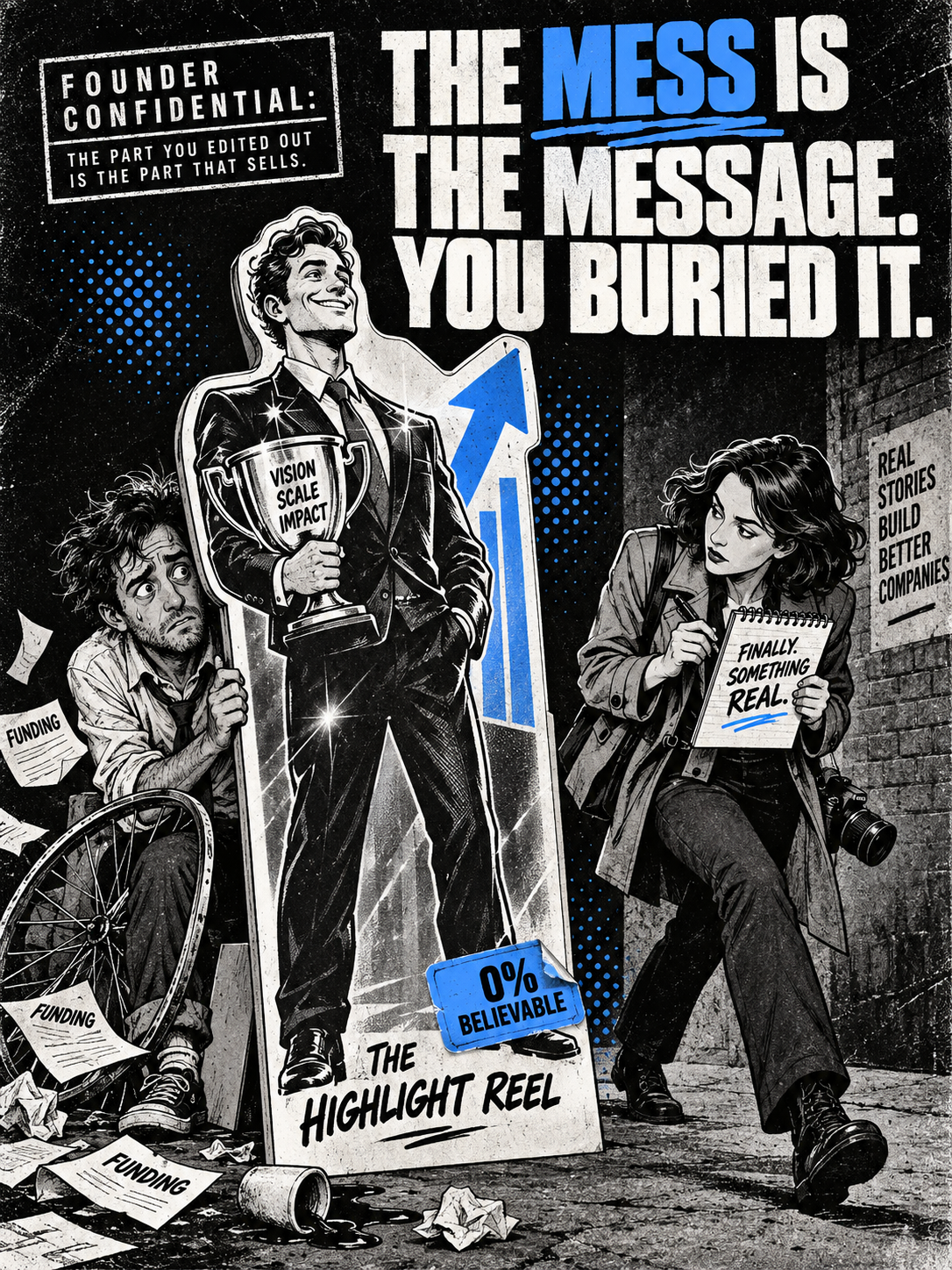
Clear messaging isn't about being edgy for the sake of it. It's about stripping off the performative "professionalism" that's keeping you invisible and saying the one thing you're scared to say in the first sentence. It's about sending a pitch that sounds like a person wrote it, a person with a brain and an opinion.
Brands that differentiate through specific, clear communication earn more coverage than brands that hide behind jargon. That's not a theory. That's a pattern that shows up every time an editor chooses one pitch over the two hundred others in their inbox.
Why Clear Messaging Scales and Safe Messaging Doesn't
Clear messaging scales because it's easy to pass on. It's repeatable. It works in a Slack message, a podcast pull quote, a headline, and a social caption. When people get it immediately, they can spread it. Try that with a three-paragraph elevator pitch wrapped in VC-speak.
And clear messaging doesn't just spread faster. It builds trust faster. According to Preply's corporate jargon research, the majority of professionals say corporate buzzwords actively reduce their trust in the communicator using them. If people can't understand your brand communication, they won't trust it. But if you can explain it in one sentence, like a human, they'll remember it. That's the whole game.
Here's what the swap looks like in practice:
Don't say: "We aim to empower modern enterprises with seamless automation capabilities." Say: "We automate boring business stuff so teams stop drowning in spreadsheets."
Don't say: "We're offering a holistic wellness platform for today's consumer." Say: "We built an app that helps anxious people sleep."
Don't say: "We want to raise awareness." Say: "We want people to stop dying because no one's talking about it."
Clear messaging feels exposed. It doesn't have ten layers of "context" to hide behind. But that exposure is exactly what makes it land.
What Actually Happens When You Drop the Safe Messaging Playbook
Choosing clear messaging over safe messaging produces real, measurable outcomes: journalist replies that say "this is interesting, can we talk?", quotes that end up in headlines instead of being trimmed from the draft, podcasts and panels where people actually remember what you said, and PR messaging that doesn't read like it was written by a committee using last year's boilerplate.
And yes, you might ruffle some feathers. Good. That means you said something that matters. Brands with real fans usually have a few people who disagree with them. That's how you know the message hit.
Say the Thing. Say It Fast. Say It Like You Mean It.
Safe messaging doesn't scale because it has no legs. No bite. No identity. Clear messaging spreads because people can grab onto it and carry it somewhere.
If you want to get noticed, covered, quoted, and shared, be brave enough to tell the truth clearly. Clearly in the real sense. Like you're talking to a smart, skeptical person who has zero patience for nonsense, because that's exactly what a journalist is.
Stop protecting your brand communication with fluff. Say what you do. Say why it matters. Say it like a real person. Everything else is just a longer path to the delete key.
Don't Be A Little Pitch helps brands find the message they've been burying and put it in front of journalists who would actually care.
FAQ
What is safe messaging and why does it hurt your PR results?
Safe messaging is brand communication built around avoiding risk: vague claims, corporate buzzwords, and over-polished language that refuses to say anything specific or controversial. It hurts PR results because journalists need something concrete to write about. Safe messaging gives them nothing to work with, so they move on.
How do I make my brand communication clearer without losing credibility?
Clarity and credibility aren't in conflict. Replace vague claims with specific descriptions of what you actually do and who you help. Test it: if a smart person outside your industry couldn't understand your message immediately, it needs editing. The most credible voices communicate in plain language, not jargon.
What is the difference between safe messaging and professional communication?
Safe messaging uses corporate jargon and deliberate vagueness to avoid taking any position. Professional brand communication is specific, direct, and accurate. They're not the same thing. The most respected communicators in any industry speak plainly. The ones nobody quotes are still using "synergy" in their pitches.
How do I know if my PR messaging is too safe?
Read it out loud. If it could have been written by any brand in your category, it's too safe. If there isn't a single sentence that feels even slightly risky to send, it's too safe. If you could swap your brand name for a competitor's and nothing would change, your PR messaging has no identity and no chance of standing out.
Does clear messaging actually improve media coverage rates?
Yes. Research consistently shows pitches fail primarily because of vagueness and irrelevance. Clear messaging that speaks specifically to a journalist's beat, makes a single direct point, and arrives in plain human language outperforms safe messaging at every stage. Journalists aren't looking for the most polished pitch. They're looking for the most useful one.

60-Day Performance Guarantee
PR only works if it builds momentum fast. If we do not secure 2 meaningful earned media features and line up 3 additional opportunities within 60 days, you get a full refund.

Free Authority Score Checker
Check your online reputation and authority score for free and see how you stack up and get custom tips to improve instantly.




.png)