How Brand Differentiation Gets You PR Coverage

TLDR:
- 88% of journalists delete a media pitch that gives them no workable angle. Yours qualifies.
- The 2026 journalist response rate has dropped below 3%. That is the documented price of safe messaging.
- 77% of journalists permanently block brands for irrelevant pitches. There is a list. You are possibly already on it.
- A brand with no position is not being cautious. It is giving journalists nothing to write about and calling that a strategy.
- Brand differentiation is not a rebrand. It is three questions most brands already know about and actively choose to ignore.
Somewhere right now, a brand is describing itself as "innovative, customer-centric, and passionate about their mission" and genuinely expecting a journalist to care. 𝘛𝘩𝘦 𝘫𝘰𝘶𝘳𝘯𝘢𝘭𝘪𝘴𝘵 𝘥𝘰𝘦𝘴 𝘯𝘰𝘵 𝘤𝘢𝘳𝘦. The journalist has already moved on.
There is a journalist with 300 pitches in their inbox. Yours is in there. Yours is getting deleted in the same batch. 𝐁𝐫𝐚𝐧𝐝 𝐝𝐢𝐟𝐟𝐞𝐫𝐞𝐧𝐭𝐢𝐚𝐭𝐢𝐨𝐧 is the only thing that was ever going to change that outcome and most brands chose the template instead.

Why Journalists Delete Your Media Pitch
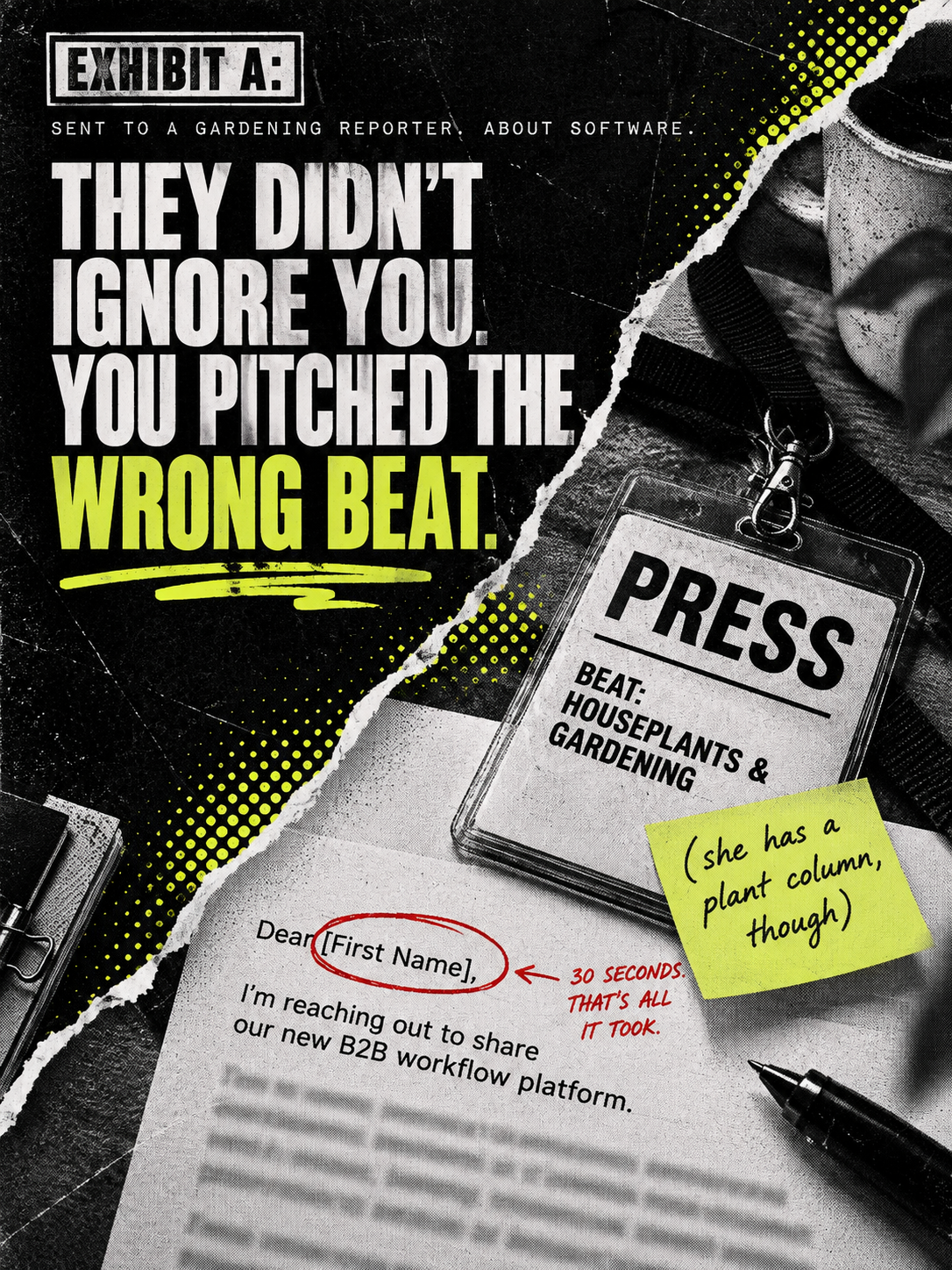
Here is the full sequence, start to finish: journalist opens your media pitch. Reads "innovative solutions empowering businesses to achieve their full potential." Feels nothing. Deletes it. 88% of journalists immediately delete pitches that don't give them a workable angle. The entire process takes under four seconds.
Brand differentiation is what creates the angle. A brand positioned for everyone has a message for no one, which means it matches no beat, which means it earns no reply. The journalist was not looking for a values statement formatted like a news pitch. They were looking for a story. You sent them a committee-approved document and then scheduled a follow-up to ask if they saw it.
What they meant to say was: you had something interesting and then edited it out in the third revision.
PR Pitch Response Rate in 2026
The numbers are not improving. The average journalist response rate to PR pitches in 2026 sits below 3%. PR professionals now pitch upward of 30 journalists per campaign just to secure a single response. That is the actual return on safe messaging. Hope the brand safety was worth it.
Here is the part that should concern you more than open rates. 77% of journalists will permanently block a brand for sending irrelevant pitches. There is a real list. Journalists maintain it. Brands get added to it quietly. And because no journalist sends you a notification that you've been blacklisted, most brands on that list have no idea. They just notice their news pitch seems to be landing in a void and tell themselves it's a slow news cycle.
It is not a slow news cycle.
A weak media pitch strategy does not just fail to generate PR coverage. It actively destroys the access that earned media requires. You are not breaking even. You are going backward. Here's a guide on how to write a pitch email that slays.
PR Strategy To Stay On Brand
"Staying on brand" is what a PR team says right before they edit out every sentence worth reading.
What it actually means: remove anything specific, cut anything that takes a position, replace anything interesting with language that offends no one. The result is messaging that no one disagrees with and no one remembers. That is not brand safety. That is brand erasure with extra approval rounds.
Journalists need a story. A story needs someone who believes something. It needs a brand willing to name the problem that the rest of the industry is still quietly avoiding. That is a pitch. "We are a passionate team of dedicated professionals committed to delivering results" is not a pitch. It is a non-answer dressed up in press release formatting, and it is sitting in hundreds of journalist inboxes right now, waiting to be deleted.
The brands earning consistent media coverage did one thing differently. They decided what they actually believed, said it plainly, and kept saying it. Over time, journalists started connecting the narrative to the brand before a pitch even arrived. Edelman's research backs this up: earned media from brands willing to take a clear stance outperforms paid advertising in consumer engagement by 16 percentage points.
A clear brand voice is not a risk. It is the baseline requirement for getting covered at all. Most brands just keep negotiating their way out of having one.
Brand Differentiation Questions For PR
There is a framework. It is not new. That is the most frustrating thing I can say about brands still not using it in 2026.
𝐅𝐢𝐫𝐬𝐭: 𝐰𝐡𝐚𝐭 𝐝𝐨𝐞𝐬 𝐲𝐨𝐮𝐫 𝐛𝐫𝐚𝐧𝐝 𝐛𝐞𝐥𝐢𝐞𝐯𝐞 𝐭𝐡𝐚𝐭 𝐨𝐭𝐡𝐞𝐫𝐬 𝐢𝐧 𝐲𝐨𝐮𝐫 𝐬𝐩𝐚𝐜𝐞 𝐚𝐜𝐭𝐢𝐯𝐞𝐥𝐲 𝐚𝐯𝐨𝐢𝐝 𝐬𝐚𝐲𝐢𝐧𝐠? Not what has cleared legal. What you actually believe, the thing that would make a competitor uncomfortable to see attributed to you in a byline.
𝐒𝐞𝐜𝐨𝐧𝐝: 𝐰𝐡𝐚𝐭 𝐩𝐫𝐨𝐛𝐥𝐞𝐦 𝐝𝐨 𝐲𝐨𝐮 𝐬𝐨𝐥𝐯𝐞 𝐛𝐞𝐭𝐭𝐞𝐫 𝐭𝐡𝐚𝐧 𝐚𝐧𝐲𝐨𝐧𝐞, 𝐬𝐩𝐞𝐜𝐢𝐟𝐢𝐜𝐚𝐥𝐥𝐲 𝐞𝐧𝐨𝐮𝐠𝐡 𝐭𝐡𝐚𝐭 𝐲𝐨𝐮 𝐜𝐨𝐮𝐥𝐝 𝐝𝐞𝐟𝐞𝐧𝐝 𝐭𝐡𝐚𝐭 𝐜𝐥𝐚𝐢𝐦 𝐩𝐮𝐛𝐥𝐢𝐜𝐥𝐲? Not "we help brands grow." Name the actual thing.
𝐓𝐡𝐢𝐫𝐝: 𝐰𝐡𝐚𝐭 𝐧𝐚𝐫𝐫𝐚𝐭𝐢𝐯𝐞 𝐜𝐚𝐧 𝐲𝐨𝐮 𝐨𝐰𝐧 𝐜𝐨𝐧𝐬𝐢𝐬𝐭𝐞𝐧𝐭𝐥𝐲 𝐞𝐧𝐨𝐮𝐠𝐡 𝐭𝐡𝐚𝐭 𝐣𝐨𝐮𝐫𝐧𝐚𝐥𝐢𝐬𝐭𝐬 𝐬𝐭𝐚𝐫𝐭 𝐜𝐨𝐧𝐧𝐞𝐜𝐭𝐢𝐧𝐠 𝐢𝐭 𝐭𝐨 𝐲𝐨𝐮𝐫 𝐛𝐫𝐚𝐧𝐝 𝐯𝐨𝐢𝐜𝐞 𝐛𝐞𝐟𝐨𝐫𝐞 𝐲𝐨𝐮 𝐞𝐯𝐞𝐧 𝐩𝐢𝐭𝐜𝐡 𝐭𝐡𝐞𝐦?
These questions sound simple until you try to answer them with a leadership team in the room. That is where brand differentiation gets quietly murdered. The honest answer goes through four rounds of feedback and emerges as something that could apply to any of the 47 other companies in your category.
Why Brand Differentiation Works
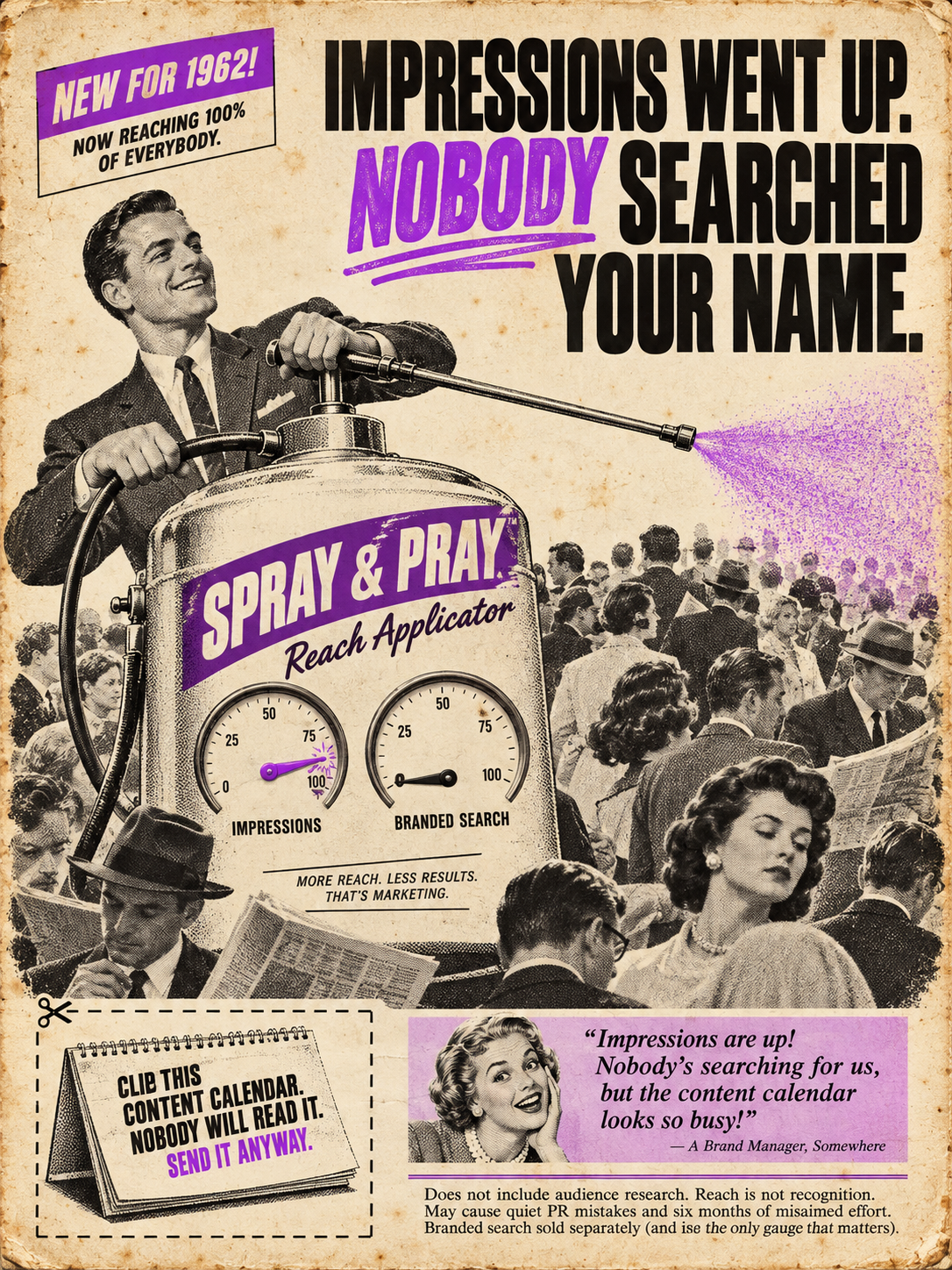
If your messaging sounds like everyone else in your category, the media will treat it exactly like everyone else in your category: delete, archive, or block. The brands earning consistent PR coverage made one decision. They chose what they actually believe, said it out loud, and kept going when it felt uncomfortable. Clarity is the entry fee. Most brands just refuse to pay it.
𝘋𝘰𝘯'𝘵 𝘉𝘦 𝘈 𝘓𝘪𝘵𝘵𝘭𝘦 𝘗𝘪𝘵𝘤𝘩 𝘦𝘹𝘪𝘴𝘵𝘴 𝘣𝘦𝘤𝘢𝘶𝘴𝘦 𝘮𝘰𝘴𝘵 𝘣𝘳𝘢𝘯𝘥𝘴 𝘯𝘦𝘦𝘥 𝘩𝘦𝘭𝘱 𝘨𝘦𝘵𝘵𝘪𝘯𝘨 𝘵𝘩𝘦𝘳𝘦, 𝘢𝘯𝘥 𝘵𝘩𝘦 𝘰𝘯𝘭𝘺 𝘲𝘶𝘦𝘴𝘵𝘪𝘰𝘯 𝘸𝘰𝘳𝘵𝘩 𝘢𝘴𝘬𝘪𝘯𝘨 𝘣𝘦𝘧𝘰𝘳𝘦 𝘵𝘩𝘦 𝘯𝘦𝘹𝘵 𝘮𝘦𝘴𝘴𝘢𝘨𝘪𝘯𝘨 𝘮𝘦𝘦𝘵𝘪𝘯𝘨 𝘪𝘴 𝘸𝘩𝘦𝘵𝘩𝘦𝘳 𝘸𝘩𝘢𝘵 𝘺𝘰𝘶 𝘢𝘭𝘳𝘦𝘢𝘥𝘺 𝘩𝘢𝘷𝘦 𝘪𝘴 𝘸𝘰𝘳𝘬𝘪𝘯𝘨.
FAQ
Does taking a brand stance hurt your audience reach?
Every brand asks this. "We serve everyone" is the origin story of undifferentiated brand voice and also the reason most brands are invisible to everyone. A journalist writing a specific story for a specific audience needs your pitch to match. If it applies to everyone, it lands with no one. The people you'd "alienate" by having a position were never going to engage with your media pitch anyway. That is called targeting. You were supposed to be doing it already.
How do you get media coverage in a boring industry?
I have heard this from tech companies, HR software platforms, insurance providers, and once from a manufacturer of specialty industrial tubing. The category is never the problem. The problem is that every company in so-called boring categories uses the boredom as an excuse to skip brand differentiation entirely. The first brand in any category that builds a real position becomes the most interesting one in the room by default. You are not limited. You are sitting on an opening and describing it as a wall.
Should your PR strategy match what competitors are doing?
The category standard is why journalists stopped covering your category. Matching it does not protect you. It makes you indistinguishable from eleven other brands on the same pitch list. A strong media pitch strategy is supposed to make you the one brand a journalist has an actual reason to call back. Replicating the category standard is not a PR strategy. It is an efficient way to confirm that you belong in the pile.

60-Day Performance Guarantee
PR only works if it builds momentum fast. If we do not secure 2 meaningful earned media features and line up 3 additional opportunities within 60 days, you get a full refund.

Free Authority Score Checker
Check your online reputation and authority score for free and see how you stack up and get custom tips to improve instantly.




.png)