How to Write a Pitch Email That Gets Opened

TLDR:
- Journalists respond to 3.15% of pitches. That number includes yours.
- You wrote that pitch for your brand. Journalists do not work for your brand.
- "EXCITING STORY OPPORTUNITY" is not a subject line. That is a threat.
- One idea. Brief context. Simple ask. If you went past that, you went too far.
- Fix the subject line before anything else. The follow-up is not the problem.
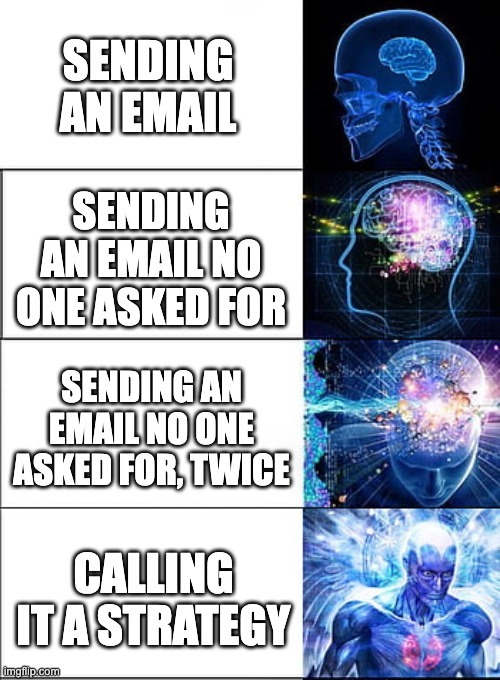
Oh. You want to know how to write a pitch email that gets opened. I see. I was in the middle of something, but sure. Let's do this.
Journalists respond to 3.15% of the pitches they receive. That number comes from an analysis of over 425,000 real pitches sent in Q4 of 2023, so it is an actual data point, not a rumor.
Three percent.
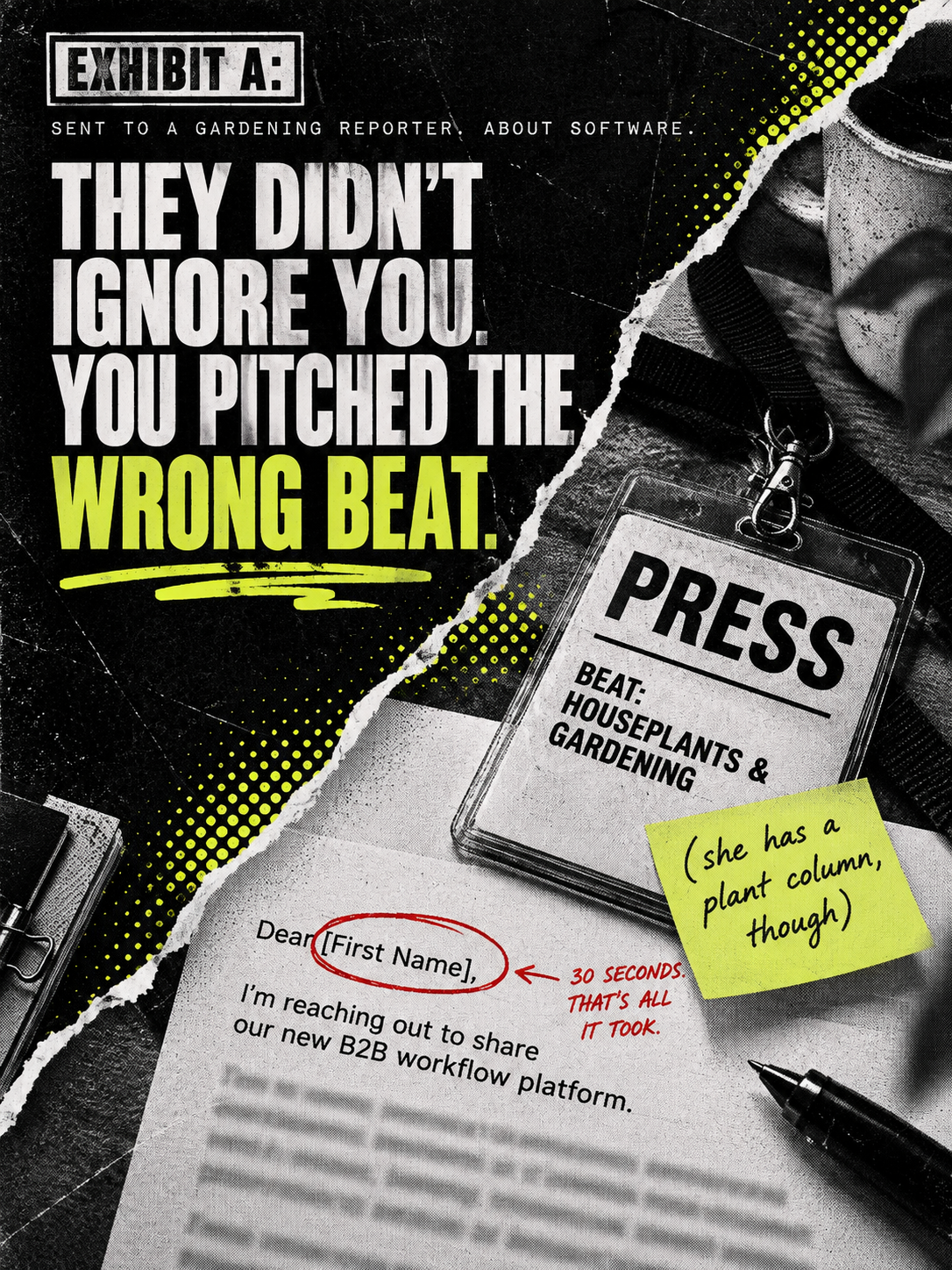
And before you decide that is a systemic issue and not your personal issue, Muck Rack's State of Journalism 2024 found that nearly three quarters of journalists say they decline pitches because the pitch does not match their coverage area. Not because it was badly written. Not because the timing was off. Because the person sending it did not bother to learn what the journalist actually covers.
That is the whole problem. You are writing PR pitch emails for your brand. Journalists are not your brand's audience. Their readers are their audience, and a pitch email that does not immediately speak to that relationship is a pitch email that does not get opened.
This is basic. I cannot stress enough that this is basic.
You Thought You Were Competing With Other Pitches.
Writing from your brand's perspective is a specific and avoidable failure. Three paragraphs explaining how your company is "disrupting the industry" does not answer the journalist's actual question, which is whether their readers would care.
They need that answer fast.
An analysis of 400,000 pitches and 4,000 reporters found that the pitches that actually get responses share two characteristics: personalization and beat alignment. Not polish. Not a witty sign-off. Whether you understood what the journalist covers and wrote the pitch like you did.
Your Media Pitch Subject Line Is the Reason.
The media pitch subject line is not decoration. It is the pitch. Everything that follows is either proof that the subject line was accurate or evidence that it was not. If the subject line does not work, nothing else gets read, because nothing else gets opened.
Subject lines that get opened are short and specific. Prowly's data puts the sweet spot at 5 to 7 words and under 49 characters. Journalists scan their inboxes; they do not read them. A subject line that looks like an announcement reads like advertising. A subject line that hints at an actual story reads like something worth opening.
The difference between "Brand X Announces New Retail Partnership" and "DTC brands are pulling out of retail. Here's why." is the difference between deleted and opened. One is offering coverage to someone who did not ask for it. The other is offering a story to someone who needs one.
Think less announcement, more angle. The instinct to make the subject line sound exciting is almost always the wrong instinct. Creativity without a clear story underneath it is just noise. If you want to understand what leading with angle actually looks like, the principle is the same whether you are newsjacking or cold pitching:
The hook is the story, not the brand.
What Is Happening Inside This Pitch Body.
A pitch email body needs three things. One clear idea. Brief context. A simple ask. That is the complete list. If yours has more than that, it is a pitch that does not know what it is about, and journalists can tell.
A pitch that spends two paragraphs on brand history and awards before arriving at the story somewhere in the middle is not getting a response. Journalists who receive 30-60 or more pitches every single work day, do not have time to locate your point. You have to lead with it or you have already lost. This pattern of burying a weak core under more words shows up across marketing fails of every variety, and pitching is no exception.
The impulse to include more usually comes from insecurity about whether the story is strong enough on its own. More context feels convincing. It does the opposite. A journalist who has to dig through brand copy to find the angle assumes there is no angle worth finding. They are right most of the time.
Cut everything that is not the idea, the context, or the ask. Whatever is left after that is probably still a little long.
A Pitch Email That Gets Opened Is Never the Clever One
How to pitch a journalist is not a craft question. It is an ego question. Creativity in a pitch email is only valuable if the story is already clear. If you are being interesting at the expense of being legible, you are making the journalist work harder, and they will not do it. They want to decide in one pass whether the pitch serves their readers. A pitch that is creative but unclear gets deleted. A pitch that is specific and slightly boring at least gets read.
Write the clearest version of your PR pitch email first. If you can add personality without making it harder to parse, go ahead. If you cannot, do not. Clarity is not the compromise you make when you run out of ideas. Clarity is the strategy.
The Pitch Email That Gets Opened
If your pitch email-that-gets-opened-rate is somewhere between bad and nonexistent, the problem is almost never the follow-up. "Just circling back" on a pitch that had a vague media pitch subject line and four paragraphs about your company is not a strategy. It is sending the same mistake twice.
Fix the subject line first. Is it specific? Is it short? Does it hint at a story instead of an announcement? If the answer to any of those is no, start there. Consistently bad pitching does not just hurt your open rate! It damages your standing with the journalists you need most, and that is a harder problem to fix later. The rest of it, writing for the journalist instead of your brand, keeping the body to one idea, leading with relevance, follows from getting the subject line right.
But none of it matters if no one is opening the email.
FAQ
How long should a PR pitch email actually be?
Three to five sentences for the body. If yours is longer than that, cut it. There is no pitch scenario where more length helps you. Journalists are not waiting for the full picture. They are deciding whether there is a story. Keep it short enough that the ask is obvious without scrolling.
How important is the subject line in a PR pitch?
That is what subject lines are for. Yes, they read it, and that is how they decide. Your media pitch subject line is likely where the problem starts. Fix that before you rewrite anything else.
Is following up ever actually worth it?
One follow-up a few days after the original is fine. Multiple follow-ups on a pitch that had no clear angle is not persistence. It is noise. Fix the pitch before you follow it up. Following up on a bad pitch just makes sure more people know it is bad.
How do I know which journalist to pitch in PR?
Knowing how to pitch a journalist means knowing exactly who covers your beat, what they have written recently, and why your story fits their work. If you are unsure who to send it to, you are not ready to send it yet. That research is not optional. It is the job.
My PR pitch is relevant and I'm still not getting responses. What now?
Check the media pitch subject line first. Then check whether your pitch leads with the story or builds toward it three paragraphs in. Then ask yourself honestly whether you are offering a journalist insight or asking them for exposure. If it is the last one, rewrite it. That is your PR pitch email tips answer, and I say it with full awareness that you already knew this.


60-Day Performance Guarantee
PR only works if it builds momentum fast. If we do not secure 2 meaningful earned media features and line up 3 additional opportunities within 60 days, you get a full refund.

Free Authority Score Checker
Check your online reputation and authority score for free and see how you stack up and get custom tips to improve instantly.




.png)