Email Deliverability for PR: Why Your Pitch Never Made It to the Inbox

TLDR:
- You spent weeks perfecting the pitch. A journalist said yes. Then nothing. No reply. No coverage. No explanation.
- The problem was not the pitch. It was email deliverability.
- One in six emails never reaches the inbox. Most PR teams have no idea this is happening to them.
- Broken PR systems kill good campaigns silently. Deliverability is just the loudest example.
- This blog explains what is going wrong, why it keeps happening, and what functional PR systems actually look like.
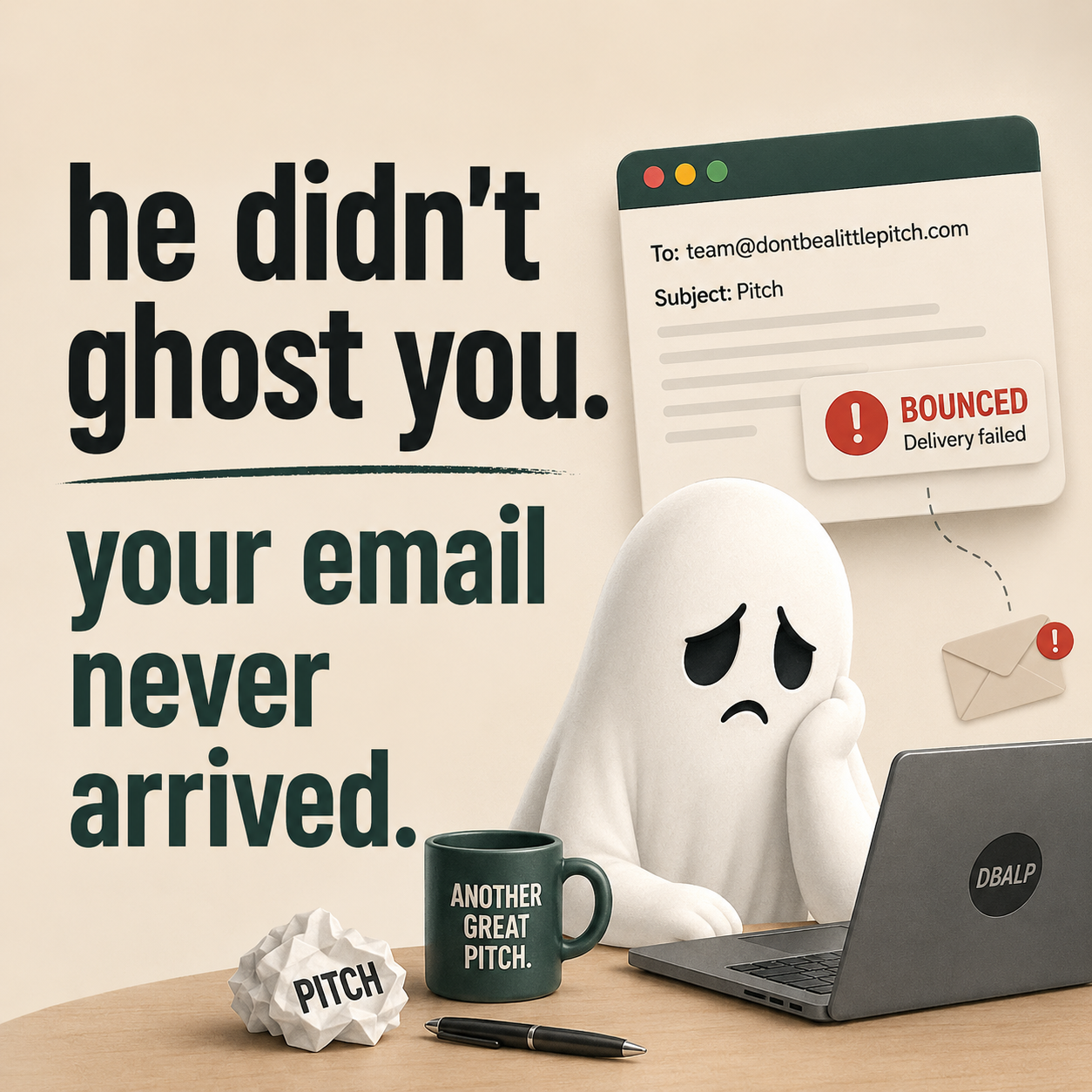
Everyone wants to talk about the pitch. The subject line. The angle. The journalist. The outlet. And sure, those things matter. But there is an entire layer of PR systems sitting underneath all of it: the email setup, the domain configuration, the task management, the troubleshooting documentation and almost nobody talks about it until a campaign falls apart and nobody can explain why.
This is that conversation. Email deliverability is where most PR campaigns silently die. And it is the last thing most teams think to check.
Why Email Deliverability Is the PR Problem Nobody Wants to Admit They Have
Nobody talks about email deliverability because it isn't a creative problem. There is no LinkedIn post about it. There is no Forbes feature on the person who fixed their domain authentication and watched their response rates climb.
But there is absolutely a client who stopped renewing because their campaign kept getting ignored, their pitches kept going unanswered, and nobody on the team thought to check whether the emails were actually landing in inboxes.
That is what poor email deliverability costs you. Not just a missed placement.
Only about 8% of PR pitches result in actual media coverage. You are already working with brutal odds. If your emails are not reaching journalists at all, that number is effectively zero. The pitch was never the only variable. It just gets all the blame.
Good PR systems do one thing above everything else: they make sure the work your team puts in actually reaches the people it was meant for. Email deliverability is the foundation of that. Without it, nothing else matters.
The PR Systems and PR Tools That Decide Whether Your Campaign Lands or Disappears
Here is a scenario that is far more common than agencies admit.
The campaign launches, but when the pitch goes out, the journalist never receives it. It hit spam before they ever had the chance to open it. The team follows up... That hits spam too. Two weeks later, the client asks why there has been no movement.
PR systems are not bureaucracy. They are the difference between a campaign that works and one that silently fails while looking like it is running fine.
Task management platforms like Monday.com, Missive, and Slack matter but they cannot save a campaign if the emails funding the whole operation never reach the inbox. The PR tools that monitor sending reputation, track bounce rates, and flag deliverability issues are not optional extras. They are the core of the infrastructure.
According to Muck Rack's State of PR Report, 69% of PR professionals now use generative AI and 64% have integrated AI into daily comms work. None of that matters if the PR workflow around the sending infrastructure is broken. AI doesn't fix a bad sender reputation… It just writes better pitches that still go to spam.
The question worth asking isn't which PR tools your team has. It is whether those tools are monitoring what happens to emails after they leave your outbox. Knowing whether your PR efforts are delivering results at all is the first real question and it starts here.
How to Fix Email Deliverability for PR Outreach Before It Kills Another Campaign
According to EmailTooltester, 16.9% of marketing emails never reach the recipient's inbox. For cold PR outreach which starts with zero relationship and zero prior engagement that number is likely worse. Every bulk send from a fresh domain, every skipped warm-up, every missing authentication record chips away at sender reputation before a single journalist reads a word.
Here is what functional email deliverability looks like for a PR team:
A custom domain instead of a generic Gmail address is the minimum standard. It isn't a branding choice (although if you don’t have a professional email it begs the question, what are we even doing here?) It’s a technical credibility signal that mail servers use to decide whether your email belongs in the inbox or the junk folder.
Domain authentication SPF, DKIM, and DMARC records tell receiving mail servers that your emails are legitimate. Skipping these is the fastest way to trigger automatic spam classification, regardless of how good the pitch is.
Email warm-up is the process of gradually increasing sending volume from a new domain so that mail servers build trust in it before it is used at full scale. Blasting a journalist list from a cold domain is one of the most common email deliverability mistakes PR teams make.
Bounce rate monitoring using PR tools like Smartlead keeps your sending reputation intact. High bounce rates signal low-quality sending practices to mail servers and accelerate deliverability decline.
The truth is, one email deliverability failure can quickly sink an entire campaign while making it look like the pitch failed. The journalist didn't ghost you. They never got the email.
How to Build a PR Workflow That Catches Problems Before They Catch You
Every PR team has a moment where something breaks and the only person who knows how to fix it is unavailable. New hire, out-of-office, unexpected situation
it doesn't matter. The outcome is always the same: everything slows down, someone panics, and the client feels it before the team does.
Standard operating procedures and troubleshooting guides are how PR systems survive beyond the people who built them. When the steps for handling a spam bounce, resetting a broken automation, warming up a new sending domain, or onboarding a new campaign client are written down clearly and kept somewhere findable the team stops depending on one person's memory to function.
The difference between a PR agency that scales and one that hits a ceiling is almost always this: one has built PR systems that document what works, and one is recreating it from memory every single campaign.
Faster fixes. Less downtime. Better onboarding. Fewer "wait, how do we do this again" moments.
Building this doesn't require a dedicated operations hire. It requires honesty about where things keep going wrong, and one person willing to write it down instead of just fixing it again. The same discipline that wins press has to go into the systems that support it see what that looks like in practice here.
The Hidden PR Systems Failures Behind Every Campaign That Underperforms
The pitch gets the credit when campaigns win. The PR systems get the blame when they don't accept that nobody actually looks at the systems, so the pitch takes that blame too.
Strong PR systems are invisible when they are working. Campaigns run, and emails land in inboxes. Tasks get completed without follow-up. Clients get results without drama. Email deliverability rates stay healthy. The team is doing PR instead of troubleshooting why the last send bounced.
That is the goal. Not a perfectly designed PR workflow as an end in itself. A machine that makes the actual work easier to execute consistently, without burning out the people doing it.
If your campaigns feel harder than they should if the same problems keep surfacing across different clients, different pitches, different journalists the pitch is probably not the problem.
The PR systems and email deliverability infrastructure behind it are.
Ready to fix what is actually broken? Don't Be A Little Pitch builds the strategy and the systems that make it stick.
FAQ
What is email deliverability and why does it matter for PR?
Email deliverability is the rate at which your emails actually reach the recipient's inbox rather than landing in spam or getting blocked entirely. For PR, it matters because cold journalist outreach depends entirely on emails being received. A pitch that never arrives is a pitch that never had a chance, regardless of how well it was written.
Why are my PR emails going to spam?
PR emails land in spam most commonly because the sending domain is new or unwarmed, the domain is missing authentication records like SPF, DKIM, or DMARC, the sending volume increased too quickly, or the email content triggered spam filters. For cold outreach specifically, domain warm-up and reputation management are non-negotiable parts of any functional PR workflow.
What PR tools help with email deliverability?
PR tools commonly used for email deliverability include Smartlead and Instantly for warm-up and sending management, MXToolbox for authentication record checking, and Google Postmaster Tools for monitoring domain reputation with Gmail. These are not advanced tools they are the standard setup for any agency serious about PR outreach that actually reaches inboxes.
What PR systems does a small agency need to run campaigns properly?
A small agency needs PR systems covering four areas: outreach and sending infrastructure (domain setup, warm-up, deliverability monitoring), task and campaign management (Monday.com, Missive, or equivalent), communication and team visibility (Slack or similar), and documentation (SOPs for recurring tasks and troubleshooting). The tools themselves matter less than whether they are set up to reduce manual work and catch problems before clients do.
How do I know if my email deliverability is hurting my PR campaigns?
Signs that email deliverability is affecting your campaigns include low or zero journalist response rates despite strong pitches, high bounce rates in your sending platform, emails that you sent to yourself landing in your own spam folder, or a sudden drop in open rates across campaigns. If any of these are happening, audit your domain authentication, check your sender reputation, and review your sending practices before sending another pitch.

60-Day Performance Guarantee
PR only works if it builds momentum fast. If we do not secure 2 meaningful earned media features and line up 3 additional opportunities within 60 days, you get a full refund.

Free Authority Score Checker
Check your online reputation and authority score for free and see how you stack up and get custom tips to improve instantly.




.png)