Earned Media: What the Data Says About Why Most PR Pitches Don't Land

TLDR:
- Earned media still earns trust no paid placement can buy. 92% of consumers say so directly.
- The problem isn't the channel, it's the PR pitch most teams are sending to get there.
- Per Muck Rack's 2026 State of Journalism Report, 88% of journalists delete a pitch the second it misses their beat.
- Media outreach that works follows a relationship, it doesn't try to create one in the subject line.
- Most teams never get to a real earned media strategy. They stall at the spreadsheet of contacts.
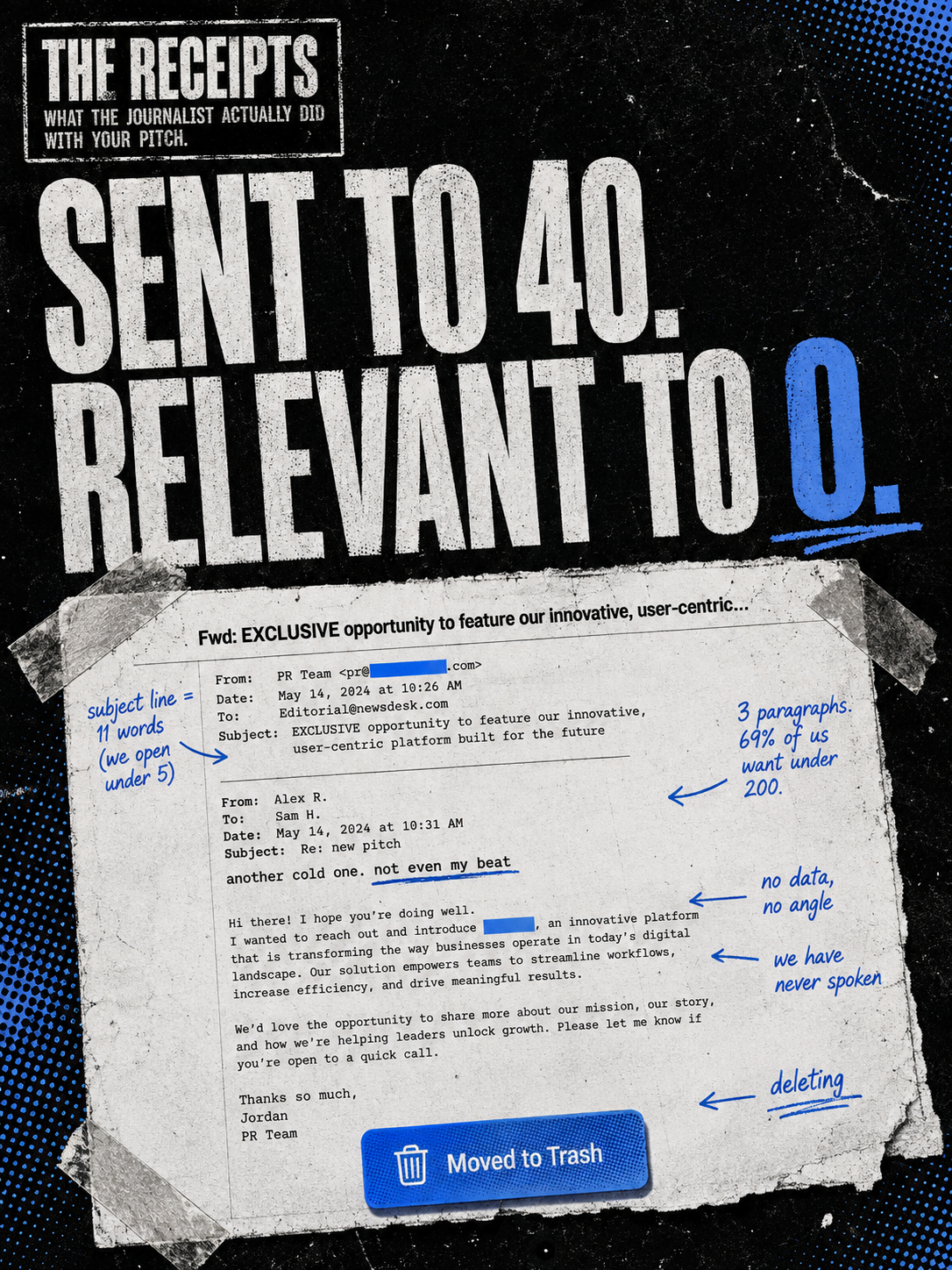
Earned media has been the most trusted form of coverage for years, and the data hasn't budged. Nielsen's research puts consumer trust in earned media at 92%, a number no sponsored placement has ever come close to. The appeal isn't complicated. What gets harder to explain is why so few PR pitches actually convert that trust into coverage.
According to Muck Rack's 2026 State of Journalism Report, 88% of journalists immediately delete pitches that miss their beat. Forty-seven percent describe what lands in their inbox as seldom or never relevant. And still, 86% confirm at least some of their stories originate from media outreach. The door hasn't closed. It's just a lot narrower than most senders are accounting for.
Why Earned Media Still Wins on Trust
The trust gap between earned and paid media isn't subtle, and it isn't new. Consumers consistently rate earned coverage above advertising, and that 92% figure hasn't moved across any research cycle available.
The SEO math backs it up. The top ranking page on Google holds 3.8 times more backlinks than positions two through ten, meaning the authority from one credible feature compounds well after the placement runs. Paid spend stops the second the budget does. Earned media keeps paying out.
None of this proves every approach works. It mostly proves that a lot of campaigns aren't measuring whether theirs does.
What Actually Gets a PR Pitch Read
Journalist surveys keep landing on the same three conditions for what separates a pitch that lands from one that doesn't.
A specific, sourced angle. A pitch without a clear story tied to something the journalist's readers actually care about ends up deleted right alongside the pitches with no angle at all. Forty percent of journalists specifically want original data they can build a story from. The angle is the part that answers why this story belongs in this outlet, for these readers, right now.
Genuine beat relevance. Seventy percent of journalists name beat alignment as the deciding factor in whether they engage with media outreach at all. A pitch sent to forty inboxes at once hasn't done that math for a single one of them. The full breakdown of what gets a pitch deleted on sight is worth reading before sending the next one.
A relationship that predates the ask. Almost every outreach guide in circulation says this outright. Response rates suggest most teams read it and moved on anyway.
The Build Phase Most Earned Media Strategies Skip
Teams that land consistent coverage share one habit: the pitch follows the visibility, it doesn't try to manufacture it. Founders and comms leads build a recognizable point of view through commentary, real participation in industry conversations, and a presence in the channels journalists already monitor, all before a single pitch goes out.
The more common sequence runs backward. A launch happens, a milestone hits, and the response is a cold round of outreach to journalists who've never heard of the sender.
When the public track record exists first, both coverage rate and placement quality shift. The journalist isn't weighing a cold claim, they're weighing someone they already have context on. That build phase is the foundation any earned media strategy actually stands on. Compressing it under deadline pressure is the clearest pattern behind pitches that go nowhere.
The Metrics That Actually Mean Something
Impressions and mentions remain the default metrics for most earned media reporting. Both measure reach. Neither measures whether that reach did anything the business needed.
The metrics worth tracking look different: referral traffic from specific placements, qualified leads attributable to coverage, backlink quality and domain authority, and sentiment shifts that line up with purchase behavior. A closer look at which PR signals actually map to outcomes is worth reviewing before deciding what gets reported internally.
There's a forward-looking piece too. Visibility in AI generated search results runs on the same credibility signals earned media has always produced: editorial coverage, third party validation, consistent presence in trusted sources. Newsroom adoption of AI tools is accelerating faster than most PR teams have adjusted for, which makes the credibility signals earned media produces even more valuable going forward, not less.
The earned media most teams are under-investing in now is the same asset that determines visibility later.
Earned media still outperforms paid on trust, and it still rewards the teams willing to build before they pitch. Don't Be A Little Pitch runs on that same premise. The foundation gets built first.
FAQ
Why does earned media matter more than paid media?
Trust, primarily. Nielsen's research shows 92% of consumers trust earned coverage over advertising, a gap that hasn't closed in any available research. Earned coverage also compounds in value through backlinks and domain authority, while paid spend stops the moment the budget does.
Why do most PR pitches fail?
Relevance, consistently, across every available study. Muck Rack's 2026 report puts the number at 88% of journalists deleting pitches that miss their beat on open. Good writing and reasonable timing don't fix a pitch sent to the wrong category.
How do you measure earned media success?
Referral traffic from specific placements, qualified lead attribution, backlink and domain authority impact, and sentiment shifts that track with purchase behavior. Impressions and mentions aren't useless, they just don't answer whether the coverage worked.
What makes journalists actually open a PR pitch?
A subject line under five words. One short paragraph, not three. An angle tied to something the journalist already covers. A named source with a real title. Sent Monday or Tuesday morning. Sixty nine percent of journalists prefer pitches under 200 words.


60-Day Performance Guarantee
PR only works if it builds momentum fast. If we do not secure 2 meaningful earned media features and line up 3 additional opportunities within 60 days, you get a full refund.

Free Authority Score Checker
Check your online reputation and authority score for free and see how you stack up and get custom tips to improve instantly.




.png)