Why Your Media Relations Stopped Working: 5 Shifts

TLDR:
- Media relations stopped being a contact list and became a credibility test. Most teams never got the memo.
- 88% of journalists delete a pitch the second it misses their beat. If your PR strategy is volume, that's not a strategy, it's a coping mechanism.
- Brand authority replaced press logos as the thing that actually moves anything.
- Founder voices outperform brand accounts because people trust people and distrust logos. This isn't new. You just kept ignoring it.
- PR measurement built on impressions counts how many people got the chance to scroll past you. That's the whole metric.
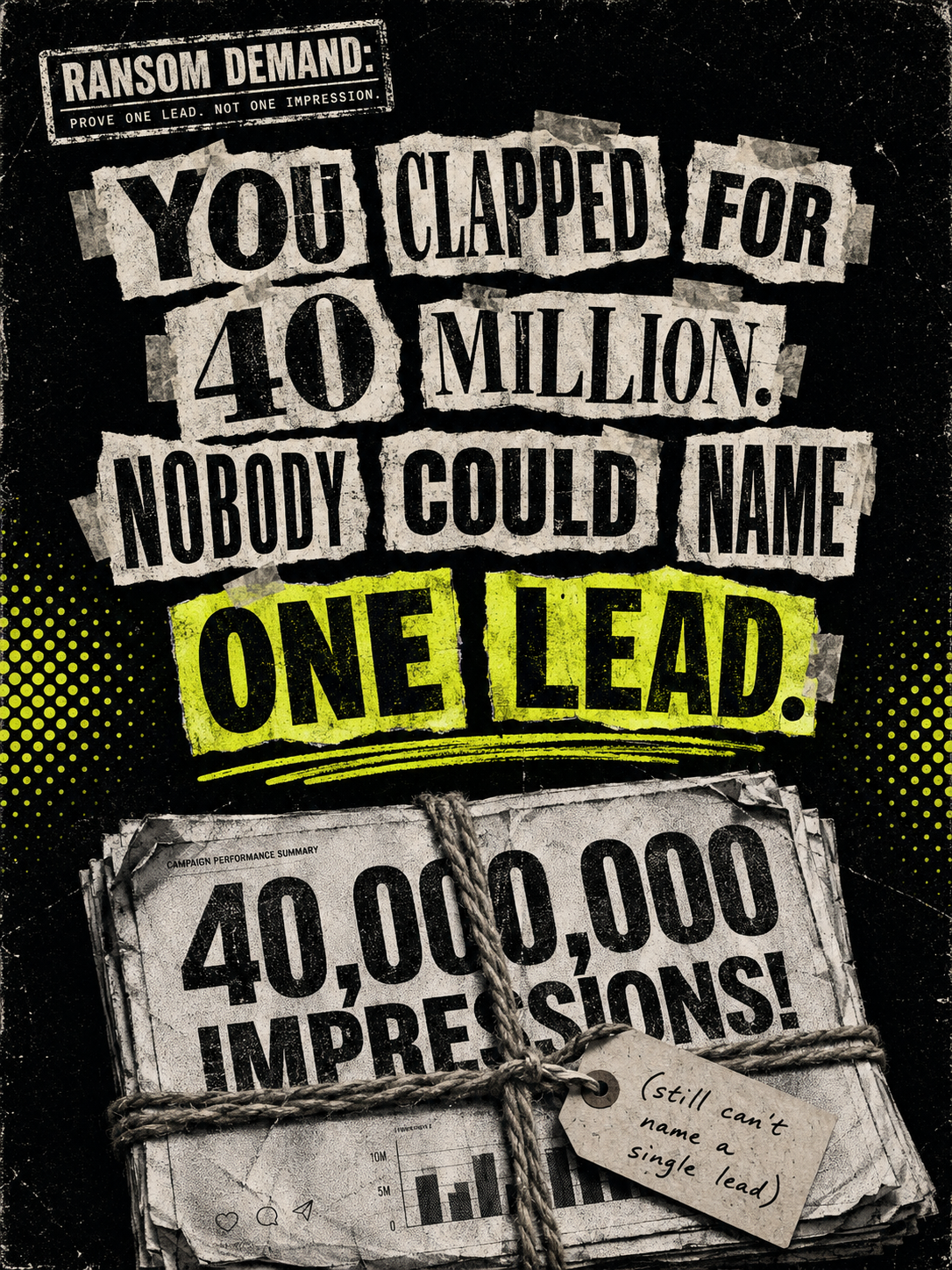
I once watched a team celebrate 40 million impressions.
Forty million. There was a slide. There was a small round of applause. Somebody said the words "incredible reach" out loud, in a room, to other adults.
Nobody in that room could name one thing that happened because of it. Not a lead. Not a call. Not a single person who changed their mind about anything.
We really said this with a straight face.
That was the moment I understood the game had already changed and we were still keeping score with the old rules. Media relations had quietly stopped rewarding effort and started rewarding credibility, and there we were counting eyeballs like that was a reasonable thing to do with a Tuesday.
Five things shifted while everyone was busy screenshotting press logos. Here they are.
What Is Media Relations and Why Did It Change?
Media relations is the practice of building working relationships with journalists so your brand becomes a source they come back to. That's different from pitching, which is a one-off task with a deadline attached.
The shift is simple to state and brutal to absorb: influence stopped being about exposure and started being about credibility.
You used to win by being seen. Now you win by being cited. Those sound similar and they're not remotely the same thing. One gets you a mention. The other gets you referenced by a journalist, a search engine, and an AI answer tool without you asking any of them.
Brand authority is what makes that happen. It's the accumulated evidence that you know something specific, held consistently enough that other people start using you as the shortcut. Everything below is that one idea breaking in five directions.
Why Brand Authority Beats Press Hits Now
Getting featured used to be the goal. It's the byproduct now, and if your PR strategy still ends at "get featured," the plan ended three steps early.
The math is unkind. Cision's State of the Media research, which surveyed more than 3,000 journalists, found over half receive 50-plus pitches a week. And per Muck Rack's State of Journalism 2026 report, 88% delete pitches that miss their beat. Not decline. Delete.
Then the part that should sting: 86% of those same journalists say pitches do inspire some of their stories. So the door works. It just doesn't work for anyone whose entire pitch is "we exist and we'd like attention."
Brands that win become sources. Journalists, AI engines, and audiences all reward expertise over announcements now, and none of them are subtle about it.
Why Cultural Relevance Decides What Gets Media Coverage
Media attention follows relevance, not effort. I've watched perfectly competent campaigns die because they were technically fine and culturally irrelevant, which is a very quiet way to fail.
Relevance means timing, tone, and knowing why a conversation is happening before you join it. Chasing a trend without that context gets you either silence or backlash, and I promise the silence hurts less.
The trust environment makes this sharper. The Edelman Trust Barometer, based on roughly 34,000 respondents across 28 countries, found seven in ten people are unwilling or hesitant to trust someone whose values, background, or information sources differ from their own. People are retreating into circles they already trust. Showing up as a stranger with a take nobody asked for isn't neutral anymore. It reads as intrusion.
This is where media relations meets culture instead of campaigns, and it's the part that can't be handed to a content calendar.
Is AI Replacing Public Relations? Not the Part That Matters
Everyone panicked about the wrong thing.
AI isn't replacing strategy. Muck Rack's research puts adoption at 82% of journalists using AI, mostly for the mechanical parts. Positioning, context, and deciding what's worth saying still need a human who's paying attention.
What AI did do is rewire distribution, and that's the part worth losing sleep over. Muck Rack's analysis of more than a million cited links found earned media accounts for the overwhelming majority of AI citations, not brand-owned pages.
Read that twice. The answer your buyer gets is assembled from third-party credibility, not from your website. You can have a gorgeous homepage and be functionally invisible in the place where the decision now happens. The full breakdown of what that means for rankings is here, and it's worth ten minutes.
Media relations didn't get less important. It became the input for a system nobody on your team is monitoring.
Why Founder Voices Outperform Brand Accounts in PR
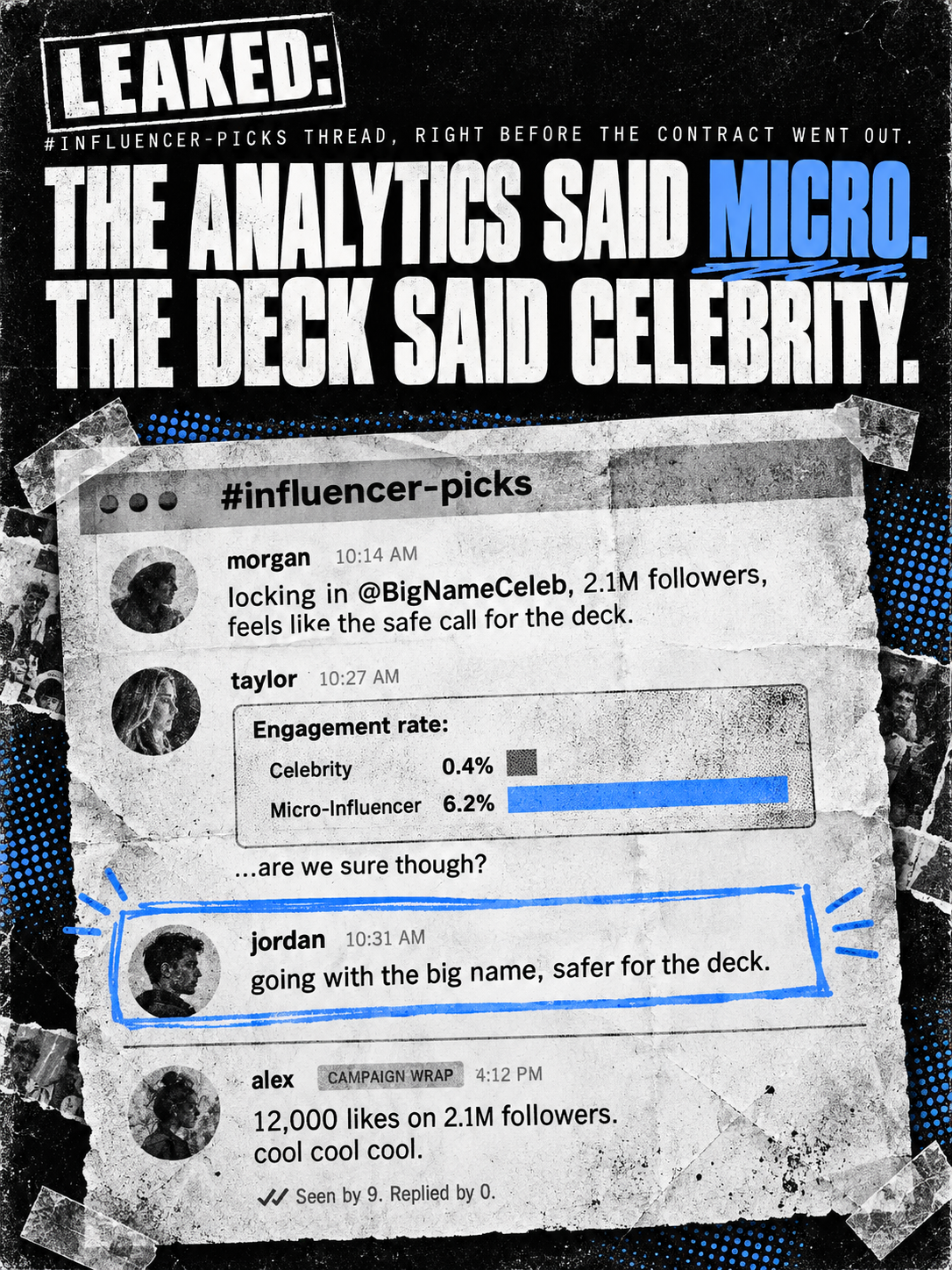
Audiences trust people. They don't trust logos. This has been true forever and companies keep treating it like a rumor.
A person can hold an opinion. A brand account structurally cannot. Every take gets softened through three rounds of approval until it's a statement nobody could disagree with, which is another way of saying nobody will repeat it.
I used to sit in meetings where a founder would say something genuinely sharp and specific, then watch that exact sentence get sanded into "we're committed to innovation in this category." Who approved this and are they okay?
The compounding is the real advantage. A brand account restarts from zero with every campaign. A founder with a consistent position builds credibility that keeps working while they sleep. Here's the deeper case for founder-owned stories, including why agencies structurally struggle to replicate it.
This stopped being optional. It's just an advantage most companies are too nervous to take.
How to Measure PR Impact Instead of Impressions
Back to my 40 million.
Impressions are easy to generate and easy to report, which is exactly why they survived this long. They measure opportunity to be ignored. That's the honest definition and I'd like it printed on something.
Real PR measurement tracks things that hurt when they're bad:
- Referral traffic from specific placements, not aggregate site traffic
- Leads and conversations you can actually attribute to coverage
- Backlink quality and domain authority movement
- Whether your brand appears in AI-generated answers about your category
- Sentiment that lines up with buying behavior instead of vibes
Good PR measurement is uncomfortable by design. If the number can only go up, it isn't measuring anything.
The metric shapes the PR strategy, not the other way around. Report on volume and you'll get a team optimizing for volume, every time, whatever the strategy deck says.
If a placement moved none of the things above, it was reached. Reach isn't impactful. These are the signals worth watching instead if you want a report that survives contact with a CFO.
How to Build Media Relations With Journalists Who Ignore You
No rebrand required. It's one decision, repeated until it gets boring.
- Pick the thing you're willing to be known for and say it consistently, including the version that mildly irritates a competitor
- Put a human in front of it, because a founder with a real position outperforms a logo every time
- Treat media relations as relationship-building, not send volume. Read the person's work before you email them
- Change what you report on before you change what you do, because the metric is what shaped the bad behavior in the first place
- Rebuild the PR strategy around being quotable, not around being covered
Those are the five shifts. Authority over exposure, relevance over noise, AI as distribution rather than judgment, people over logos, impact over volume.
PR didn't get louder. It got sharper, and sharper is much harder to fake.
Nobody needs another press hit. They need a reason to be quoted. Don't Be A Little Pitch builds the second thing.
FAQ
What is media relations in PR?
Media relations is the practice of building and maintaining working relationships with journalists so your brand becomes a source they return to. It's different from pitching, which is a one-off task. Relations are ongoing, pitches are transactions, and journalists can tell the difference immediately.
Why isn't my media relations strategy working?
Usually relevance rather than effort. Muck Rack's research shows 88% of journalists delete pitches that miss their beat, so a high send volume to the wrong list produces the same outcome as sending nothing. A PR strategy built on frequency won't fix an angle and targeting problem.
How do I build media relations with journalists from scratch?
Read their published work before you contact them, engage with it honestly, and be useful before you ask for anything. Pitch only when you have something that fits their beat. Consistency over months beats a burst of outreach around a launch.
What is brand authority and why does it matter for PR?
Brand authority is the credibility your company has built on a specific subject, shown through consistent expertise rather than announcements. It matters because journalists, search engines, and AI tools all now prioritize expertise over promotion when deciding who gets referenced.
Is AI replacing public relations?
No, but it changed which parts carry value. Muck Rack's research shows 82% of journalists now use AI, mostly for mechanical tasks. Strategy and judgment still need people. What AI did change is distribution, since AI-generated answers pull heavily from earned media rather than brand-owned pages.
How should I measure PR if impressions don't work?
Useful PR measurement tracks referral traffic from specific placements, attributable leads, backlink and domain authority impact, and whether your brand surfaces in AI-generated answers for your category. Impressions measure potential exposure, not whether anything changed.

60-Day Performance Guarantee
PR only works if it builds momentum fast. If we do not secure 2 meaningful earned media features and line up 3 additional opportunities within 60 days, you get a full refund.

Free Authority Score Checker
Check your online reputation and authority score for free and see how you stack up and get custom tips to improve instantly.




.png)