Personal Brand PR: Why Founders Who Own Their Story Get More Media Coverage

TLDR:
- You hired a PR agency and got media coverage so beige your mom didn't even share it. This is the blog that explains why.
- Personal brand PR earns more trust, more clicks, and more real coverage than any agency pitch ever will. There is data on this.
- Your story about mortgaging the house, losing the team, or pivoting three times is press gold. You have been sitting on it.
- The reason your brand sounds like everyone else is that you have been letting everyone else tell it

I used to sit in meetings where the head of marketing would present a PR brief describing the founder as "a visionary leader disrupting the space."
And I would look around the room.
And everyone would nod.
And I would think: this person has a genuinely insane story. They bootstrapped this thing from nothing. They got publicly rejected on a pitch show and turned it into their best marketing moment. They once sent an accidental mass email to 40,000 people and had to write the most humiliating apology of their career. And we are describing them as "a visionary leader disrupting space."
Who approved this and are they okay?
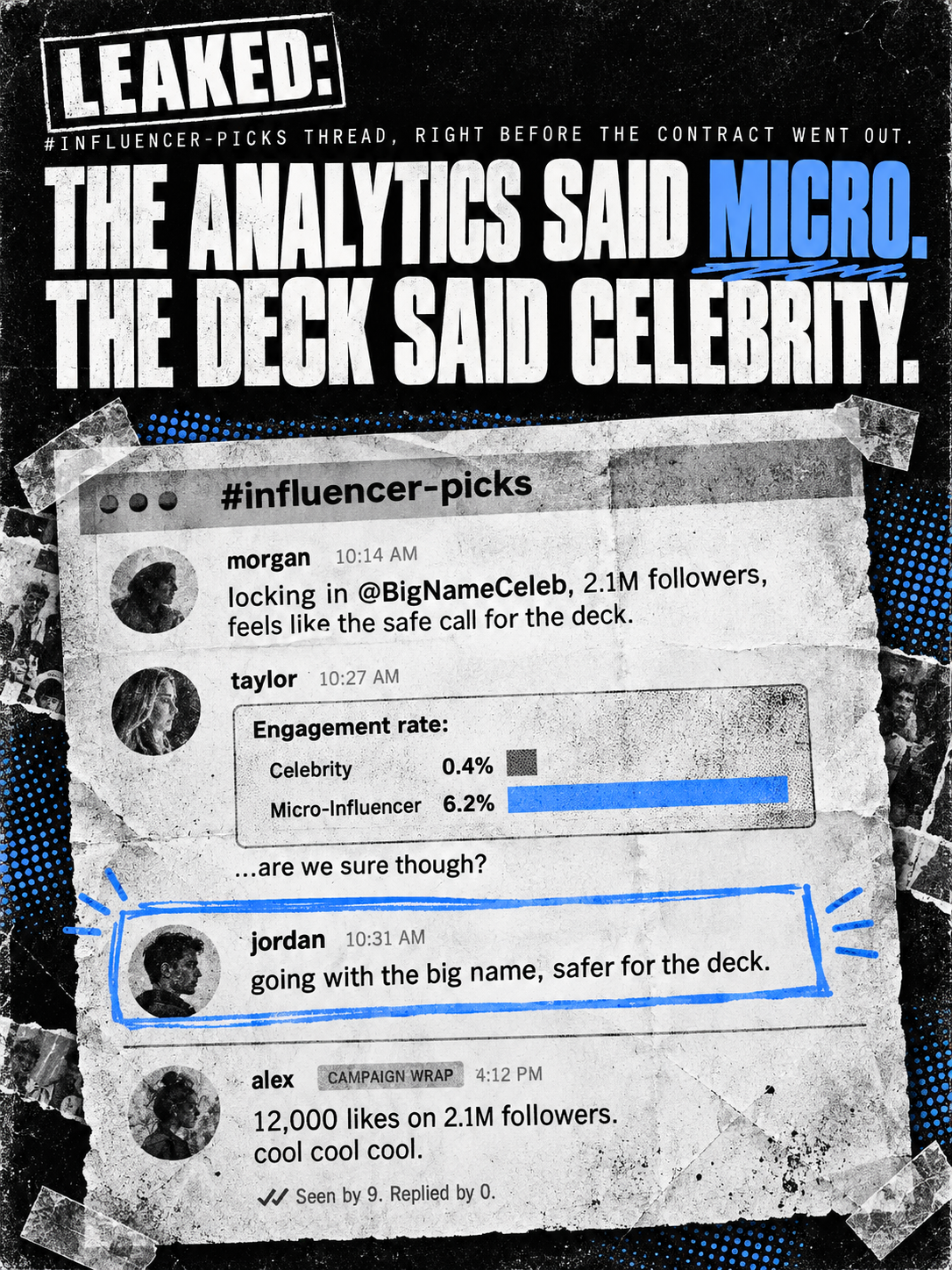
Personal brand PR is the thing most companies are paying agencies to accidentally avoid. Agencies protect. Agencies polish. Agencies file the edges off the story until it sounds like every other brand in the category. And then founders wonder why the coverage they're getting doesn't move anything.
Why Personal Brand Stories Generate More Earned Media Than Brand Announcements
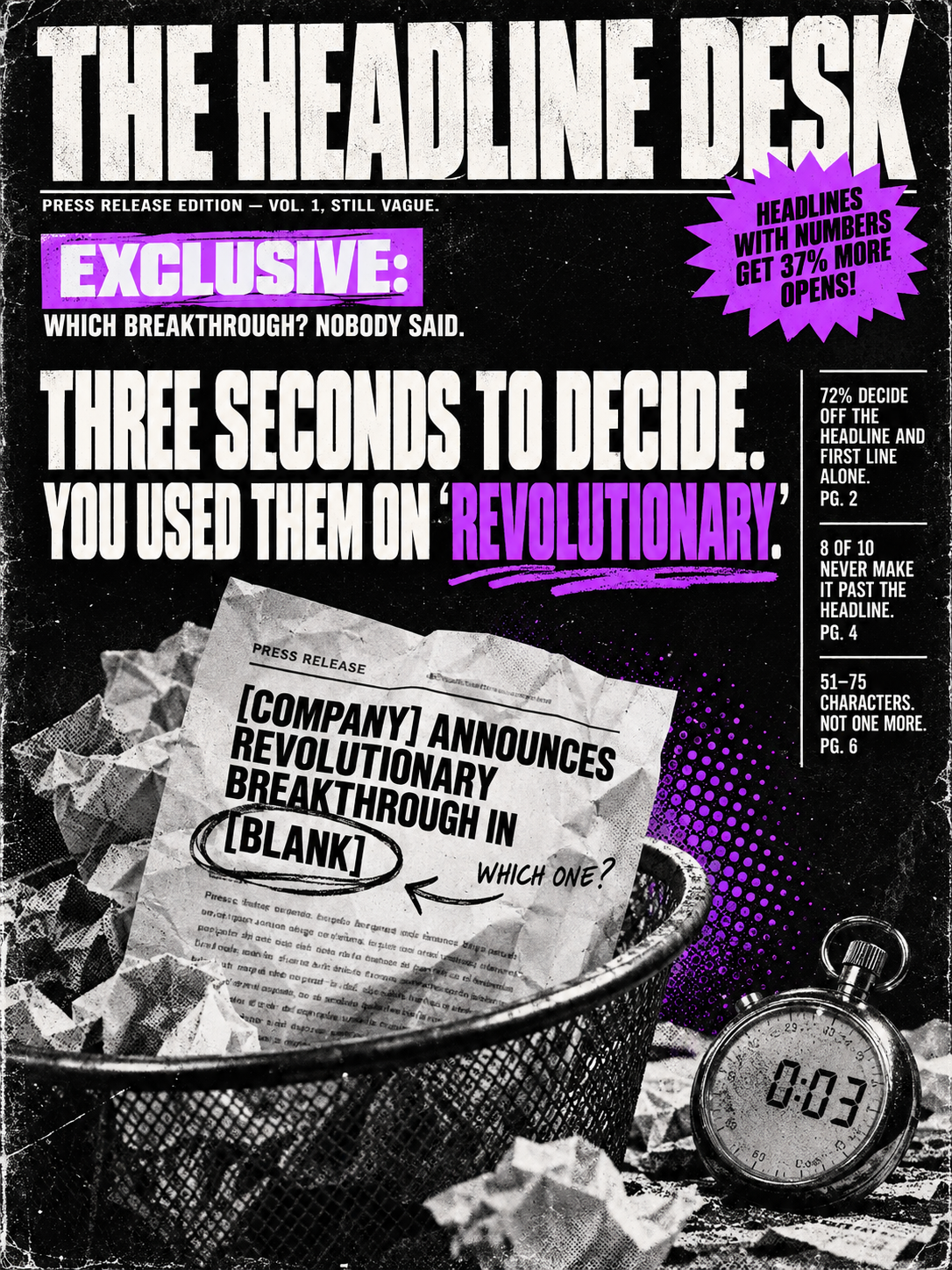
Here's something that should make you uncomfortable. 86% of journalists immediately reject pitches that aren't aligned with their beat or audience. The standard brand announcement, "Company X raises $2M to disrupt Y category," lands in that pile constantly. Every single day. It offers nothing a journalist can build a story around.
What generates media coverage? A person. A specific moment. A decision that went sideways in a publicly interesting way.
Personal brand PR gives journalists the thing they actually need: a human being with a real story and a defensible perspective. Glossier's Emily Weiss shared her journey from beauty blogger to beauty CEO, the actual unglamorous version. Brian Chesky told the story of blowing up air mattresses in a San Francisco apartment because they couldn't afford furniture. These stories were just true. And true beats are polished in the media every single time.
According to Cision's 2025 State of the Media report, 72% of journalists say press releases are still the most useful resource PR teams provide, and 79% rely on them for story ideas. The releases that actually convert are the ones with a real person behind them, a specific moment, a genuine perspective on something happening in their industry right now. Brand announcements give journalists nothing. Founder stories give them everything.
The Corporate PR Strategy That Polishes Away All the Good Parts
I've been in the room where it happens.
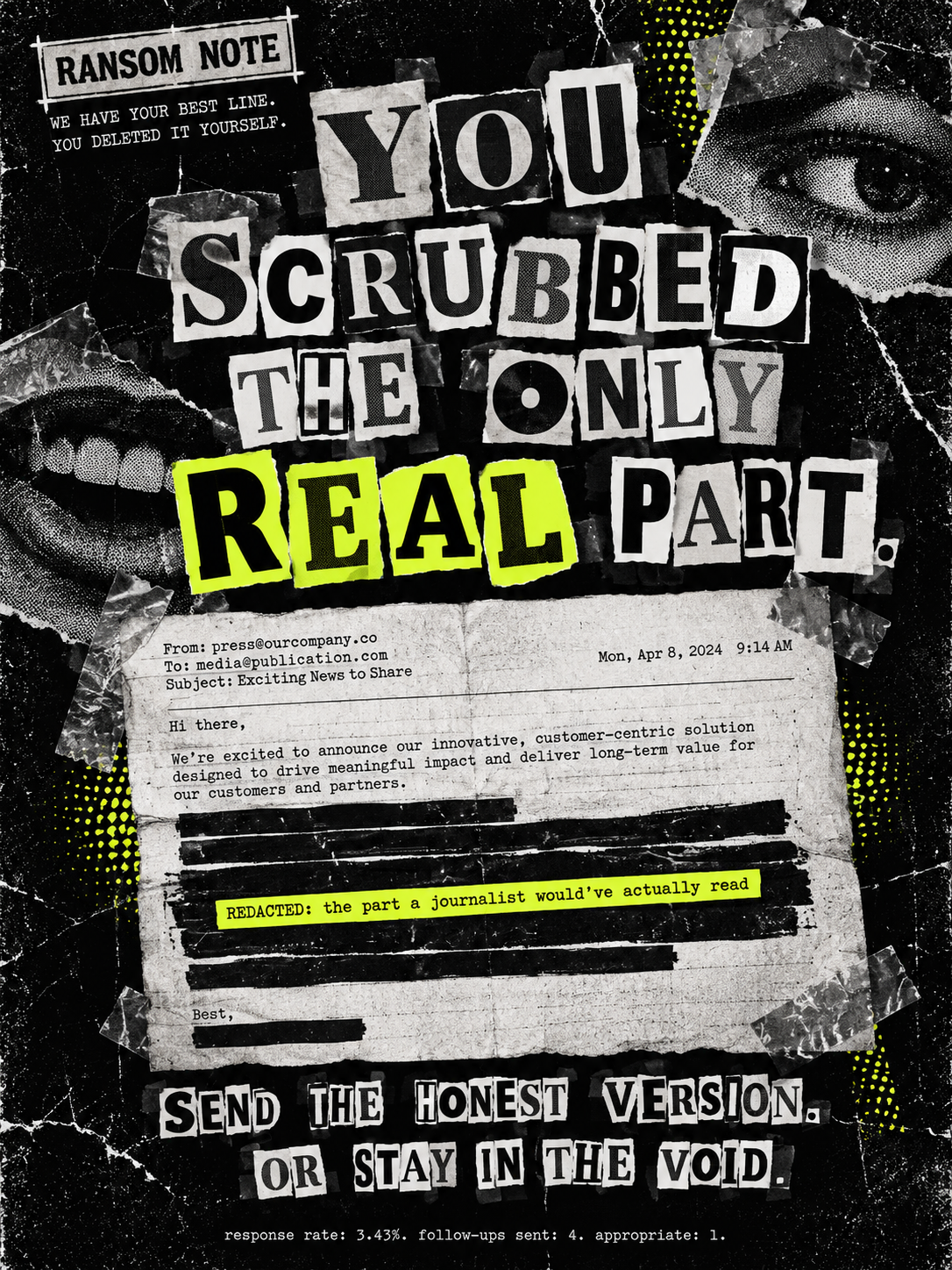
The founder has a genuinely wild story. Real chaos. Real stakes. Real moments of "I can't believe we survived that." And then somewhere between the story and the press release, the legal team and the brand manager and the PR agency all get involved, and every interesting sentence gets removed for being "too personal" or "potentially off-brand."
What's left is a completely sanitized version of a real thing that happened to a real person. We really said this with a straight face every time.
This triggered something in me the first time I watched a founder talk about their actual journey in a meeting, raw and specific and funny, then sit down and approve a press release that sounded like it was generated by a bored algorithm. The gap between the person in the room and the person in the press release was so wide you could park a truck in it.
Earned media responds to specificity. Journalists are drowning in pitches from brands that all sound exactly the same. The pitch that lands is specific, true, and something only this particular founder in this particular company could have said.
The brands earning consistent earned media right now are building their media coverage on founder-specific stories. The messy details. The specific numbers. The moment of genuine crisis that became the thing that defined the company.
What Your Personal Brand Story Actually Contains
Most founders don't know what they're sitting on. Here's the real inventory.
The origin moment: what specific problem frustrated you enough to do something about it? The mission statement version won't cut it here. The actual moment. Where were you? What happened? What did you do that everyone around you thought was a bad idea?
The failure that almost ended it: every company has one. The launch that flopped. The partnership that fell apart. The six weeks where payroll felt uncertain. This is the material journalists build features around, and it's the material most PR agencies specifically tell founders to hide.
The take that 99% of your industry disagrees with: operating in a space long enough generates a genuine contrarian view on something. That view is a media angle. It gives a journalist a reason to call you when they need a quote for a story, and eventually a reason to write the story about you.
The specific result: the actual number, the actual context, the actual thing that happened and can be pointed to. Journalists pitch their editors on specificity, and vague claims about growth don't get past the subject line.
Why Personal Brand PR Scales Faster Than Agency-Driven Media Coverage
Here's something I learned from watching agencies work for a while. The retainer relationship creates a very specific problem.
The agency's incentive is to generate activity. Coverage clips. Pitch sends. Media mentions. The founder's incentive is to build a reputation that compounds over time, one that makes journalists reach out because they already know you're worth quoting.
These incentives produce different outcomes. One produces reports. The other produces momentum.
Personal brand PR builds what Edelman's Trust Barometer consistently identifies as the highest-credibility source for business information: a real person with direct expertise speaking from genuine experience. When a founder shows up consistently with a specific perspective, journalists start filing them as a go-to source for their category. The pitching stops being necessary. The calls start coming in.
That's the flywheel. It's slower to start than buying coverage, and it compounds faster than anything an agency can manufacture. The personal brand grows alongside the company's brand. Investors see it. Potential hires see it. Partners see it. The media coverage stops being a one-off stunt and becomes a distribution channel that runs on authenticity.
What a Strong PR Strategy Looks Like With Both a Founder and an Agency
What a Strong PR Strategy Looks Like With Both a Founder and an Agency
Agencies open doors. They have relationships founders haven't built yet. They know which journalists cover which beats. They can place pitches into inboxes that would otherwise be inaccessible.
The limitation is specific. They can't replicate the energy of a founder who genuinely believes in what they're building. They can't produce the quote that only comes from someone who actually lived through the thing they're describing. They can't manufacture the credibility that builds up over months of a founder showing up consistently, saying something specific, being the person journalists reach for when they need a real source.
A strong PR strategy looks like this: the founder leads with story, perspective, and specific take. The agency amplifies what the founder builds. The story starts with the founder, and the most effective agencies know that and build around it.
If you've been waiting for someone else to tell your founder story, the delay is costing you real opportunities.
Don't Be A Little Pitch works with founders, executives, and personal brands who are ready to build the kind of earned media strategy that earns real media coverage.
FAQ
What is personal brand PR and how does it work?
Personal brand PR is a strategy where the founder's story, perspective, and credibility drive media coverage rather than corporate brand announcements. It works by giving journalists a specific person with a real story and a defensible point of view, which is what they need to build a compelling piece. Founder-specific stories earn coverage far more consistently than corporate announcements do.
Do I need media training to do my own PR as a founder?
Media training can improve performance, but authenticity is the real driver of earned media. Journalists respond to someone who stumbles over a word but says something genuinely interesting over someone who delivers a perfectly polished non-answer. Getting specific about what actually happened produces better results than memorizing talking points.
How do I know which parts of my founder story are worth pitching?
The parts that feel slightly risky to share publicly tend to be the most valuable for media coverage. The specific failure that nearly ended the company. The contrarian view your industry disagrees with. The number or moment you usually leave out because it feels embarrassing. Those are the details journalists build features around.
How do I build media relationships as a founder without an agency?
Follow the journalists who cover your space. Respond thoughtfully to their published pieces. Share their work when it's genuinely good. Be useful before you ask anything. A solid PR strategy built on real relationships produces far more consistent coverage than cold outreach from an unknown founder.
Can a founder-led approach replace a PR agency entirely?
For some founders in early stages, yes. For founders who are scaling, the combination produces stronger results: founder leads with story and perspective, agency amplifies and handles relationships at volume. The story starts with the founder regardless. An agency builds on top of a strong personal brand foundation; it can't substitute for one.

60-Day Performance Guarantee
PR only works if it builds momentum fast. If we do not secure 2 meaningful earned media features and line up 3 additional opportunities within 60 days, you get a full refund.

Free Authority Score Checker
Check your online reputation and authority score for free and see how you stack up and get custom tips to improve instantly.




.png)