Brand Awareness Starts With What You Stand For (Not What You Look Like)

TLDR:
- A beautiful rebrand with unclear brand messaging produces the same result as an ugly brand with unclear messaging. Silence.
- Brand awareness compounds when people can repeat your story without coaching. Aesthetics help. Clarity is the actual driver.
- 86% of journalists reject pitches that don't align with their beat. Vague brand positioning makes alignment impossible before the pitch is even written.
- The PR strategy that earns consistent coverage starts with a positioning decision, not a visual one.
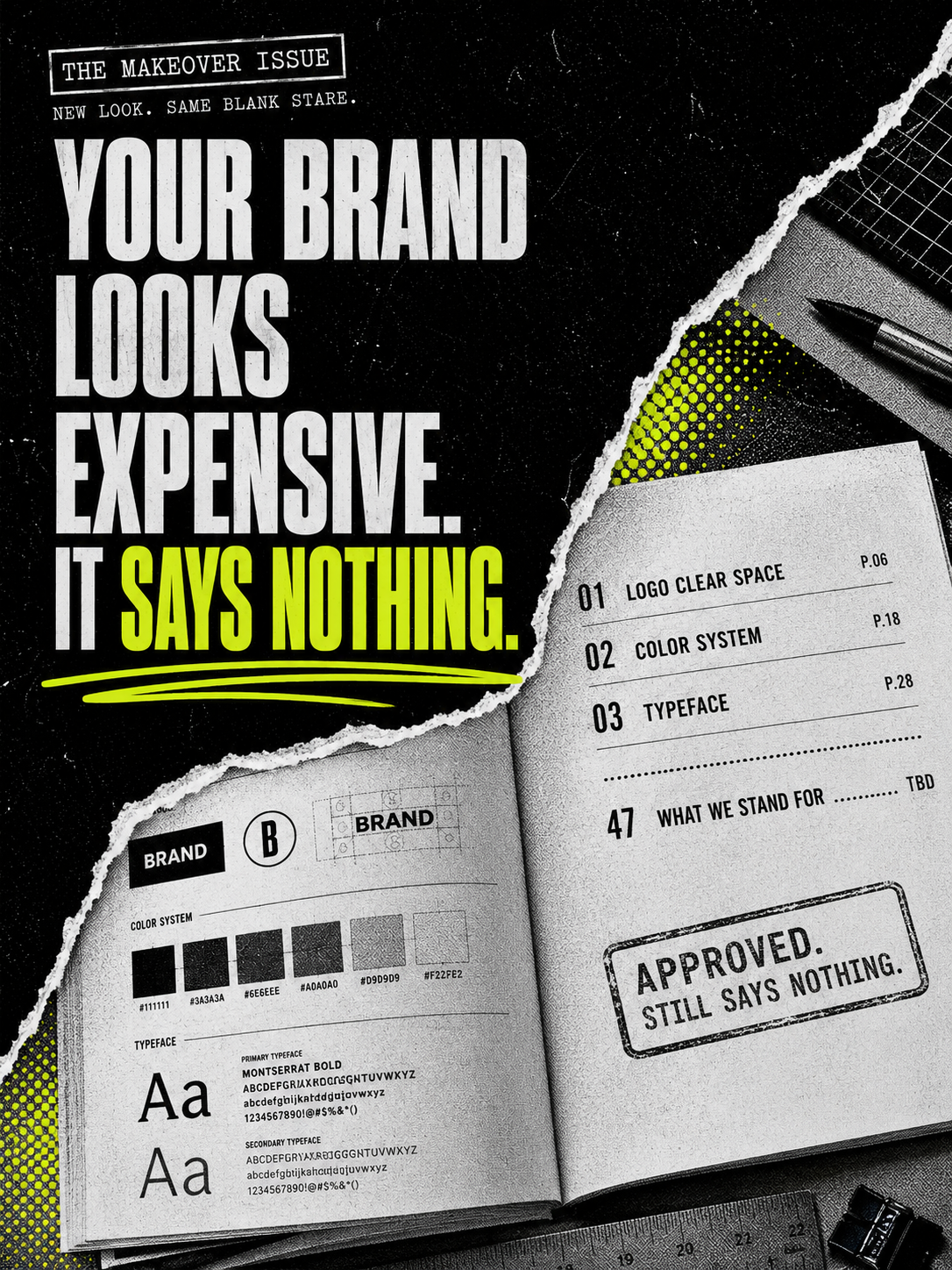
Here's something nobody said in the rebrand kickoff meeting: the new logo will not make a journalist care.
I've sat through enough brand refresh presentations to know exactly how it goes. The agency presents the moodboard. Someone says "premium but approachable." Someone else says "we want to feel like X but for Y audience." The deck is beautiful. The room is exciting. And months later the brand looks great and nobody outside the company can explain what it actually does or why anyone should care.
Let me translate this for you: what most companies call a brand positioning exercise is actually a visual decision wrapped in strategic language. The colors get picked. The typography gets updated. The tagline gets workshopped seventeen times. And the actual question, the one that determines whether a journalist ever files the brand under "worth covering," never gets answered.
The question is this: what does this brand stand for with enough specificity that someone could repeat it in a sentence they didn't memorize?
That question is uncomfortable. So it gets skipped. And the brand looks great and stays invisible.
How Brand Awareness Actually Builds Over Time
Brand awareness at scale grows from repeated exposure to a clear, specific message delivered consistently to the right audience.
The brands that compound over time in media, in word of mouth, in the kind of organic coverage that shows up without a retainer attached, are the ones where the brand positioning is clear enough that it practically pitches itself. A journalist covering the space hears the brand's name and immediately knows what it stands for. A potential customer sees a mention and immediately understands why it's relevant to their situation.
According to Cision's 2025 State of the Media research, 86% of journalists reject pitches immediately when they don't align with their beat or audience. The alignment problem runs deeper than topic matching. A brand with vague positioning produces vague pitches because there's no defensible angle to build from. Specific brand positioning makes every downstream PR activity more effective.
The brands that stay perpetually beige made an aesthetic choice where a strategic one was needed. They look great. They communicate nothing with enough specificity to stick.
Why Brand Messaging Has to Survive a Five-Second Summary
Brand messaging has one test that matters more than any brand guidelines document: can someone who heard the brand described once repeat it accurately to someone else without rehearsing?
That's the test. A journalist talking to an editor. A customer telling a friend. A podcast host doing the intro cold. If the messaging collapses the second it has to travel through someone who didn't prepare, the clarity work hasn't been done.
The Content Marketing Institute's research on B2B brands consistently shows that the brands producing the most consistent coverage maintain fewer core messages delivered repeatedly and specifically, rather than comprehensive frameworks that cover every possible audience scenario. Clarity compounds. Comprehensiveness diffuses.
I've watched brands produce forty-page messaging frameworks that say everything and communicate nothing. (The sales team always ignores them. Always.) The ones that actually land are the ones where someone sat down and wrote two or three sentences specific enough to be argued with. That's the foundation. Everything else builds on top of it.
"Premium but approachable" is not that foundation. It's a design brief pretending to be a strategic position.
The PR Strategy Problem That Starts Before the Pitch Gets Written
Here's the part of the PR strategy conversation that agencies skip because it implicates their previous work.
Media coverage builds on clarity. A journalist covers a story, and the brand is the vehicle for that story. When the brand positioning is vague enough that there's no defensible angle, no specific point of view, no claim that would make someone push back, the PR strategy has nothing to work with.
Muck Rack's State of Journalism data shows journalists receive an average of six or more pitches per workday and reject the majority within the first sentence. The ones that survive are the most specific. The ones where the brand clearly knows what it stands for and why that's relevant to what the journalist covers.
Brand awareness at scale starts with a positioning decision that feels uncomfortably narrow at the beginning. The brand that tries to be for everyone communicates to no one with enough specificity to be memorable. The brand that picks a lane, owns a perspective, and repeats it until it sounds obvious internally, that brand earns the kind of coverage that builds authority over time.
Strong brand positioning creates the kind of PR results that compound because the story becomes easier to tell with every placement. Each piece of coverage reinforces the position. The position makes the next pitch easier. The pitch earns the next placement.
What Positioning Decisions Actually Change
The brand messaging decisions that drive real brand awareness share a few qualities worth naming.
Specificity that excludes someone. Real clarity means making a claim another brand in the category couldn't make because it belongs to how this brand specifically sees the problem. Generic positioning works for every brand in the category, which means it works for none of them.
Repeatability without coaching. The founder can say it. The sales rep can say it. The journalist who covered the brand once can describe it to an editor. Anything that requires a training document to remember has been complicated rather than positioned.
Connection to editorial conversations that already exist. PR strategy that earns real placements starts with knowing which conversations in the media landscape the brand genuinely belongs in. The positioning creates a real entry point to those conversations, built from a specific perspective, not proximity to a trending topic.
The visual refresh might be overdue and the rebrand might be warranted. The positioning question that determines whether any of it produces coverage lives in the words. The words have to be decided before the colors, and they have to be specific enough that clarity does the work the logo never could.
Great aesthetics and unclear brand positioning produce the same result: a brand people notice and forget immediately.
Don't Be A Little Pitch helps brands figure out what they actually stand for and builds the PR strategy that earns coverage because the story is worth telling.
FAQ
What is brand awareness and how does PR help build it?
Brand awareness is the degree to which your target audience recognizes and understands your brand's specific value. PR builds it by earning media coverage that puts your positioning in front of the right audiences repeatedly. Coverage compounds because each placement reinforces the position and makes the next pitch more credible.
Why does brand positioning matter more than visual branding?
Brand positioning determines what your brand communicates, who it resonates with, and what journalists have to work with when they consider covering you. Visual branding affects recognition. Positioning affects comprehension. Recognition gets attention. Comprehension earns trust and coverage.
What makes brand messaging actually stick with an audience?
Brand messaging sticks when it's specific enough to be memorable and simple enough to travel without rehearsal. The five-second summary test reveals whether messaging is working: if someone who heard the brand described once can repeat it accurately to someone else, the clarity is there. Generic descriptions signal that the clarity work remains.
How do I build a PR strategy when brand positioning is still unclear?
Start with the positioning. A PR strategy built on unclear positioning produces pitches with no defensible angle, and pitches with no defensible angle produce silence. The specific problem being solved, for whom, and what the brand believes about that problem that others in the category would argue with, that's the foundation the pitching strategy builds on.
How long does stronger brand positioning take to show up in media coverage?
Improved brand positioning produces better pitches immediately, and better pitches produce better response rates within the first weeks of consistent outreach. The compounding effect, where journalists begin reaching out rather than needing to be pitched, builds over months. Clarity compounds with each placement because the story becomes easier to tell and easier for journalists to file under "worth covering again."


60-Day Performance Guarantee
PR only works if it builds momentum fast. If we do not secure 2 meaningful earned media features and line up 3 additional opportunities within 60 days, you get a full refund.

Free Authority Score Checker
Check your online reputation and authority score for free and see how you stack up and get custom tips to improve instantly.




.png)