The PR Glow-Up: Your Brand Positioning Is Painfully Boring and the Journalists Know It

TLDR
- Your pitch isn't the problem. Your brand positioning is. Stop polishing the symptom.
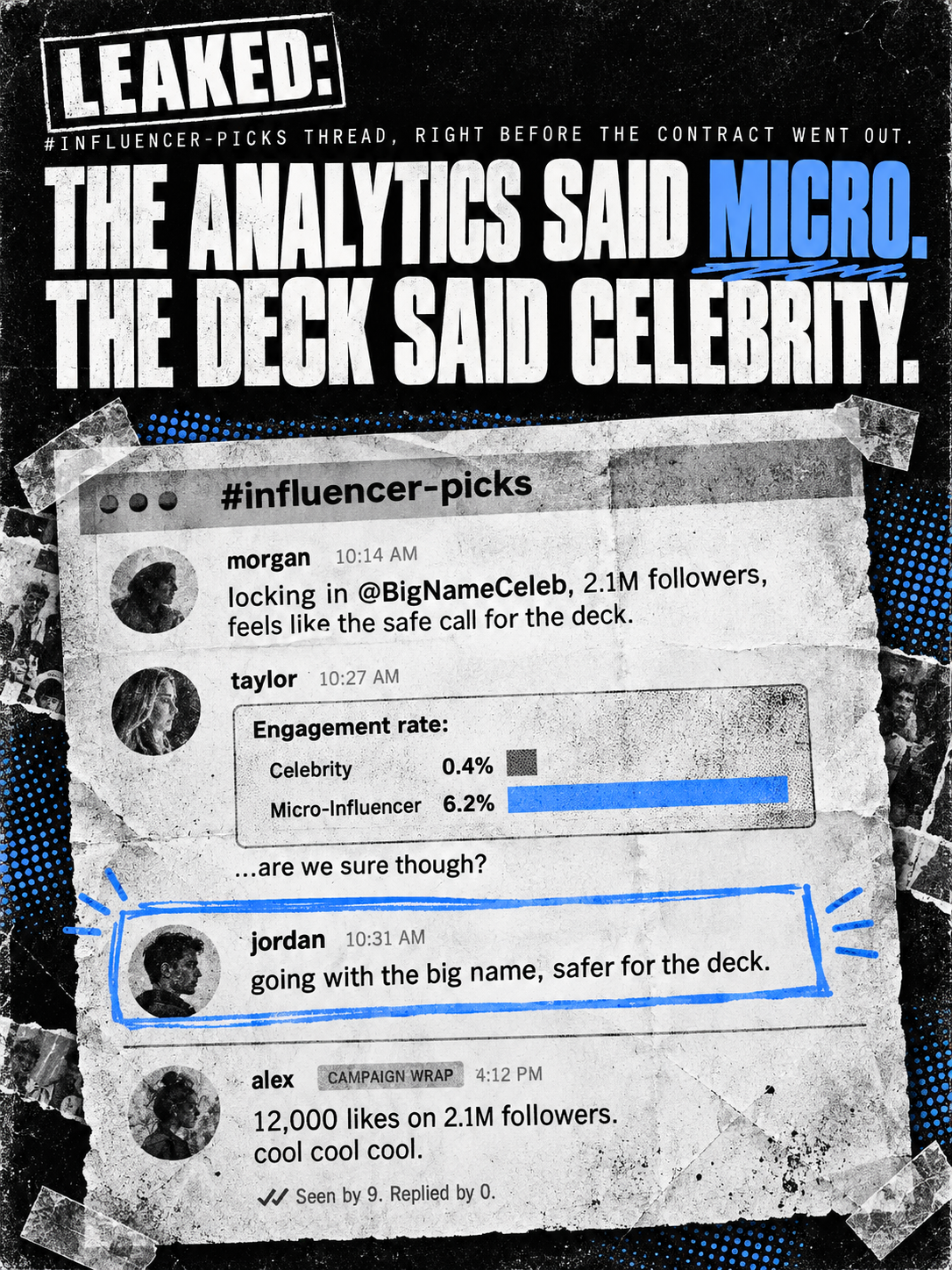
- 79% of journalists reject pitches for irrelevance. They're not the problem either. You are.
- You cannot pitch your way into authority. Build thought leadership first, then show up in their inbox.
- Earned media takes quarters, not weeks. Anyone telling you otherwise is selling something.
- Studied neutrality is not a safe brand position. It's a fast track to being forgettable.
- The brands getting covered consistently are the ones that showed up when there was nothing to promote. That's the whole secret.
Let's talk about your .03% response rate. No, actually, let's sit with it.
You spent real time on that pitch. You workshopped the subject line. You used the journalist's first name like you're old friends. You hit send on 200 emails and the universe responded with the kind of silence that makes you question your entire career. And what did the industry collectively decide to do about it? Send more pitches.
Stunning. Revolutionary. 𝘊𝘰𝘮𝘱𝘭𝘦𝘵𝘦𝘭𝘺 𝘸𝘳𝘰𝘯𝘨.

Nobody wants to say it so I will: the pitch is not the problem. The pitch is just where your deeper, older, more foundational brand positioning failures finally become someone else's inconvenience.
You don't have a pitch problem. You have a "your brand has nothing interesting to say and no one knows who you are" problem, and fixing your subject line is not going to touch that.
The term bouncing around communications circles for the fix is a PR glow-up: strategic repositioning of a brand so it becomes genuinely compelling to journalists, without dismantling everything that already exists.
It's not reinvention. It's alignment. Most brands are nodding along to this distinction while absolutely not executing it. We see you.
Why Journalists Reject Brand Pitches
Muck Rack's State of Journalism 2024 has some numbers that should make you set down your coffee. 79% of journalists reject pitches for lack of relevance to their beat. Nearly half report they seldom or never respond to pitches at all. Half of these people have constructed an ignore reflex so sophisticated it deserves its own LinkedIn certification.
Understanding why journalists reject brand pitches is step one of any honest PR strategy for brand visibility. And the answer is almost never the pitch itself. The answer is everything that came before it.
A pitch from a brand with zero presence on a journalist's beat, about a story with no reason to exist right now, framed entirely around what the brand wants people to know about itself rather than what any actual human being would want to read, is not a pitch problem.
It is a brand positioning problem wearing a pitch costume and wondering why it keeps getting turned away at the door. The costume is not fooling anyone. It never was.
When a brand actually tries to articulate why its story matters today, specifically today and not six months ago or six months from now, one of two things happens. Either they find a genuinely compelling answer, which is great. Or they discover they've been describing their own features to journalists as if features are stories.
They are not stories. They are a product page. The journalists can smell the difference from a mile away and they have already moved on.
Brand Storytelling for Press Coverage
Here is the brutal truth about brand storytelling for press coverage: most brands don't have a story. They have a list of things they're proud of, assembled in paragraph format, sent to someone who covers a completely different beat, and called a pitch.
A real brand narrative answers one question that most brands cannot answer cleanly: why does this matter right now? Not why it matters to the brand. Not why it matters to the investors. Why it matters to a reader who has never heard of you and has seventeen other tabs open.
Developing that narrative requires knowing what journalists in your space are actively covering, where genuine knowledge gaps exist in the current conversation, and where your brand's perspective has a legitimate stake in those questions. That is considerably more foundational work than "we should probably tighten up our messaging," which is how most brands describe this exercise when they don't want to reckon with how much work it actually is.
Brand storytelling for press coverage is not clever wordsmithing. It is building a point of view that is specific enough to be useful, consistent enough to be credible, and timely enough that a journalist can actually do something with it. Everything else is decoration on a pitch that's going straight to the archive folder.
How to Position Your Brand for Earned Media
Here is the order that actually produces results: build authority first, then pitch. Do not pitch your way into authority. If you want to understand how to position your brand for earned media, start by accepting that the cause and effect do not run in the direction most brands assume.
The 2024 Edelman-LinkedIn B2B Thought Leadership Impact Report found that 73 percent of B2B buyers trust thought leadership content more than traditional marketing materials. 54% had specifically gone and researched a company because of consistent thought leadership exposure.
The study is technically about buyers, but journalists operate on the exact same mechanism: if you have been consistently showing up in the conversations they monitor, with a point of view that doesn't evaporate the second your campaign cycle ends, you are evaluated differently before you've sent a single word of outreach.
If you have not been doing that, you are evaluated as another stranger in their inbox and acted upon accordingly.
Thought leadership built for earned media is not a LinkedIn carousel about your company values. It is not a press release dressed up in casual language. It is a sustained, coherent presence in the conversations that journalists are already having, with a perspective that holds over time instead of pivoting every time someone in leadership reads a different book.
Whether you're B2B or B2C shapes which channels actually build that credibility, because the two markets are not the same and treating them like they are is how you end up irrelevant in both directions simultaneously.
How to Get Press Coverage Without Paid Media
Optimizing for earned media is where the whole operation gets demanding and where, it should be stated directly, the majority of brands quietly give up and go back to sending more pitches.
How to get press coverage without paid media is not a hack. It is not a growth tactic. It is the slow, unsexy answer that nobody wants to put in a deck but everybody eventually has to reckon with: 92% of consumers trust earned media over paid advertising. That gap is why earned media is worth having and also exactly why you cannot conjure it on demand, no matter how urgent your quarter is feeling.
Brands that consistently attract media attention are, without exception, the ones that have held a coherent brand positioning on something, said it in places journalists actually read, and kept doing that through the long boring stretches when they had nothing to promote and no campaign justification and absolutely no guarantee that any of it was working.
That is the PR glow-up. It is not glamorous. It does not fit on a timeline that makes anyone's Q3 goals feel achievable. It looks like showing up consistently without immediate reward, and maintaining an actual point of view rather than the studied, say-nothing neutrality that most brands adopt because taking a position feels risky.
The irony is that neutrality is the riskiest position of all. It is perfectly designed to make you forgettable, and for most brands, it is working beautifully.
What a Real PR Strategy for Brand Visibility Actually Requires
A serious PR strategy for brand visibility is not a press kit refresh. It is not a tighter media list, a snappier one-liner, or a more aesthetically pleasing pitch template, though all of those things may eventually follow from doing the actual work.
It is the slow, unsexy, aggressively non-viral process of building a brand that journalists can genuinely use. A coherent brand narrative. Consistent thought leadership. A brand positioning that exists before the pitch arrives instead of depending entirely on the pitch to create it. And an earned media foundation solid enough that coverage is a predictable outcome rather than a quarterly surprise.
The brands that do this consistently get covered consistently. The brands that skip straight to pitching get a .03% response rate, optimize the subject line, and try again. The math on which approach works better has been available for some time. The question was never whether the math was right. It was whether anyone was willing to do the work, or just describe their intention to.
𝘋𝘰𝘯'𝘵 𝘉𝘦 𝘈 𝘓𝘪𝘵𝘵𝘭𝘦 𝘗𝘪𝘵𝘤𝘩 𝘸𝘰𝘳𝘬𝘴 𝘸𝘪𝘵𝘩 𝘣𝘳𝘢𝘯𝘥𝘴 𝘵𝘰 𝘣𝘶𝘪𝘭𝘥 𝘵𝘩𝘦 𝘬𝘪𝘯𝘥 𝘰𝘧 𝘱𝘰𝘱 𝘤𝘶𝘭𝘵𝘶𝘳𝘦 𝘗𝘙 𝘢𝘱𝘱𝘳𝘰𝘢𝘤𝘩 𝘵𝘩𝘢𝘵 𝘪𝘴 𝘢𝘤𝘵𝘶𝘢𝘭𝘭𝘺 𝘸𝘰𝘳𝘵𝘩 𝘳𝘶𝘯𝘯𝘪𝘯𝘨. 𝘚𝘵𝘢𝘳𝘵 𝘸𝘪𝘵𝘩 𝘵𝘶𝘳𝘯𝘪𝘯𝘨 𝘺𝘰𝘶𝘳 𝘣𝘳𝘢𝘯𝘥 𝘪𝘯𝘵𝘰 𝘮𝘦𝘥𝘪𝘢 𝘤𝘢𝘵𝘯𝘪𝘱 𝘢𝘯𝘥 𝘣𝘶𝘪𝘭𝘥 𝘧𝘳𝘰𝘮 𝘵𝘩𝘦𝘳𝘦.
FAQ: For the People Still Sending 200 Cold Pitches a Week
What is a PR glow-up and is it actually different from rebranding?
Yes, meaningfully different. A PR glow-up is the strategic repositioning of your brand positioning so journalists actually want to deal with you, without scrapping everything and starting over. Three steps: get your brand narrative sharp enough that it survives contact with someone who doesn't care about your company even a little bit, build real thought leadership authority before you pitch instead of hoping pitching creates authority by accident, and sustain that earned media strategy over time instead of going dark between launches. The name implies this is quicker and more fun than it is. It is neither.
Why do journalists reject brand pitches at such high rates?
79 percent of journalists reject pitches for irrelevance, and the industry average response rate is 3.43 percent. The causes behind why journalists reject brand pitches are not mysterious: no brand presence on the journalist's beat, no compelling "why now" in the brand narrative, and an angle built around what the brand wants to say rather than what any human being wants to read. More pitches do not fix this. They produce more non-responses at higher volume.
What's actually the difference between earned and paid media?
Earned media is coverage you receive because an editor made an independent decision that you're worth their readers' time. Paid is coverage you purchased. 92 percent of consumers trust earned media over paid. A proper earned media approach builds the conditions under which coverage keeps happening, rather than being a thing that occasionally occurs during launch windows and then vanishes.
How long does brand positioning for earned media realistically take?
Longer than your timeline, probably. A brand with some existing content foundation might see real movement within a few months of sustained repositioning. A brand starting from minimal visibility is looking at a longer runway before the compounding effects of thought leadership become measurable. The field talks about this in quarters. Anyone promising faster results is either selling you something or has a very creative definition of results.


60-Day Performance Guarantee
PR only works if it builds momentum fast. If we do not secure 2 meaningful earned media features and line up 3 additional opportunities within 60 days, you get a full refund.

Free Authority Score Checker
Check your online reputation and authority score for free and see how you stack up and get custom tips to improve instantly.




.png)