Earned Media Strategy: What the Playbook Promises and What Actually Happens

TLDR
- Every brand calls their next campaign the one that is going to change everything. Half of them start without a finished media list.
- A six-step playbook circulates constantly in PR circles. It has steps. Steps are good. What lives between the steps is less documented.
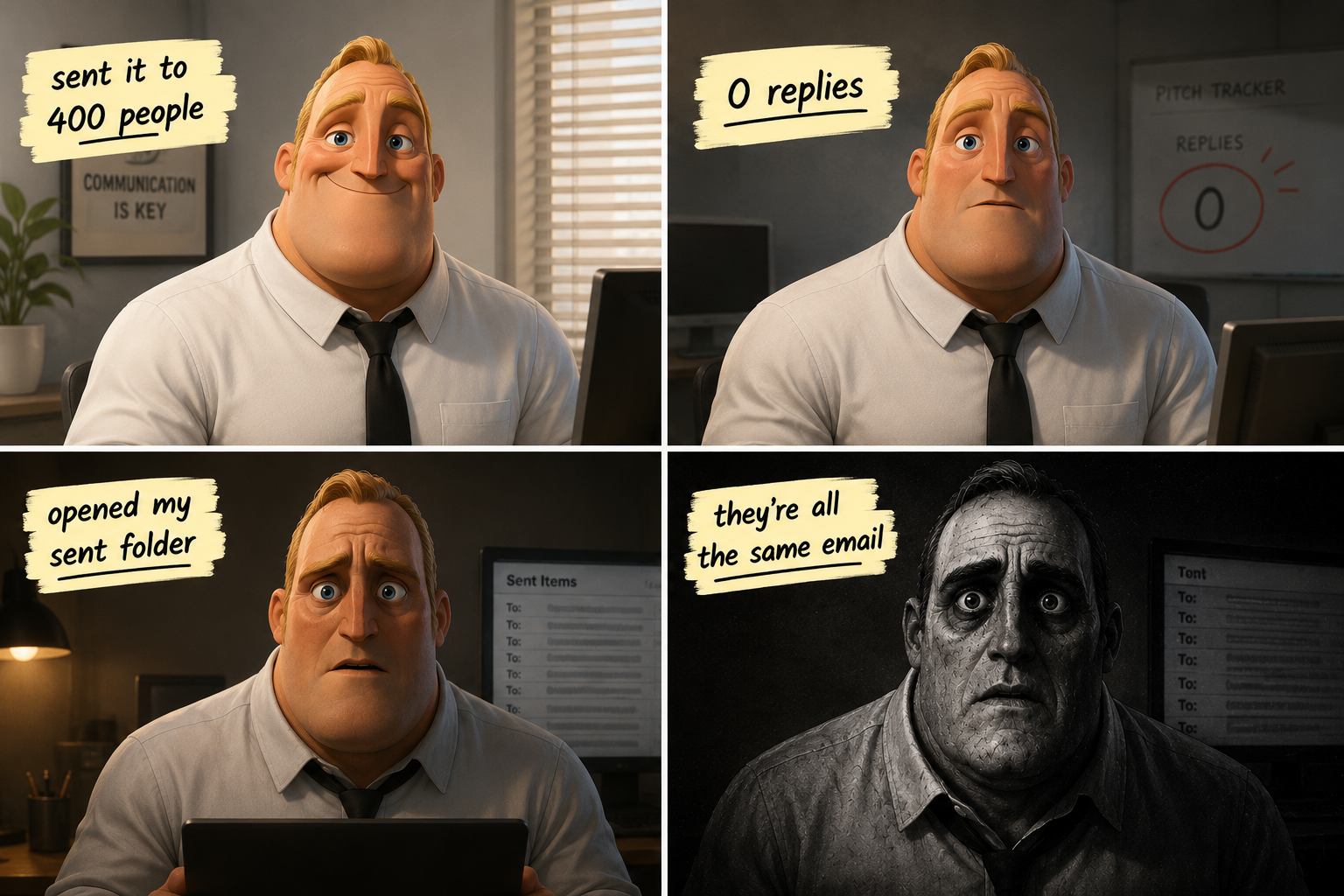
- Reporters receive upward of 500 pitches a week. The standing advice is still to "pitch urgency." Interestingly, everyone is pitching urgency.
- The case study proving the framework works was written by the firm selling the strategy call at the bottom of the same page.
- Below is what the playbook says, what it doesn't, and the part everyone quietly skips.
Brands that treat earned media as a box to check tend to find out at the end of a campaign why that was a mistake. PR agencies publish strategy playbooks regularly. They circulate through startup Slack channels and LinkedIn reposts, landing in the inboxes of brand marketers who are, at that moment, probably already behind on their planning.
The standard playbook covers six areas: team alignment, media pitching, social content, experiential events, brand partnership marketing, and campaign measurement. The framework is not new. Several of the recommendations are genuinely useful. The formatting is clean.
What the document describes less clearly is the space between each step. That space is typically where earned media campaigns are won or lost. The playbook does not linger there.
Earned Media Starts Before the Pitch: What PR Strategy Gets Wrong About Alignment
The playbook opens with a call to convene a "war room" so that PR, social, and partnerships all run off the same campaign message. Cohesion, the document notes, is non-negotiable.
This is accurate. Most communications managers reading this have also sat in a post-mortem where misaligned internal teams were identified as the primary cause of underperformance. The familiarity of that meeting is worth noting.
The recommendation positions alignment as a starting move. In practice, it is the thing most campaigns spend their first stretch chasing across three different calendars and two competing approval chains. The PR strategy document does not address this. It moves on to media pitching.
It remains unclear whether the war room metaphor is meant to describe what happens or what everyone agrees should happen in theory.
How to Pitch Journalists When Your Pitch Looks Like Everyone Else's
The next section advises brands to lead with urgency rather than "thought leadership jargon" when media pitching. Tie campaigns to cultural moments, current narratives, or bold predictions. The framing is straightforward: make the reporter's job easier and their piece more interesting.
This is where the advice ages fastest under scrutiny.
Reporters receive upward of 500 pitches per week, according to PRLab's media pitching data. Cision reports that journalists are measurably less responsive during high-volume news periods, precisely because every brand with a campaign plan has concluded that urgency is the correct angle. The playbook does not acknowledge this dynamic. It describes the pitch strategy that works when volume is manageable, without mentioning the conditions under which volume is anything but.
Sources might interpret this as confidence. It may also be timing.
The brands that consistently land earned media placements are not the ones pitching harder. They are the ones pitching earlier, more specifically, and to journalists who actually cover their category. Before locking in any media angle, it helps to understand what actually makes a story land. How to newsjack without being cringe covers the difference between a timely hook and a desperate one.
Brand Partnership Marketing: When the Strategy Looks Better Than the Execution
The social media section instructs brands to produce raw, behind-the-scenes content that feels alive. It specifically warns against anything that has gone through too many approval rounds, noting that over-processed output reads as stiff to audiences.
Interestingly, the content most frequently cited as raw and spontaneous is also typically the output of a multi-stakeholder brief, a content calendar, and at least one round of brand-safety review. The playbook does not note this.
The events recommendation lands in similar territory. The document correctly observes that most brand events are forgettable: networking mixers, product launches, gatherings that blur together by the following week. As alternatives, it recommends interactive installations, collab pop-ups, and virtual events designed not to feel like standard panels. The examples share several characteristics with the category it just called forgettable. The differentiating variable, the playbook suggests, is intention.
The brand partnership section follows with advice to pursue unexpected but aligned collaborations and co-create rather than co-brand. The instinct is sound. A meta-analysis published in the International Journal of Consumer Studies found that brand image fit between partners predicts co-branding success more reliably than category novelty or strategic surprise. The playbook leads with surprise. The research leads with fit.
These are not the same recommendation.
Brands that get picked up in earned media are rarely the loudest ones in the room. They are the most distinct. The PR Glow-Up covers what actually makes a brand more coverable to journalists before any collab brief gets written.
Measuring Earned Media Beyond Vanity Metrics Requires Defining the Metrics First
The sixth step urges brands to track what the playbook calls "the splash, not the droplets" meaning earned headlines, lead conversions, and real audience engagement rather than likes. This is positioned as the corrective to vanity metrics.
The Content Marketing Institute has documented that most earned media value formulas, including those offered as replacements for vanity metrics, still lean heavily on impressions and reach as primary inputs. The playbook does not engage with this. It moves directly into the case study.
The case study features a fintech platform the same agency was retained to support. The campaign is presented as evidence the framework works. The page then closes with an invitation to book a strategy call.
Reported as fact: the case study and the playbook were produced by the same firm. The conflict of interest is not mentioned. This appears to be an oversight.
PR Strategy: What the Playbook Gets Right and What It Stops Short of Saying
The six recommendations are familiar, defensible, and mostly correct. Internal alignment matters. Timely pitches outperform generic ones. Social content that feels alive outperforms content that feels committee-approved. Experiences worth sharing outperform events worth attending. Brand partnerships built on genuine fit outperform ones built on novelty. Campaigns measured on real outcomes outperform campaigns measured on reach.
What the document leaves out are the conditions under which each of these is harder than it sounds. Cohesion is harder than a war room metaphor suggests. Media pitching has measurable response rates that move in the wrong direction during high-volume periods. Spontaneity is less spontaneous than it photographs. And the metrics meant to replace vanity metrics tend to look very similar to vanity metrics once you examine the formula.
The most useful thing a brand can do before any major earned media campaign is read the playbook twice. Once for the advice. Once to notice what it stops just short of saying.
Don't Be A Little Pitch builds earned media strategies that work past the planning document.
FAQ
What is earned media and why does it matter for brands?
Earned media is coverage your brand receives from journalists, publications, and third-party sources without paying for placement. It matters because editorial coverage carries a level of trust that paid placements do not. A single well-placed feature in the right outlet can do more for brand credibility than multiple paid spots in the same publication, because it signals that an independent party found the story worth covering.
What makes a media pitch actually get a response?
Relevance to the journalist's specific beat is the most consistent predictor of a response. According to current industry data, most pitches are deleted on relevance grounds within seconds of opening. The brands getting earned media coverage are typically the ones who pitched a more specific angle to a better-matched journalist, not the ones who sent the same pitch to a larger list.
What makes a brand partnership marketing campaign actually work?
Brand image fit between partners is the most consistent predictor of co-branding success, more reliable than the element of surprise or category novelty. An unexpected brand partnership that lacks genuine alignment tends to perform exactly as expected. The research on this is consistent. The playbook advice on this topic leads with surprise. The academic literature leads with fit.
How do I measure earned media without just counting impressions?
Define what success looks like before the campaign launches. Lead attribution, direct traffic from specific placements, and share of voice within target outlets are more meaningful than reach alone. Most earned media value formulas still weight impressions heavily, which means naming the metric you actually care about before pitching is the step most PR strategy plans skip entirely.
Why does internal alignment keep being identified as the reason campaigns underperform?
Because it is genuinely difficult and the playbook version of alignment convening a meeting and declaring cohesion non-negotiable does not address the approval chains, competing calendars, and stakeholder priorities that pull campaigns in different directions after the war room disperses. The recommendation is correct. The execution gap is real and consistently underdocumented.


60-Day Performance Guarantee
PR only works if it builds momentum fast. If we do not secure 2 meaningful earned media features and line up 3 additional opportunities within 60 days, you get a full refund.

Free Authority Score Checker
Check your online reputation and authority score for free and see how you stack up and get custom tips to improve instantly.




.png)