Brand Story: Why Vulnerability Builds More Trust Than Any PR Campaign

TLDR:
- Nobody trusts a founder who's never failed. They trust the one who lost everything and built anyway.
- Your brand story is the highest-leverage PR asset you own. Most founders are actively hiding it.
- Brand trust isn't manufactured through polish. It's earned through honesty that costs something to share.
- A strong founder brand starts with the uncomfortable version of the story, not the highlight reel.
- Authentic PR means leading with the mess. That's what gets you covered.
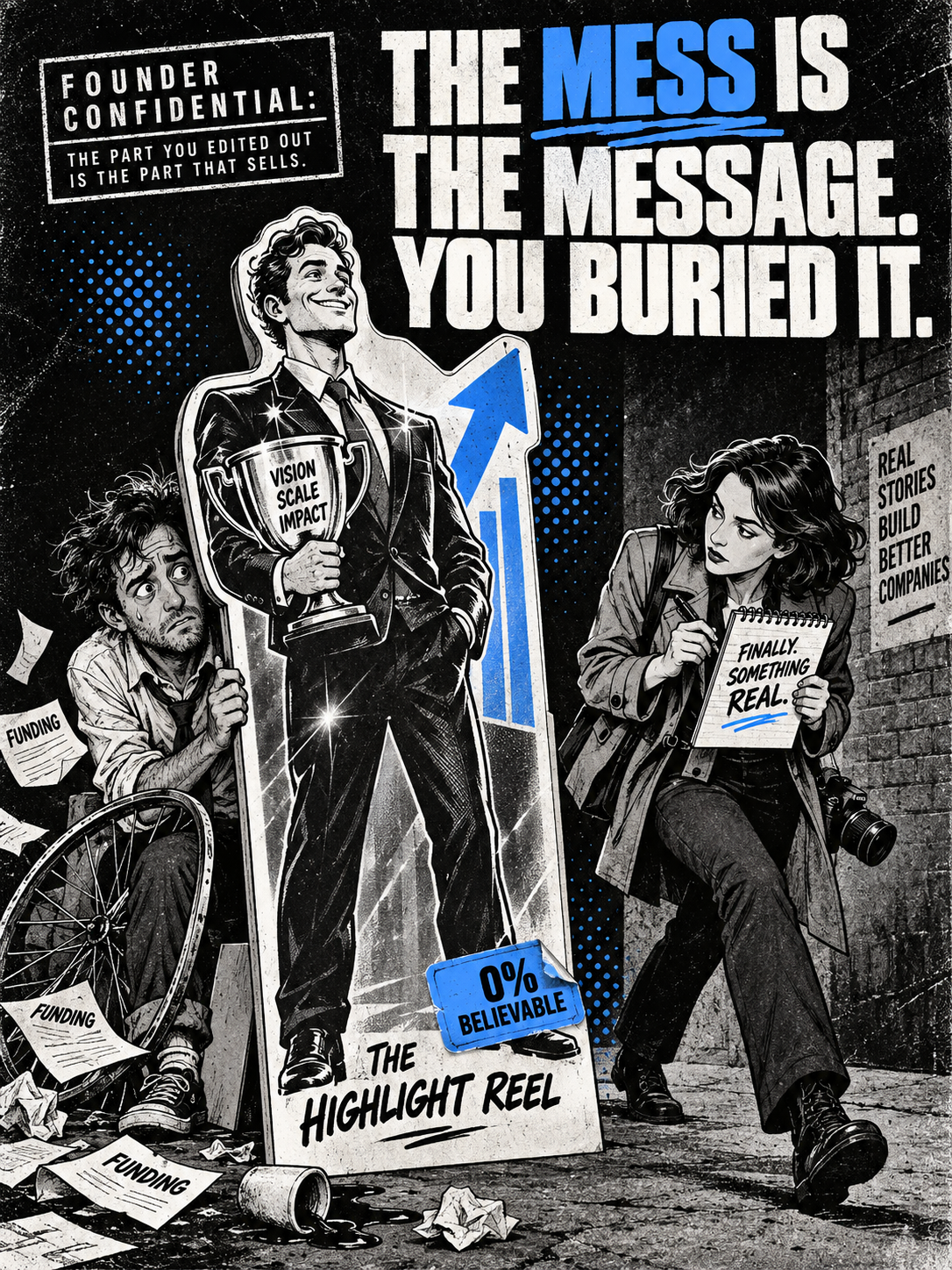
There's a story Bryce North tells about the worst day of his professional life. Not in a "lessons learned" listicle kind of way. In a it all collapsed at once and I still had to figure out what came next kind of way.
In the span of a few hours, a funding opportunity fell through, his team walked, his relationship ended, and someone stole his bike. All of it. One day.
Most founders would bury that brand story. Bryce put it on stage, talked about it openly, and watched something unexpected happen: people didn't pity him. They trusted him. Business opportunities followed. Media doors opened. The story that felt like a liability became the foundation of brand trust he couldn't have manufactured with a PR budget.
That's the thing about authentic PR that nobody in the polished-deck world wants to admit: the mess is the message.
Why Your Brand Story Builds Trust That Hype Never Can
Audiences have always been good at detecting performance. They're even sharper at it now.
According to the 2026 Edelman Trust Barometer, 76% of consumers actively demand authenticity from the brands they engage with. Polished messaging that glosses over the difficult parts doesn't read as professional. It reads as evasive. And evasive brands don't build brand trust, they just delay the moment someone looks closer and finds nothing real underneath.
Bryce describes it simply: "People are attracted to other people's rough edges."
That's not a personality type. That's a pattern in how brand trust actually forms. People don't connect with the version of you that has it all figured out. They connect with the version that figured it out after getting it badly wrong first. That brand story is the one that earns them. Everything else is just content.
How a Strong Brand Story Turns a Founder Brand Into a Media Magnet
One of the sharpest things Bryce says about why most brand messaging fails: "People buy better versions of themselves."
Your offer isn't a product. It's a transformation. The audience isn't trying to understand your features list. They're trying to see themselves in your brand story, to find the before-and-after they're hoping is possible for them. A strong founder brand speaks directly to that future version of the reader. It makes them feel the outcome before they've made a decision.
This is exactly where hype-based PR collapses. Hype says "we're the best." Brand trust says "here's what it actually looked like when we got it wrong, and here's what we learned." One creates a transaction. The other creates a relationship.
The data backs this up hard: people remember 5-10% of pure facts, but when those facts are delivered inside a story, retention jumps to 67%. Story-driven marketing also reduces customer acquisition costs by 30-40% and generates five times more organic shares than promotional content. A strong brand story isn't a soft strategy. It's a conversion strategy with real numbers behind it.
Authentic PR vs. Hype: The Reframe That Changes Everything
Most brands are playing the wrong game entirely. They're chasing visibility when what they actually need is credibility.
Bryce's framework flips the whole question. He calls it trust generation instead of lead generation. The goal isn't clicks or impressions. The goal is building the kind of authority that makes journalists want to cover your brand story, makes audiences want to share it, and makes potential clients feel like working with you is the obvious next move.
"We're in the game of trust generation, not lead generation."
The difference matters because visibility without credibility is noise. A media hit that doesn't reinforce your brand trust doesn't compound. It just sits there. But authentic PR built around a real, specific, human brand story creates momentum that doesn't need constant maintenance. It starts coming to you.
The Founder PR Playbook is built on exactly this principle: ditch the fluff, own the mic, and trust that the honest version of your brand story is the one that earns coverage.
Why Most PR Fails Founder Brands (And What Actually Works)
Traditional PR chases features and headlines. It treats media coverage as the goal rather than the outcome of having a brand story worth telling. Bryce is direct about why those campaigns usually flop: they lack story, soul, and strategy.
Authentic PR works differently. It starts with the founder brand voice, builds authority through consistent and relevant narrative, and lets the media coverage follow from the credibility. This approach requires one thing most PR advice doesn't ask for: honesty about what actually happened.
One good brand story placed where your audience actually pays attention will do more for your brand trust than a dozen forgettable features in publications nobody reads. The bottleneck isn't access. It's authenticity.
Bryce makes this observation that should be taped to every founder's monitor: "We're not bad storytellers; we're bad story collectors." The content is already there. The experiences that built your founder brand, the moments that nearly broke you, the lessons that changed how you operate. Most founders just haven't learned yet how to shape those into something worth sharing.
Spin is dead. Authentic PR has taken its place as the strategy that actually builds brand trust over time. The founders who figure this out stop competing on polish and start competing on truth. That's not a crowded market.
What It Actually Means to Show Up Real
The clients who want to work with you, the journalists who want to cover you, the audiences who want to share your brand story: they're all looking for the same thing. Evidence that you give a damn about something beyond your own metrics.
Bryce puts it plainly: "Clients just want you to care as much about their business as they do." That simple shift, leading with genuine investment over manufactured credibility, turns brand trust into traction that compounds. It turns followers into believers. It turns coverage into momentum.
The question worth asking before you send the next pitch, write the next post, or build the next campaign: are you telling the polished version, or the true one?
Most founder brands need a better storytelling strategy more than they need better distribution.
Don't Be A Little Pitch helps founders find the brand story that's already there, shape it into something worth telling, and put it in front of the audiences that matter.
FAQ
What makes a brand story actually earn media coverage?
A brand story earns coverage when it has a specific, human angle a journalist can build a piece around. Vague success narratives don't land. Stories with real stakes, genuine setbacks, and earned outcomes do. Journalists are looking for something their readers will feel, not just absorb. Give them that and the coverage follows.
How does vulnerability actually build brand trust?
Vulnerability builds brand trust because it signals honesty, and honesty reduces perceived risk. When a founder shares a genuine failure, a hard pivot, or a lesson that cost something to learn, audiences see real experience instead of crafted messaging. That shift from performance to reality is what makes people believe the rest of what you say.
What is authentic PR and why does it outperform traditional PR?
Authentic PR leads with the real brand story rather than manufactured announcements. It builds credibility through genuine narrative and earned media rather than paid placements or recycled press releases. It outperforms traditional PR because it creates brand trust that compounds over time instead of one-off visibility that disappears.
How do I build a founder brand that people actually trust?
Start by collecting the real stories behind your business: what went wrong, what you didn't see coming, what changed your thinking. A founder brand people trust is built on specificity and honesty. Share the version of your brand story that required something from you to tell. That's the version that earns trust.
Can early-stage founders build brand trust without a big track record?
Yes. A strong brand story doesn't require an impressive track record. It requires a genuine perspective and the willingness to share the honest version of why you're building what you're building. That's what earns coverage and builds brand trust, regardless of company size or stage.

60-Day Performance Guarantee
PR only works if it builds momentum fast. If we do not secure 2 meaningful earned media features and line up 3 additional opportunities within 60 days, you get a full refund.

Free Authority Score Checker
Check your online reputation and authority score for free and see how you stack up and get custom tips to improve instantly.




.png)