AI's Got the Looks, But Human Touch Still Closes the Deal

TLDR:
- AI content can draft fast, sound clean, and still say absolutely nothing
- Human touch is not a nostalgia play, it's the actual reason people click, read, and trust anything
- I sat through enough meetings where someone said "just let the AI handle it" to know exactly how that ends
- The brands winning right now aren't choosing between AI and humans, they're just finally admitting which one does what
- If your content looks good but doesn't connect, the problem was never speed, it was perspective
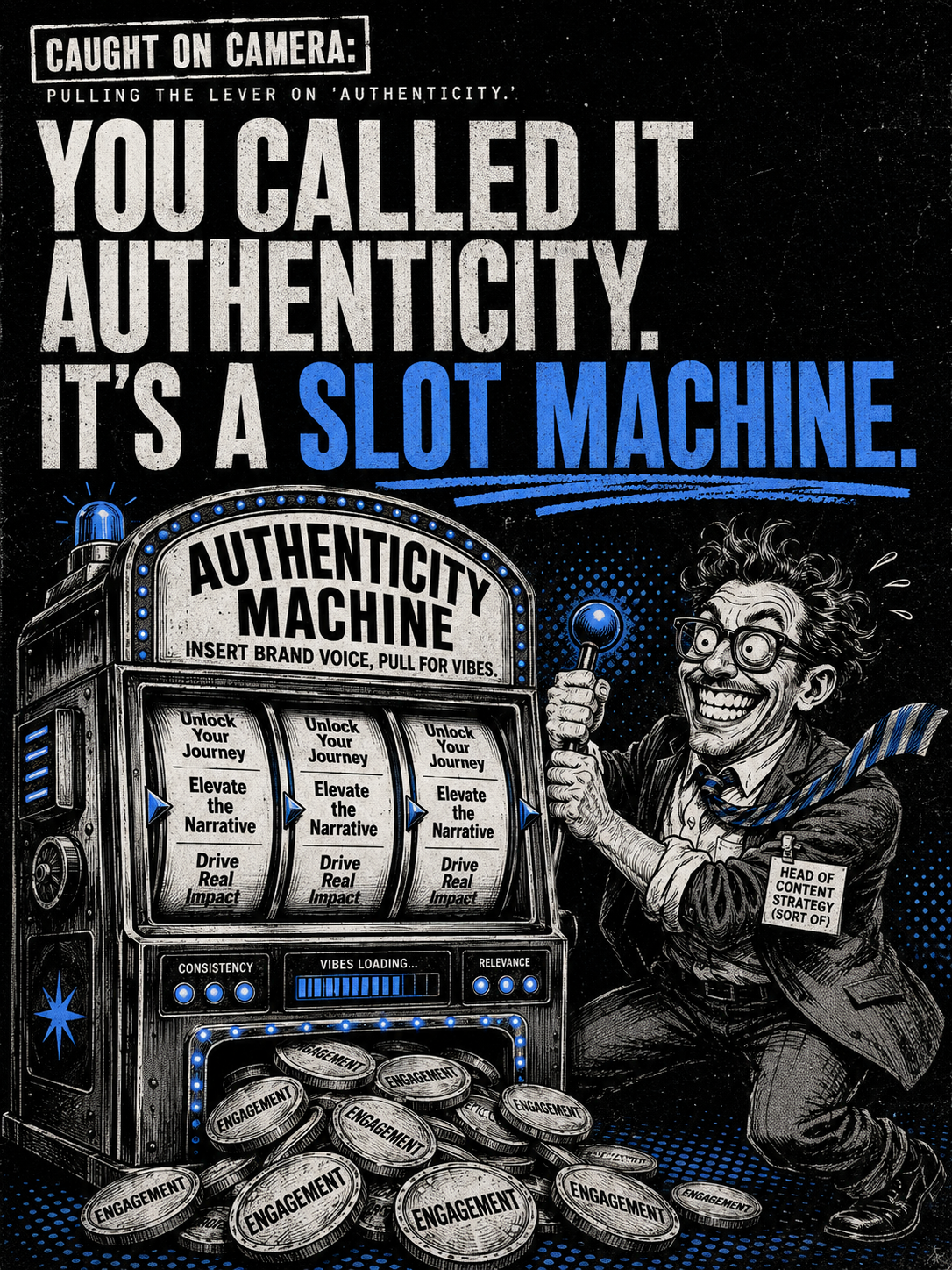
I used to sit in meetings like this. Someone pulls up a slide, says the word "efficiency" four times in one sentence, and announces that AI is going to handle "the content stuff" from now on. Everyone nods. Nobody asks the actual question, which is: handle it for who? Because I've read that content. It reads fine. It says nothing. And somehow that distinction never made it into the meeting.
Here's the thing nobody wants to say in the room. AI content changed how things get made. It did not change why anyone clicks, reads, or trusts a single word of it. Those are two completely different problems, and most companies are still solving the wrong one.
Why Human Touch Still Wins Even Though AI Content Is Everywhere
This triggered something in me, honestly. Human touch isn't some soft, feel-good marketing phrase people say to sound thoughtful in a pitch deck. It's the literal reason people trust one piece of content over another. 78 percent of consumers say they trust content made by real people more than AI content, and brand perception drops the second people recognize AI wrote it, according to AI content research compiled by Customer Impact. That's not a nuance. That's the whole ballgame, and somebody should tell whoever's still betting the entire content calendar on volume alone.
We really said this with a straight face in more meetings than I can count: "AI can do strategic thinking too, eventually." No it can't. It can draft, summarize, and restructure at a speed no human will ever match. What it cannot do is know when a joke lands wrong, when a client's actual fear isn't the one they said out loud, or when a moment calls for restraint instead of another bullet point. That's not a technical limitation someone's going to patch next quarter. That's judgment, and judgment is not a feature you install.
The Meeting Where We All Pretended AI Content Was Enough
Who approved the version of content strategy where speed replaced perspective, and are they okay? Because the data says people noticed. 55 percent of consumers, and 66 percent of Gen Z and Millennials specifically, say they're more likely to trust brands that publish human-generated content, according to research from MarTech on where marketing's real advantage is heading.
That same research found most people actively want to know what's automated and what isn't. They're not confused about the difference. They're just waiting for brands to stop pretending there isn't one.
I've sat in the version of this meeting where "authenticity" gets used as a buzzword while the actual content strategy is "generate forty variations and see what sticks." That's not authenticity. That's a slot machine with extra steps.
Does AI Generated Content Actually Hurt Brand Trust
Let's just say it plainly instead of dancing around it. Yes. Only 7 percent of consumers say visible AI generated content makes them trust a brand more, while 31 percent say it makes them trust the brand less, according to consumer research covered by eMarketer. That's not a close call. That's a brand actively spending its own credibility to save a few hours on a first draft.
If your pitch emails or blog copy have started sounding like they came out of the same machine as everyone else's, this breakdown on why your pitch sounds like a bot is worth a read before the next one goes out. It covers exactly this problem from the pitch side instead of the content side
How to Actually Balance AI and Human Content Without Losing Your Soul
The brands actually winning right now aren't in some heroic battle between AI and humans. That framing was always a little dramatic. They just figured out, quietly, what each one is actually good at. AI handles speed, scale, and pattern recognition. It drafts, restructures, and removes friction so a team can think instead of typing. Left alone with no human judgment attached, though, it produces content that looks fine and feels like absolutely nothing, polished with zero perspective behind it.
Human content is what makes people stop scrolling. Strong opinions. Lived experience. Someone willing to say the specific, slightly risky thing instead of the safe average of everything already published. That unpredictability is not a bug. It's the entire reason content authenticity works as a trust signal at all, because a machine averaging existing text cannot generate a genuinely new opinion, only a very convincing remix of ones that already exist.
If your team is using AI for research and structure while still worried it might be quietly eating your visibility, this piece on how search itself is changing is a good next read, since the balance question doesn't stop at content creation.
The Bottom Line on Human Touch (And Why I'm Not Sorry)
AI accelerates execution. Humans create meaning. Somewhere along the way, a lot of teams convinced themselves those two things were interchangeable, and the data has been fairly patient about correcting them ever since.
If your content looks good but nobody's actually connecting with it, the problem was never the speed it got made at. It was the perspective that got skipped to save time. Human touch isn't the sentimental option here. It's the actual strategy.
Don't Be A Little Pitch exists because most brands can spot a hollow piece of content the second they read it, they just can't always see it on their own. If that sounds a little too familiar, that's usually the sign worth acting on.
FAQ
Does AI generated content hurt brand trust?
Yes, when it's visible or unedited. Consumer research consistently shows lower trust and engagement when audiences recognize content as AI generated without human input.
Is AI content bad for SEO?
Not inherently, but search engines evaluate content on quality and usefulness rather than how it was produced. Unedited, low-value AI content published at scale is treated as spam, while AI-assisted, human-edited content performs normally.
How can a brand balance AI and human content?
By using AI for drafting, research, and structure while relying on human judgment for tone, strategic decisions, and anything requiring cultural or emotional nuance.
Why does AI content sometimes feel empty even when it reads well?
Because AI can replicate structure and pattern but can't originate genuine opinion or lived experience. Polished writing without a real perspective behind it tends to read as generic.
Should brands disclose when content is AI assisted?
Many consumers say they want transparency about what's automated, and disclosure tends to build more trust than being caught using undisclosed AI content later.


60-Day Performance Guarantee
PR only works if it builds momentum fast. If we do not secure 2 meaningful earned media features and line up 3 additional opportunities within 60 days, you get a full refund.

Free Authority Score Checker
Check your online reputation and authority score for free and see how you stack up and get custom tips to improve instantly.




.png)