Earned Media Is the Founder Branding Cheat Code Nobody Admits To

TLDR:
- Earned media is not a nice-to-have screenshot for your highlight reel, it's the actual mechanism behind long-term trust and search visibility
- Your company has zero credibility right now. You do, or you don't, and people can tell
- Founder branding beats company branding because humans trust humans, not logos
- One founder built a business from a napkin sketch, hit nearly a million dollars in a month, and never once waited for the company to earn trust first
- Syndication beats single hits. Getting seen once is cute. Getting seen everywhere is a strategy

Okay, let me say the quiet part out loud since apparently nobody in a client meeting ever will: your company does not have credibility yet. You do, or you don't, and everyone already knows which one it is before you finish your pitch (they're just too polite to say it to your face, I am not). The fastest way to fix that gap is earned media, and almost nobody uses it correctly.
Most founders treat a press mention like a trophy. Screenshot it, post it, forget it happened. That's a waste of a genuinely useful asset. Earned media, done right, is what builds founder branding in the first place, and founder branding is what makes people trust a business before it's proven anything. That's the whole mechanism nobody wants to say plainly, because it makes half the industry's retainer pricing look a little embarrassing.
Why Earned Media Is the Only Flex That Actually Works
Let me translate this for you: one placement does almost nothing for long-term authority. I don't care how big the outlet is. What actually moves the needle is volume, stacked across a spread of outlets, consistently, because that's what search engines and human skeptics both respond to. Not vibes. Volume.
The numbers make this uncomfortably clear. The average top-ranking page on Google carries roughly 3.8 times more backlinks than pages ranked second through tenth, and only a small fraction of published content ever earns multiple backlinks through earned media at all, according to media coverage research from SHNO. Getting featured once is a nice screenshot. Getting featured repeatedly is what ACTUALLY builds the kind of authority that shows up the second someone searches your name.
What they meant to say in every one of those corporate strategy decks is: nobody is reading the company blog. They're reading you, if you've bothered to earn the coverage that puts you in front of them.
Founder Branding Beats Company Branding, and Earned Media Is Why
Personal brand PR consistently outperforms corporate messaging because people follow people, not entities. A founder posting an honest, specific, occasionally messy update will always beat a polished company announcement nobody will remember by Thursday. Earned media is the accelerant. One feature, syndicated well, does more for a founder's reputation than a year of company page posts ever will.
The data backs this up in a way that should embarrass most marketing departments. Companies attribute 44 percent of their market value directly to the reputation of the CEO, according to personal branding research compiled by DSMN8, and the same research found that people trust recommendations from other people, even total strangers, over brand messaging by a wide margin. Not a small edge. A structural one.
The Napkin Sketch That Made Nearly $1M in 30 Days
Here's a story that should be a case study somewhere, and instead just quietly happened. A founder sketches a product idea on a napkin. No prototype, no funding, no safety net. Launch it on Kickstarter anyway. Within thirty days, that napkin sketch pulls in close to a million dollars. Not because the product was finished. Because the story was.
This is the part people skip past too fast. Nobody backed a finished product. They backed a person willing to bet on himself in public, which is a far more compelling pitch than any spec sheet. Sell first, build second, let the sale prove the demand before the operations catch up. Sounds reckless until you realize most successful founders have quietly done some version of this and just don't advertise it.
(This is also, conveniently, the exact opposite of what most PR agencies tell founders to do, which is wait until everything is perfect before saying anything publicly. By the time it's perfect, the moment is gone.)
Dragon's Den Is Not Real Life (And Neither Is Your LinkedIn Feed)
Every founder who's been on a pitch show has a version of the same realization afterward: television drama and startup reality are not the same product. The dramatic pause before the ask, the editing that turns a thirty-second answer into a gut-punch moment, none of that reflects how deals actually get built.
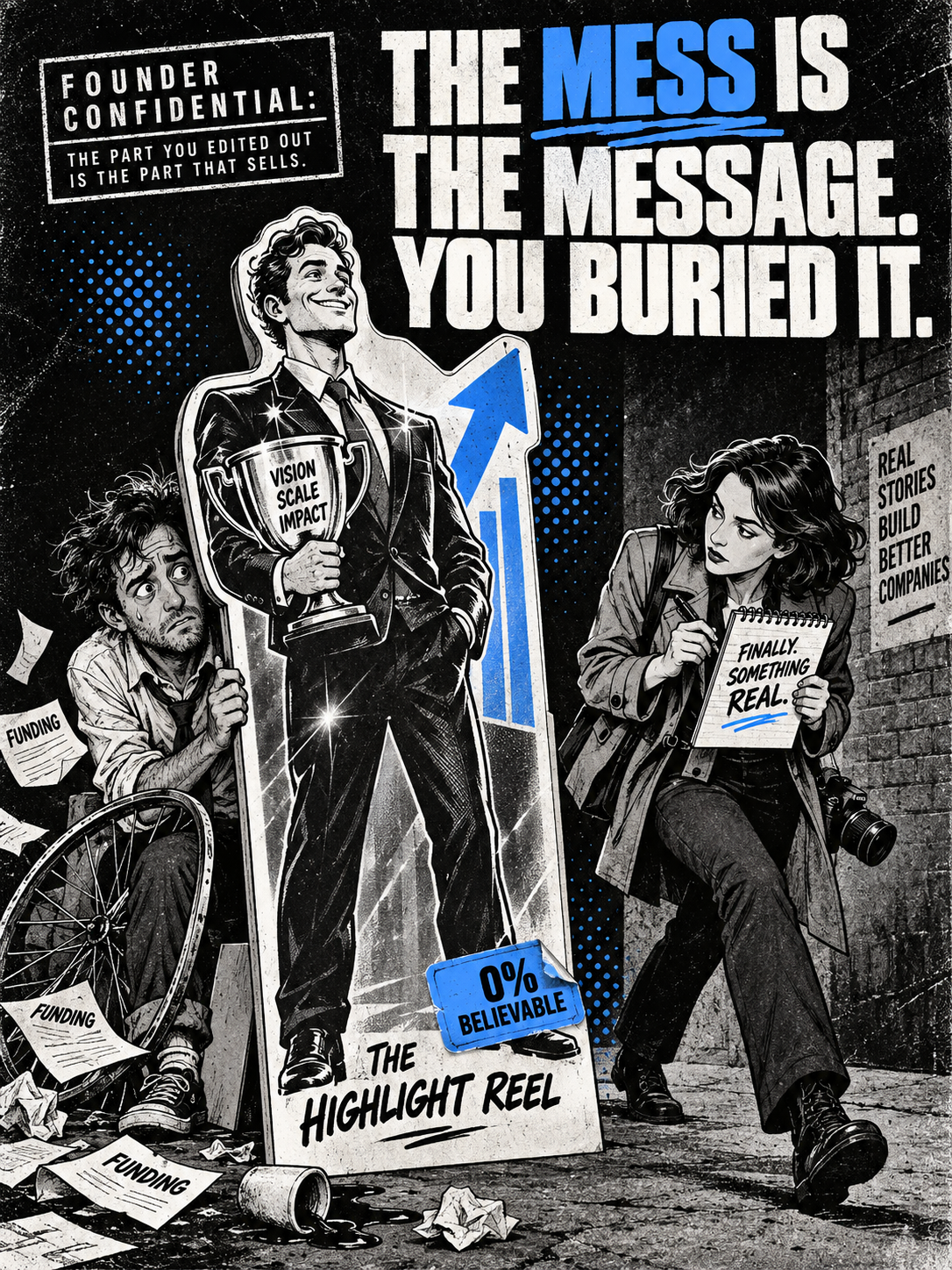
Your LinkedIn feed has the same problem. It rewards the highlight reel, not the operational reality, which is exactly why founders who try to "go viral" usually flame out and founders who just show up consistently and honestly tend to win slowly and permanently. You are not posting to go viral. You are posting so that when you message someone cold, they Google you first, and if the search results are thin, no amount of confidence in the room fixes that.
Our breakdown on why founders who own their story get more coverage goes deeper into exactly how that stacking works if you want the mechanics instead of the rant.
Is Earned Media Worth It for Small Businesses
Short answer, yes, and arguably it matters more for smaller businesses than big ones. A large company can survive a weak personal brand because the company name alone still carries weight. A small business does not get that luxury. The founder is the brand, whether anyone planned it that way or not, and pretending otherwise just means nobody's actually managing it.
Personal profiles now generate roughly eight times more engagement than company pages for equivalent content, and inbound messages from personal content convert at a rate several times higher than cold outbound ever does, according to LinkedIn personal branding data from Shaflex. If you're a founder still funneling all your energy into the company account instead of chasing earned coverage under your own name, you are leaving reach on the table. Free reach. Just sitting there.
If you haven't Googled yourself lately to see what a stranger sees first, that's usually the real starting point, before any of the rest of this matters at all.
The Bottom Line on Earned Media and Founder Branding
If you can't get yourself media coverage, exposure, or basic online credibility, why would anyone trust you to manage theirs? That's not a rhetorical jab, it's the actual filter smart clients use before hiring anyone in this industry, and most agencies quietly hope nobody applies it to them.
Trust compounds. Attention is the input, earned media is the multiplier, and a founder willing to be specific and a little unpolished in public will always out-earn the brand hiding behind a stock photo and a mission statement nobody remembers. Build the coverage first. The founder's branding catches up on its own, quietly, without you having to manufacture it.
Don't Be A Little Pitch exists because most founders can build the product but freeze the second it's their own face and name on the line. If that's where you're stuck, that's usually the actual bottleneck. Not your positioning.
FAQ
What is earned media?
Earned media is coverage or mentions a brand or founder receives from journalists, publications, or platforms without paying for the placement, as opposed to advertising or sponsored content.
How is earned media different from founder branding?
Earned media is the coverage itself. Founder branding is the reputation that coverage builds over time. Earned media is the input, founder branding is the compounding result.
How do founders get earned media coverage?
By pitching a specific, newsworthy angle to journalists, showing up consistently in their area of expertise, and being willing to comment or contribute rather than waiting to be discovered.
Is earned media better than paid PR or advertising?
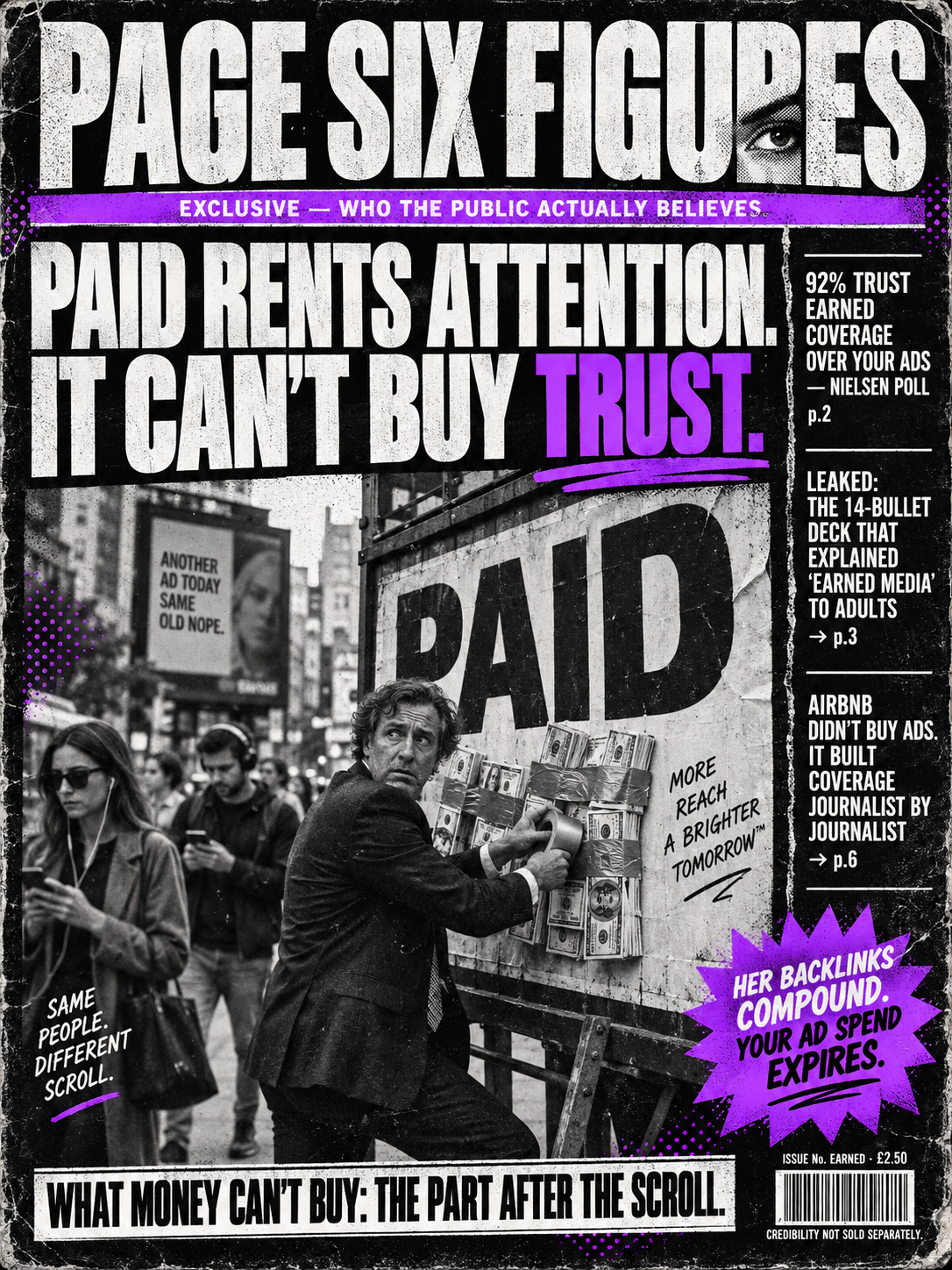
Earned media typically carries more trust and search authority than paid placements, since audiences and search engines both treat third-party coverage as a stronger credibility signal than an ad.
Is earned media worth pursuing for small businesses?
Yes, often more so than for large companies, since a small business rarely has an existing reputation to lean on and earned coverage is one of the fastest ways to build one.

60-Day Performance Guarantee
PR only works if it builds momentum fast. If we do not secure 2 meaningful earned media features and line up 3 additional opportunities within 60 days, you get a full refund.

Free Authority Score Checker
Check your online reputation and authority score for free and see how you stack up and get custom tips to improve instantly.




.png)