The State of Media Relations, and Why Most Pitches Still Fail

TLDR:
- Modern media relations has a response problem, and most senders never learn why their pitch landed in the silent majority
- A well-built PR pitch with the right target and the right length outperforms almost everything else in the current data
- Relevance beats volume. 86 percent of journalists reject pitches that don't match their beat
- Journalists want a story with a person in it, not a product description with a pulse
- Following up is fine. Following up aggressively gets a PR contact quietly blocked
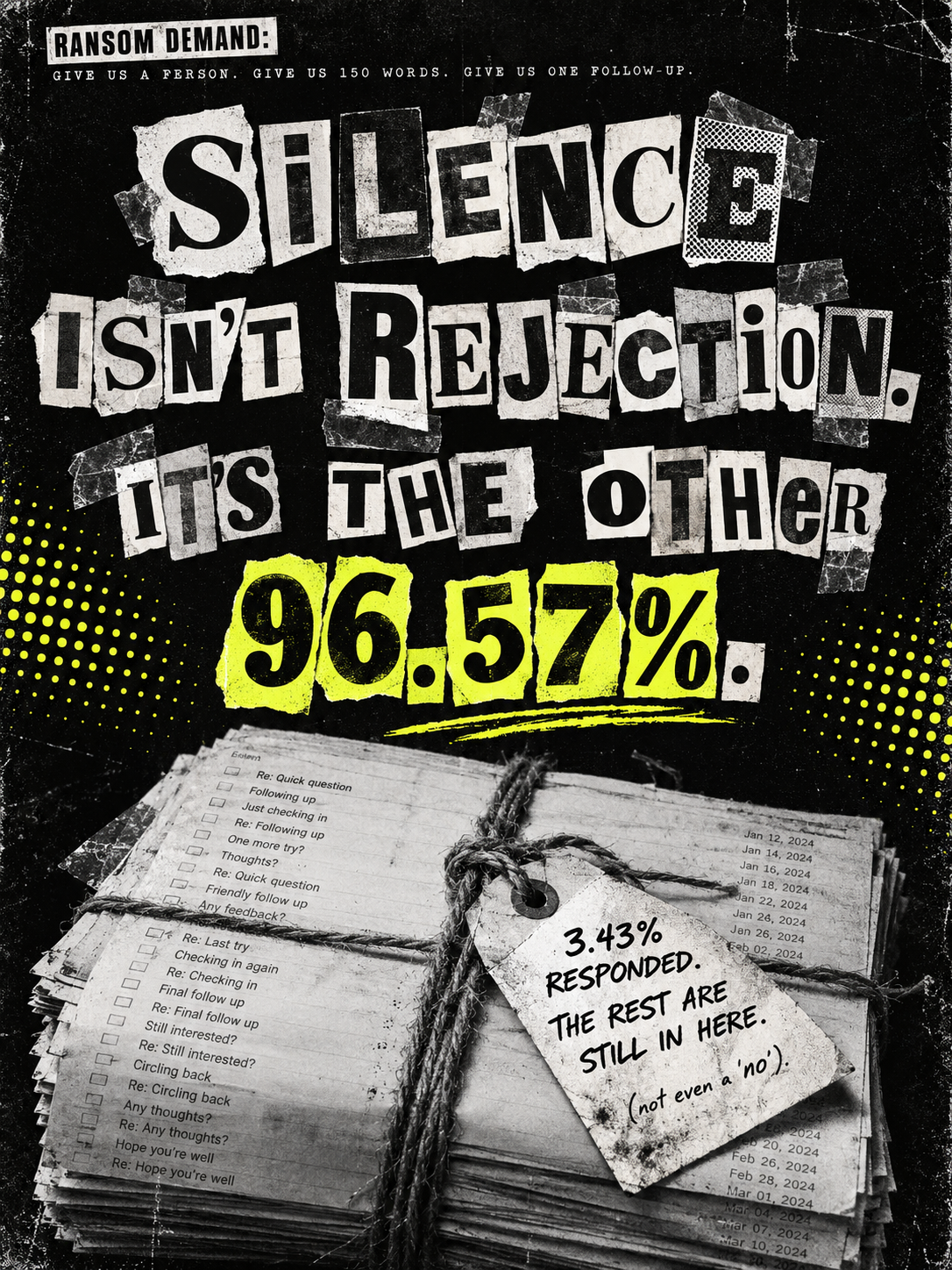
A founder sent a pitch about a genuinely useful product recently and received nothing back. Not a rejection. Not a "not right now." Nothing. It remains unclear whether the pitch reached an inbox at all in any meaningful sense, though the more likely explanation is less mysterious and considerably less flattering.
Media relations, as a category, has a response problem. The average journalist responds to just 3.43 percent of the pitches sent to them, according to media relations research from AMW, and the interesting part isn't the low number itself. It's how many senders still haven't worked out why their own pitch belongs in that 96.57 percent.
The State of Media Relations Right Now
86 percent of journalists say they reject pitches specifically because they're irrelevant to their beat, according to the same AMW data, which suggests the issue for most senders isn't quality so much as targeting. A pitch built for a general audience of "anyone who might care" reads, to a journalist, as a pitch built for no one in particular.
Interestingly, a well-constructed PR pitch aimed at the right journalist doesn't require much beyond relevance and brevity to outperform the field, which raises the question of why so few senders manage it. Personalized pitches see a 24 percent higher response rate than mass-distributed ones, and that gap alone accounts for most of the difference between the pitches that get answered and the ones that quietly disappear.
If the difference between a real angle and a template still feels blurry, this breakdown of what an actual PR pitch hook looks like covers the exact test worth running before the next pitch goes out.
Why Journalists Ignore Most PR Pitches
Sources might interpret the rejection rate as evidence that journalists have simply grown pickier over time. The more accurate read is that inboxes have grown louder while the average pitch has grown less specific, and the two trends compound against each other.
A PR pitch built around a company's own priorities, rather than a journalist's actual coverage area, reads as noise regardless of how well it's written. The campaign appears, in most failed cases, to have been built entirely from the sender's side of the conversation with no consideration for what the receiving end actually wants.
The Story Journalists Want, Not the Product Pitch They Get
Interestingly, the pitches that convert tend to share one trait that has nothing to do with the product being pitched. They read as a story with a person in it, not a feature list with a company name attached. A pitch built around a founder's specific, slightly uncomfortable decision tends to outperform one built around a spec sheet, because a journalist's job is finding something a reader will remember.
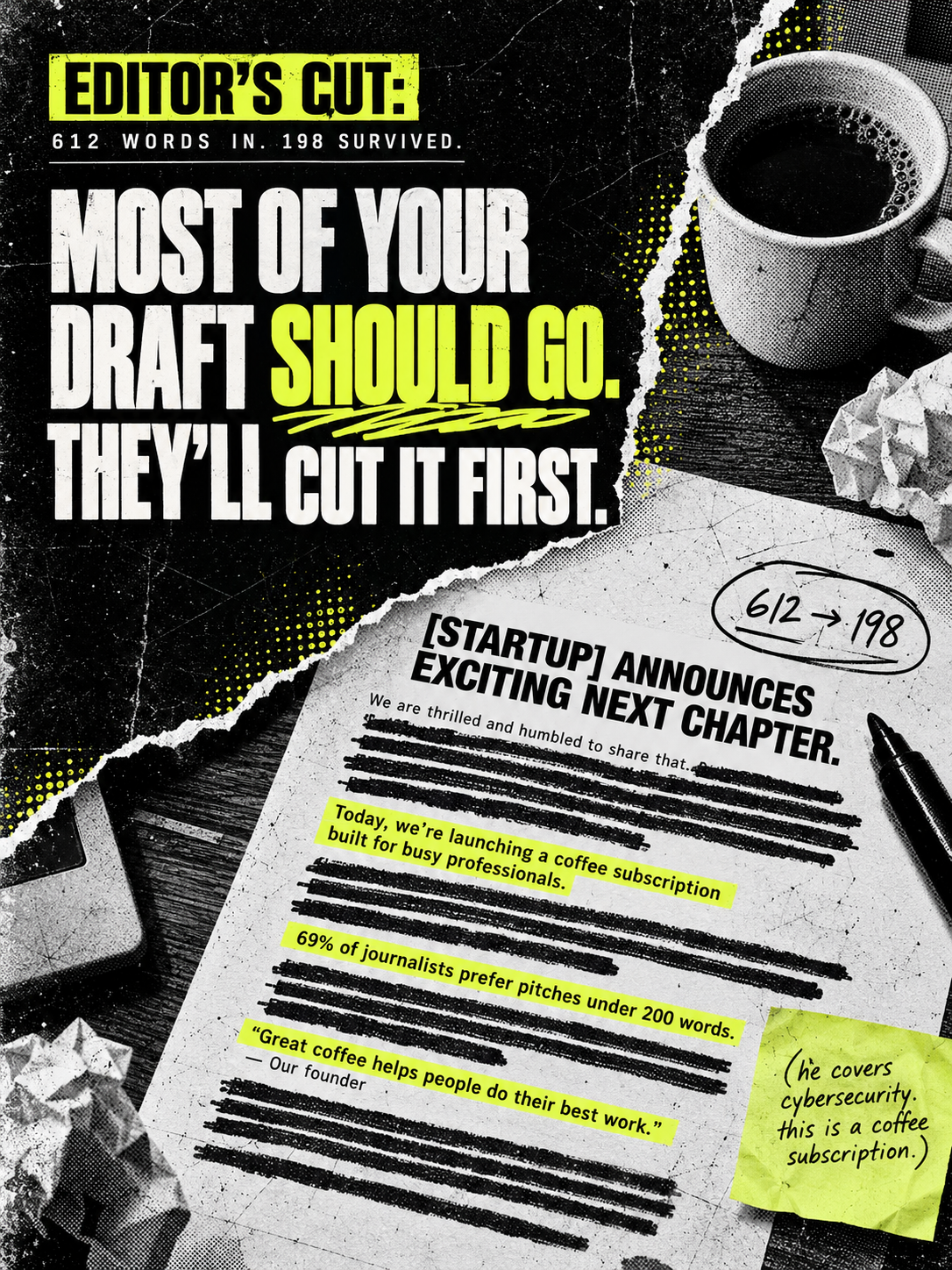
Pitches under 150 words see a response rate roughly four times higher than pitches over 500 words, according to the 2026 PR Pitch Response Rate Study from EPR Research and 5W, a gap large enough that length alone appears to function as a filter before media pitching content is ever fully evaluated.
Timing Still Decides Whether a Pitch Gets Read at All
A well-written pitch sent at the wrong moment performs roughly as well as a poorly written one, which is to say, not well. Journalists work against a news cycle, not a sender's launch calendar, and a pitch with no connection to a current conversation needs to be considerably more compelling to justify its own existence.
This cuts in both directions. A holiday-themed pitch sent the day before the holiday arrives too late to be useful. A pitch about something launching next year arrives early enough to be forgotten before it's relevant. The window in between is narrower than most senders assume, and it requires actually checking what a journalist has covered recently rather than guessing.
How to Follow Up on Media Relations Without Getting Blocked
A single, polite follow-up is standard practice and rarely causes offense. Repeated, aggressive follow-ups are a different matter entirely. 48 percent of journalists say they'll block a PR contact over repeated aggressive follow-up attempts, according to research on pitch follow-up behavior covered by Sword and the Script, which puts a fairly hard ceiling on how much persistence is actually welcome.
If a pitch doesn't land, the more useful response is usually a different angle or a different journalist, not a second and third nudge to the same inbox. Outreach built on volume alone tends to produce a reputation, just rarely the one a sender intended.
For a broader read on whether media relations efforts like this are actually translating into anything measurable, this breakdown of how to know if your PR efforts are working is worth reviewing before the next round goes out.
The Bottom Line on Media Relations
None of this requires a dramatic overhaul. Media relations that work tends to rely on a shorter, more specific PR pitch, timed against something already happening, and built around a person rather than a product. The senders still struggling are, in most cases, doing the opposite of all four, and wondering why the inbox stays quiet.
Don't Be A Little Pitch exists because most founders can spot a bad pitch immediately in someone else's inbox and somehow keep sending the same version themselves. If that sounds familiar, that's usually the actual thing worth fixing before the next send.
FAQ
What does good media relations actually look like?
Effective media relations relies on targeting journalists whose existing coverage area genuinely matches the story, with concise, specific pitches rather than broad, mass-distributed outreach.
Why do journalists ignore most PR pitches?
The most common reason is irrelevance to the journalist's specific beat or coverage area, with a majority of journalists citing this as their primary reason for rejecting or ignoring a pitch.
How long should a media pitch be?
Shorter pitches consistently outperform longer ones. Pitches under 150 words tend to see meaningfully higher response rates than pitches exceeding 500 words.
How often should I follow up on a pitch?
One polite follow-up is generally acceptable. Repeated or aggressive follow-ups risk damaging the relationship, with a significant share of journalists reporting they'll block contacts who follow up too persistently.
What should a good PR pitch include?
An effective pitch typically includes a specific, relevant angle tied to the journalist's beat, a human story rather than a product description, a compelling data point or statistic, and clear contact information for follow-up.


60-Day Performance Guarantee
PR only works if it builds momentum fast. If we do not secure 2 meaningful earned media features and line up 3 additional opportunities within 60 days, you get a full refund.

Free Authority Score Checker
Check your online reputation and authority score for free and see how you stack up and get custom tips to improve instantly.




.png)