Press Release vs Press Kit vs Media Kit: What to Send Journalists, and What Gets Deleted

TLDR:
- A press release is the announcement. A press kit or media kit is the toolbox that makes the announcement easy to cover
- Press kit vs media kit is mostly a naming argument. Don't lose a meeting over it
- Most journalists say the majority of pitches they get aren't relevant, so your kit has about four seconds to prove it is
- Keep it short, keep it organized, and build everything around ONE story
- A branded USB stick isn't a strategy, but it's weirdly effective. We'll get there
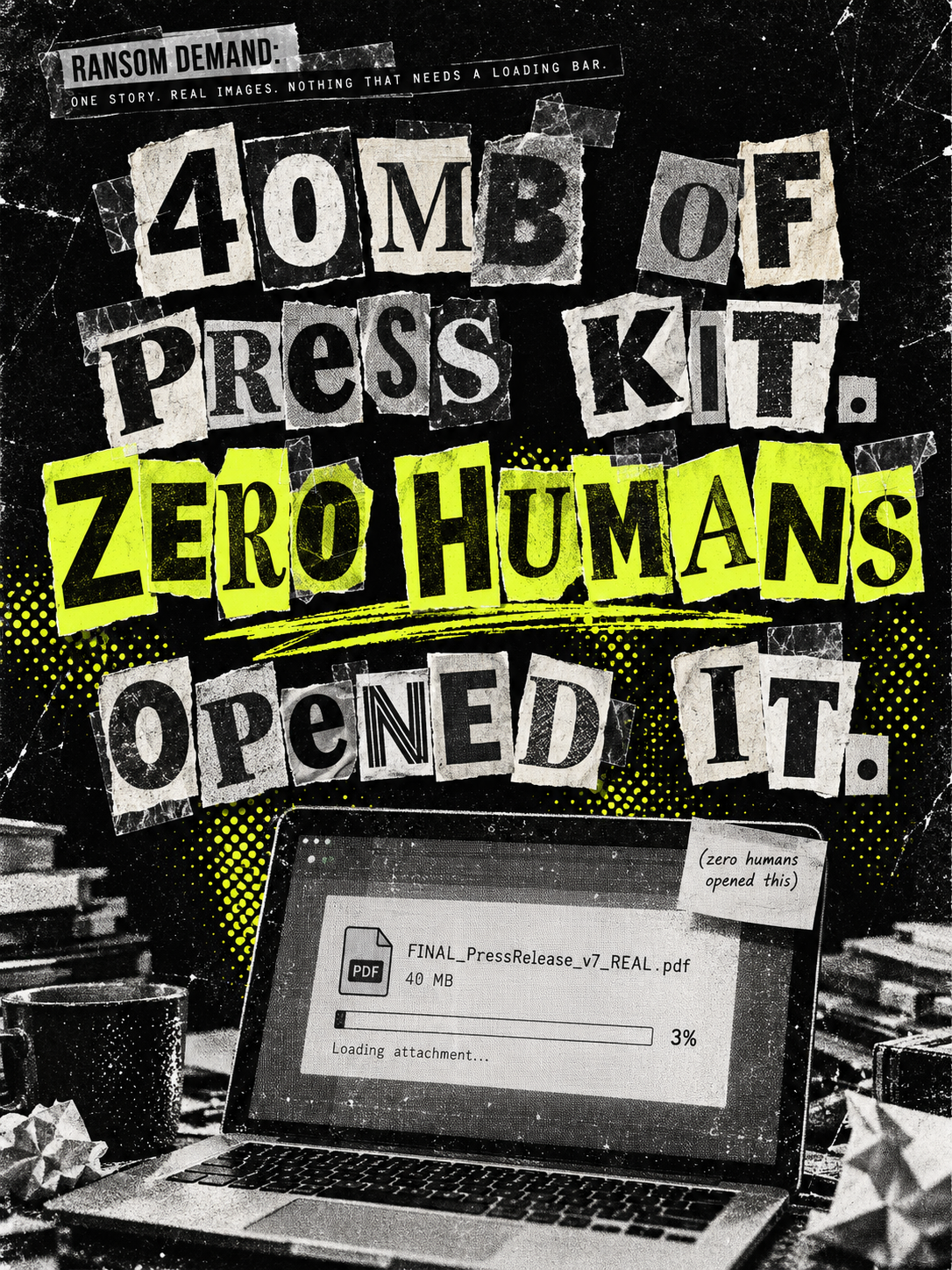
Somewhere right now a journalist is opening an email with a 40MB attachment called FINAL_PressRelease_v7_REAL.pdf, watching it load, and closing the tab. Nobody wrote back. Nobody ever writes back. And the founder is in a conference room asking why the press release "isn't working" (it's been opened by zero humans, but sure, let's workshop the font).
Let me translate this for you: the announcement isn't the problem. The pile of stuff around it is. Journalists are busy, tired, and one deadline away from a breakdown, and what they need is the story and the materials to write it, fast, without emailing you back.
What Is a Press Release (and Why Do People Keep Burying It)?
A press release is the official announcement: a product launch, an event, a milestone, a correction. It gives a journalist the facts in one place. And contrary to what every "PR is dead" post wants you to believe, reporters still ask for it. 72 percent of journalists say they prefer to receive press releases from PR professionals, according to Cision's State of the Media findings, as reported by PRSA. A separate cut of the same research puts the share who want news announcements at 74 percent, per MarketingProfs.
So the format isn't the issue. What they meant to say was: "stop sending me a release that reads like a wedding toast." Lead with the news, not the company's feelings about itself.
Press Release vs Press Kit vs Media Kit: Pick a Name, Move On
Here's where people love to start a fight. The traditional split goes like this: a press kit covers one specific event, like a product launch or a press release drop, while a media kit is the broader, long-term version that supports ongoing brand promotion. The press release lives inside both.
Prezly, a PR software company that actually builds these things, says there's no real difference between a press kit and an online media kit, though some agencies draw a slight distinction. So if you want to be tidy, treat the press kit as the event-specific version and the media kit as the evergreen one. If somebody insists on a lecture, nod slowly and move on.
What to Include in a Media Kit Besides the Press Release
Here's the part where I'm supposed to hand you a list. Fine. Here's the list, and then I'll tell you what it actually means.
- Company essentials: an overview, key team members, a summary of what you sell, and any recent press releases
- Branding details: logos in several acceptable colors, brand guidelines, high-resolution visuals, promotional photos
- Contact information: you as the marketer, customer service details, and anyone else who should get the call
- Promotional materials: client testimonials, case studies, positive coverage, and the key benefits of what you offer
Now the reality. The images matter more than anyone admits. 87 percent of journalists say they use the images, data visualizations, and videos that come with pitches, per that same PRSA report. Which means the blurry logo you screenshotted off your own website is literally the thing standing between you and a published story. (Yes, I'm yelling about a logo. Yes, I'm right.)
If you want a kit that supports a smarter pitch, not just a prettier folder, this breakdown of what a real PR pitch hook looks like is the companion read.
How a Press Release Earns Media Coverage Instead of an Unread Tab
Every founder wants to add a page. Then another. Then the origin story, the vision statement, the mood board, a 12-slide "culture" section. By the time the kit is "done," it contains everything except a reason to cover you.
73 percent of journalists say fewer than a quarter of the pitches they receive are relevant, per the MarketingProfs summary of Cision's data. So your release isn't competing with other good releases. It's competing with a mountain of irrelevant noise, and the way you earn media coverage is by being the one thing that's clearly about their beat.
Build the whole thing around a positive narrative: who you are, what makes you different, and one emotional hook a reporter can grab. Keep the writing consistent with your website and your visuals, because a kit that looks nothing like your brand is a trust problem in a nice PDF. If your messaging already feels scattered, this piece on protecting your reputation online is a good place to start untangling it.
And hire a designer, or have someone in-house who has actually done this. A kit that looks like it was assembled at 2 a.m. will be treated like it was assembled at 2 a.m.
The Physical Press Kit and the Branded USB Stick (Yes, Really)
Even if everything lives online, a physical kit can hit differently. It's a real object someone remembers. A branded USB stick loaded with your promotional images, your press release, and your files is cheap, genuinely useful, and keeps your name on a journalist's desk after the email has been buried. Is it a strategy? No. Does it work? Annoyingly, yes.
The Bottom Line on the Press Release and the Kit Around It
A press release isn't a brag sheet, and a media kit isn't a trophy case. Together they're the fastest way to hand a journalist everything they need to say yes. Keep it concise, keep it organized, make the visuals good, and tie it to one story worth telling. Do that, and media coverage stops feeling like a lottery.
Don't Be A Little Pitch exists because most brands have a release and a kit that look impressive to the people who made them and invisible to the people who matter. If that sounds painfully familiar, that's the thing to fix first.
FAQ
What is a press release?
A press release is an official announcement from a company or organization, such as a product launch, event, or milestone, written to give journalists the key facts in one place.
Do journalists still read press releases?
Yes. Cision's State of the Media research found that most journalists say they prefer to receive press releases from PR professionals, especially for news announcements.
What is the difference between a press release, a press kit, and a media kit?
A press release is a single announcement. A press kit is a package of materials tied to a specific event, and a media kit is a broader, long-term package about the brand. Many sources treat press kit and media kit as essentially the same thing.
What should be included in a media kit?
Common items include a company overview, key team members, a product or service summary, press releases, logos and brand guidelines, high-resolution images, contact information, testimonials, case studies, and positive media coverage.
How do you get media coverage with a press release?
Lead with the news, send it to journalists whose beat actually matches the story, include strong images, and make the supporting materials easy to find in one organized kit.

60-Day Performance Guarantee
PR only works if it builds momentum fast. If we do not secure 2 meaningful earned media features and line up 3 additional opportunities within 60 days, you get a full refund.

Free Authority Score Checker
Check your online reputation and authority score for free and see how you stack up and get custom tips to improve instantly.




.png)