I Used to Think Thought Leadership Was Corporate Theater. Then

TLDR:
- Thought leadership measurably changes what B2B buyers do next, not just how they feel about a brand
- Personal branding on LinkedIn consistently outperforms the polished company page nobody actually reads
- A real LinkedIn strategy is the closest thing B2B has to an actual PR department
- B2B PR now happens in a comment section as much as it happens in a press release
- If your profile looks abandoned, that's not neutral. That's a message, and it's not the one you wanted to send
.
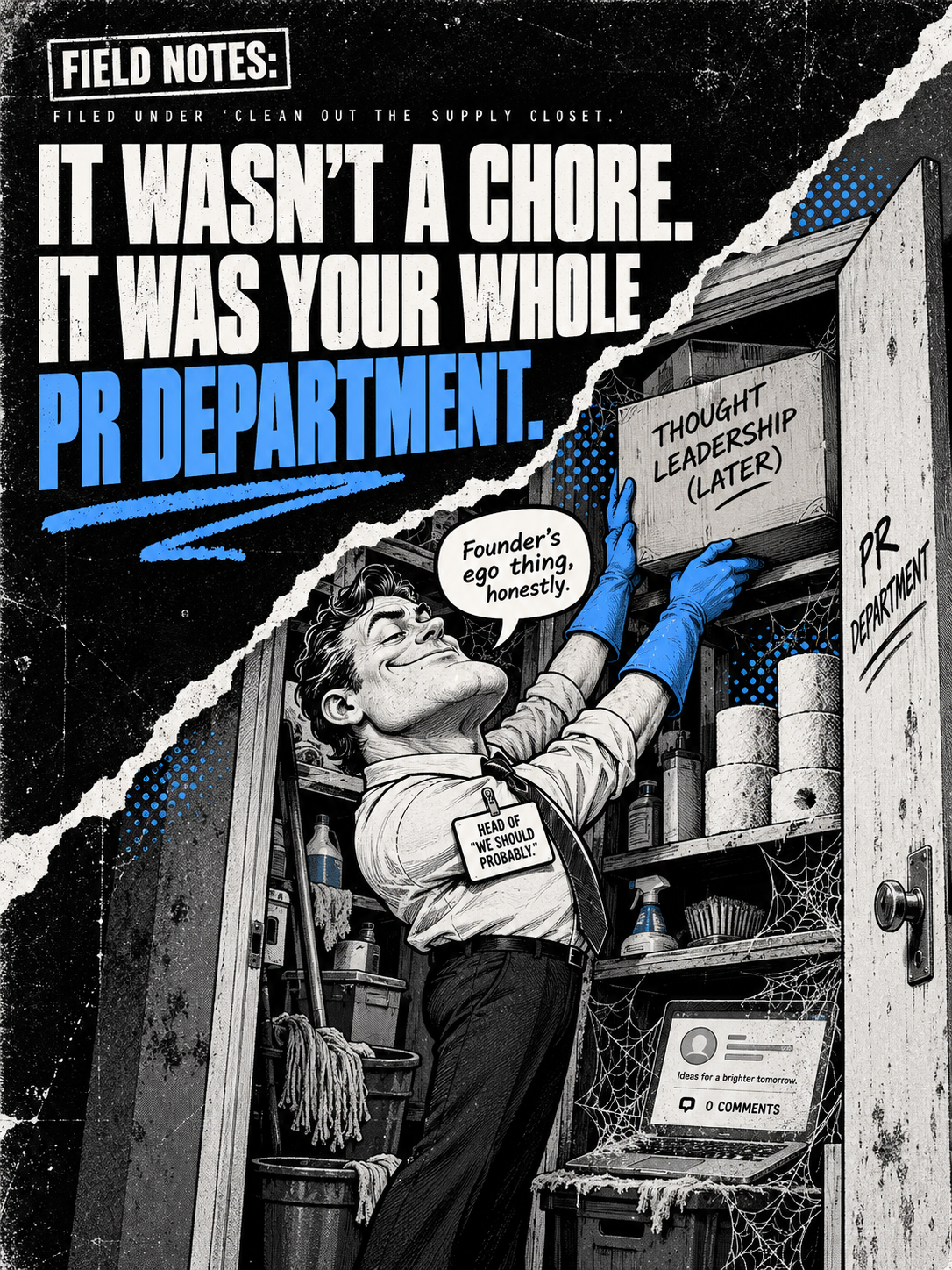
I used to sit in meetings like this. Someone says "we should probably do some thought leadership" in the same tone they'd use for "we should probably clean out the supply closet," like it's a chore nobody's excited about. And then six months later that same person is confused why a competitor with half the budget keeps getting quoted in industry roundups and they're not.
This triggered something in me, honestly. Thought leadership was never the chore. It was the actual PR department, running quietly the whole time, while everyone treated it like busywork
Does Thought Leadership Actually Influence B2B Buyers? The Data Says Yes
We really said this with a straight face in more strategy meetings than I can count: "thought leadership is just a nice-to-have for the founder's ego." No. 73 percent of B2B buyers say thought leadership is more trustworthy than a brand's own marketing materials when judging whether that company actually knows what it's doing, according to Edelman's research on thought leadership and B2B buying behavior.
It gets better, or worse, depending on how your content calendar currently looks. 54 percent of buyers say consistent thought leadership is what prompted them to research a company's offerings in the first place, and a genuinely wild 86 percent said they'd be likely to invite that company to bid on their business because of it.
That's not brand awareness. That's a pipeline, sitting there, waiting for someone to publish something worth reading.
Personal Branding Beats the Company Page, and It's Not Close
I'm going to say the quiet part out loud since apparently nobody else will. The polished, committee-approved company page everyone spent three meetings perfecting gets a fraction of the engagement a real person's profile gets. Personal, specific, slightly opinionated posts consistently outperform corporate-voice content, and in some measurements the gap is closer to an entire order of magnitude.
Personal branding works on LinkedIn because people trust people, not logos. A founder sharing an actual opinion about their industry reads as a real voice. The same opinion filtered through brand guidelines and run past legal reads as nothing, and gets treated like nothing.
If your messaging still sounds like it was written by committee, this breakdown of what a real PR pitch hook looks like covers the same problem from a different angle. The hook is what makes someone stop scrolling, whether it's a pitch or a post.
Why LinkedIn Strategy Matters for Thought Leadership
Here's the thing nobody says out loud in the strategy deck. 53 percent of B2B professionals rank LinkedIn as the single most important social platform for their work, according to marketing statistics compiled by ClickMinded. Not "one of several channels." The most important one. Who approved the decision to treat that platform as an afterthought, and are they okay?
A real LinkedIn strategy also isn't optional for sales teams anymore. 90 percent of top-performing sales professionals use social selling tools, compared to 71 percent of sales professionals overall, according to research reported by eWeek on LinkedIn's own sales data. The gap between the people winning and the people wondering why they're not isn't talent. It's whether they showed up consistently somewhere their buyers were already paying attention.
And no, copy-pasting outreach doesn't count as strategy. Engage with what someone's actually posted before sliding into their inbox, or don't bother reaching out at all.
B2B PR Is Happening in Comment Sections Now, Whether You're Ready or Not
Here's a sentence that would've sounded insane a few years ago and is just accurate now. Engagement, endorsements, and recommendations function as public, quantifiable proof that a business is actually good at what it says it is. B2B PR used to live entirely in press coverage and press releases. Now a chunk of it lives in whether your last ten posts got real comments from real people in your industry, or sat there with zero engagement like a digital ghost ship nobody's checked on.
That matters because reputation compounds in public now, for better and for worse. If your online presence took a hit somewhere and you're not sure how bad it actually is, this piece on protecting your reputation online is worth a read before the next post goes out.
The Bottom Line on Thought Leadership, Since Someone Had to Say It
Thought leadership doesn't work because it's trendy. It works because buyers said, in actual research, that it changes what they do next. Personal branding doesn't work because it's flashy. It works because people trust a real voice over a brand voice every single time. And your LinkedIn strategy is just the place where both of those get seen by the people deciding whether to hire you.
If your presence currently consists of a logo, a tagline, and silence, that's not a neutral choice. That's the whole PR department, quietly closed for business.
Don't Be A Little Pitch exists because most brands can spot a dead LinkedIn profile from a mile away and somehow never notice their own. If that sounds a little too familiar, that's usually the exact thing worth fixing next.
FAQ
What is thought leadership in B2B marketing?
Thought leadership is content that shares original insight, expertise, or a distinct point of view on an industry topic, designed to build credibility and trust with buyers rather than to promote a product directly.
Does thought leadership really influence B2B buying decisions?
Yes. Research shows the majority of B2B buyers view thought leadership as more trustworthy than traditional marketing materials, and a notable share say it directly prompted them to research or consider a company they hadn't previously been evaluating.
Should a business post from a personal profile or a company page on LinkedIn?
Personal profiles generally get significantly higher engagement than company pages, since audiences tend to trust and engage with individual voices more than branded corporate messaging. Many brands use both.
How do you build a personal brand on LinkedIn for business?
Share specific, original perspectives on your industry consistently, engage with other people's content, and keep your profile complete and aligned with the expertise you want to be known for.
Why is LinkedIn important for B2B public relations?
LinkedIn is where a majority of B2B professionals spend their most relevant social media time, which makes it one of the most direct channels for building authority, trust, and visibility with the people who make purchasing decisions.

77% of sales professionals have noted that selling on LinkedIn helps them close deals at a higher rate.

60-Day Performance Guarantee
PR only works if it builds momentum fast. If we do not secure 2 meaningful earned media features and line up 3 additional opportunities within 60 days, you get a full refund.

Free Authority Score Checker
Check your online reputation and authority score for free and see how you stack up and get custom tips to improve instantly.




.png)