Earned Media in 2026: How to Get Media Coverage Without Paying for It

TLDR:
- Earned media is coverage you don’t pay for: articles, interviews, features, and mentions that someone chose to give you.
- It works because people trust it more than ads. You can’t buy credibility, but you can earn it.
- A real PR strategy starts with a story angle, then backs it up with founders, data, and consistent messaging.
- Media pitching succeeds when it’s short, relevant, and aimed at the right journalist. Mass emails get deleted.
- Bold moves can win you media coverage, but only if you’ve weighed the risk before you hit post.
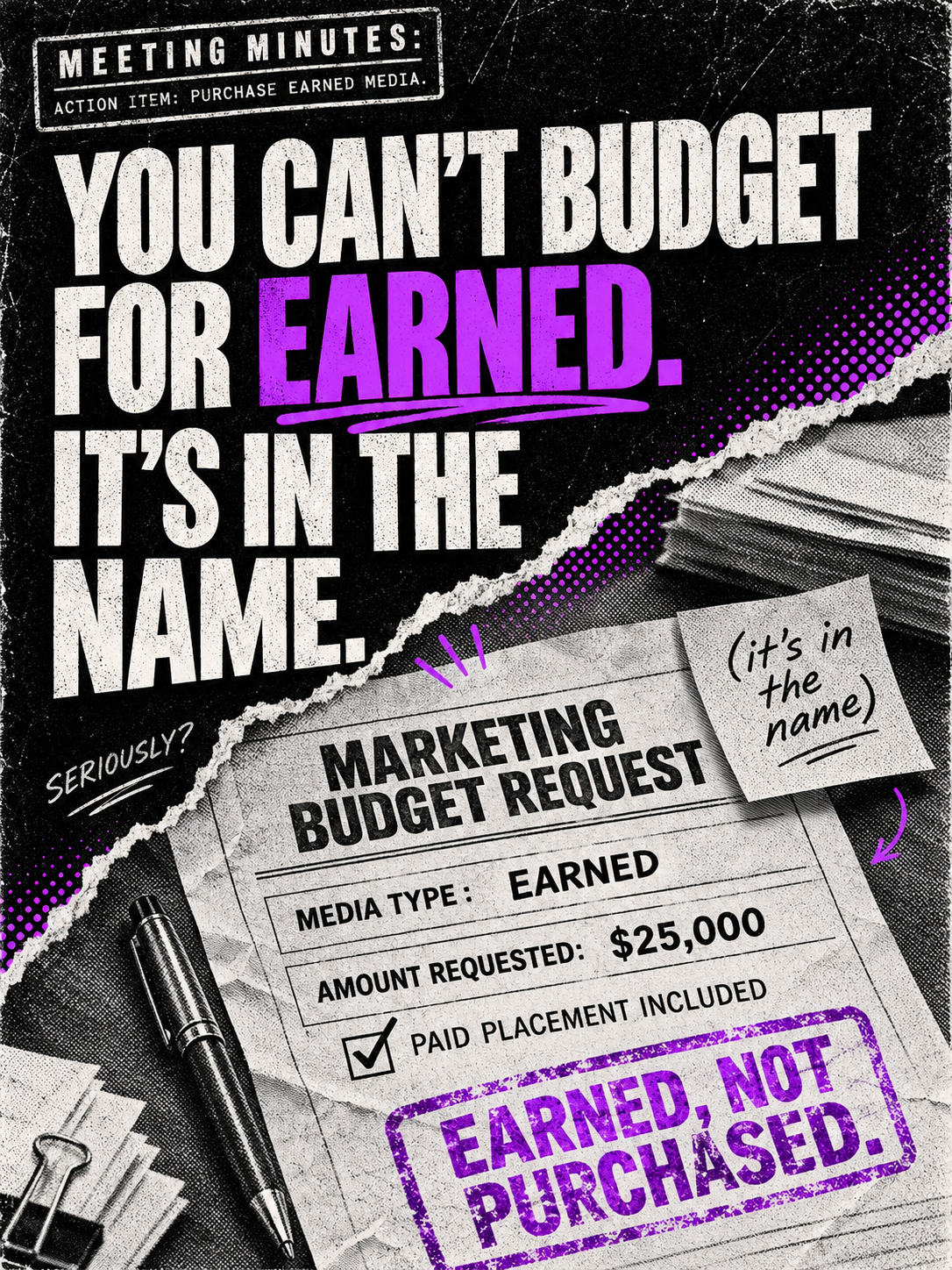
The first time I heard someone say “earned media” in a corporate meeting, my VP nodded thoughtfully and asked, “Great. So what’s the budget for that?”
I need you to sit with that for a second.
Earned. It’s right there in the name.
I used to sit in meetings like this every week. Smart people, nice blazers, absolutely no idea how a journalist decides what to write about. Half of them still believed “build it and they will come.” We’d send out a press release, wait, refresh our inboxes, and then blame “the news cycle” when nothing happened.
So if you’re here because you’re done buying attention and want the kind people actually believe, congrats. You’re one of the smart ones. Whether you’re running a scrappy small business or a company with an actual comms department, this is how earned media really works, minus the conference-room nonsense.
What Is Earned Media (and Why Your Press Release Isn’t It)
Earned media is any coverage you get without paying for the placement. A reporter quotes you. A podcast invites your founder on. A publication features your story because it’s genuinely interesting. Someone else decided you were worth talking about. That’s the whole point.
A press release can help you get there. On its own, though, it’s just a document. If your entire plan is press releases and the same old media contacts, without widening your reach at all, that isn’t a PR strategy. It’s a hope with an attachment.
Digital media changed what stories look like and how people consume them. Audiences want content that’s dynamic, engaging, and shows a side of your business that feels real. And let’s be honest, people trust companies about as far as they can throw them. You need them to believe in you, and you need to get noticed fast.
Here’s the kicker that should make every comms team a little uncomfortable. Muck Rack’s State of Journalism findings, summarized by the University of Minnesota, show that 86% of journalists say at least some of their work started with a PR pitch, while 43% say pitches relevant to their beat are rare.
So journalists are open to pitches. They’re just buried under bad ones. That’s your opening.
Earned Media vs Paid Media: Why Coverage You Can’t Buy Hits Harder
Paid media is ads. Sponsored posts. That banner follows you around the internet because you looked at a lamp once.
Earned media is someone with no financial stake saying, “Hey, this is worth your time.”
Guess which one people believe.
Nielsen’s global trust research found 84% of consumers trust word-of-mouth recommendations, a form of earned media, more than any other kind of advertising. Every time a publication covers you, it works like a recommendation from a source your audience already trusts.
Earned coverage also keeps working long after it’s published. It builds backlinks, gets your brand searched, and increasingly shapes what AI tools say about you. We covered that side of it in why thought leadership is the real reason you’re not getting press coverage.
How to Build a PR Strategy That Earns Media Coverage
To cut through the noise, you need an angle that grabs attention faster than everyone else’s. That’s what gets the media talking about you instead of the other thousand brands in their inbox.
Every good PR strategy starts with one question corporate loves to skip: what’s the story?
Not your product specs. Not your mission statement that took nine stakeholders to approve. The story. Why you started, who you’re fighting for, and what you believe that your competitors would never say out loud. Get that right and people start cheering for you.
When I asked my old team this, someone answered, “We’re customer-centric.” Who approved that answer, and are they okay?
Once the story’s clear, push it somewhere memorable. Brainstorm the wild, unconventional stunts and campaigns that make legal nervous. Look at Marmite. They built their brand around the idea that you’ll either love it or hate it, cheerfully alienating half the planet. That kind of tribalism turned the other half into die-hard fans who lift the brand up themselves.
How Authentic Founder Stories Earn Media Coverage
This triggered something in me when I first saw it.
In a Muck Rack survey reported by Ragan, 75% of journalists said CEOs are credible sources, while only 34% said the same about PR agencies.
Read that and then think about every time a founder was told to “let comms handle it.”
Authenticity builds trust, and journalists want to hear from you. Share real stories about your business, the people who work for you, and the challenges they deal with. Talk about what went wrong before things worked. Ditch the promotional fluff. Nobody’s ever been moved by “best-in-class solutions.” You want a real connection with an audience you need on your side.
Keep your messaging consistent, too, whether you’re talking to your whole audience or one person in the DMs. If your website sounds like a prude and your Instagram yells “HOLY SH*T, have you seen our latest offer??”, people start thinking the polished version of you is fake.
Consistent, human, specific. That’s what turns a founder into a source reporters come back to for more media coverage.
How to Use Data to Get Earned Media
Opinions get you noticed. Data gets you quoted.
Use it in two ways: to throw out the ideas that are genuinely trash, and to give journalists something they can’t get anywhere else.
- Measure how your current PR efforts are performing
- Learn who your audience is and what they care about
- Catch emerging trends early and position your brand around them
- Survey customers and pull out findings no one else has
- Track how visitors behave on your site so you can improve their experience
Then actually use what you find and pivot. Stay ahead of what’s new, even to the point of being a little annoying, if that’s what gets you media attention.
According to Duree & Company’s breakdown of Muck Rack’s research, 70% of journalists prioritize pitches aligned with their coverage, 58% want credible sources, and 40% value original data.
Media Pitching Tips: How to Pitch Journalists Without Getting Ghosted
Let’s talk about media pitching, the part everyone thinks they’re good at.
I’ve seen corporate pitches with an executive summary. For a pitch.
Here’s what actually works:
- Pitch the right person. Read their recent articles first. If they cover fintech, don’t send them your candle launch.
- Lead with the story. Your company history can wait.
- Keep it short. That same Muck Rack data shows 69% of journalists prefer pitches under 200 words.
- Make it easy. Offer your founder an interview, attach the data, and remove every obstacle between “interesting” and “yes.”
Not sure what to send along with it? Here’s the difference between a press release, press kit, and media kit, and which ones get deleted.
There are lots of kinds of media coverage now, and each has its fans and haters. You might be sick of the word “influencer,” but creators are the lifeblood of how a lot of brands get discovered. Collaborations and shout-outs put you in front of people who already trust the messenger. When someone sees you mentioned by their favorite creator and in a publication they read, they file you under “success story.” So don’t dismiss it. Pitch creators with the same care you’d pitch a journalist.
And build relationships before you need something, whether that’s online, at an event, or at the bar afterward. Be a normal person. (No, you don’t need to get drunk with a reporter to land a feature. I’ve watched people try. A new partner in crime is great. A hangover isn’t a strategy.)
How Shareable Content Turns Into Earned Media
Creating something shareable is one of the most reliable ways to get noticed, and journalists notice what’s spreading. When something you made keeps showing up everywhere, a reporter eventually wants to know why. Viral growth can launch you straight into media coverage you didn’t have to beg for.
Make your content at least a few of these:
- Measure how your current PR efforts are performing
- Learn who your audience is and what they care about
- Catch emerging trends early and position your brand around them
- Survey customers and pull out findings no one else has
- Track how visitors behave on your site so you can improve their experience
Only an amateur hits just one. Stack several in every piece, tie it clearly to your brand, and the attention lands where it should.
Is Controversy a Smart Earned Media Strategy?
Sometimes, yes. “Canceled” is both a buzzword and a dirty word, but a little controversy is still one of the fastest ways to set your brand apart and get earned media attention. It can give you a bigger boost than almost anything else. Just be ready for the kind of coverage that comes with it, because it’s also one of the fastest ways to end up apologizing in a Notes app screenshot.
You’re never doing something risky in a vacuum. Before you do anything spicy:
- Know how much edgy stuff your audience will actually tolerate
- Stretch your brand’s boundaries without snapping them
- Run an honest risk check and decide whether you stand to win or lose more
When boldness comes from who you really are, it sets you apart from competitors. It becomes an angle you can riff on again and again, and it helps you avoid backlash, because people can tell the difference between confident and desperate.
If it all aligns? F*cking go for it.
Just moderate your comment sections. Edgy content attracts attention, and not all of it is the kind you want attached to your name. Keep it clean, and people see you as exciting and fun instead of problematic. If something does go sideways, here’s how to handle reputation management after bad press.
Be smart about it, or work with someone who already knows what they’re doing.
How to Get Earned Media for Your Business Without Settling for Mediocre
Here’s what I figured out the day I stopped nodding along in those meetings.
Earned media was never about how many emails we sent. It was about whether we had something real to say and the nerve to say it like actual humans.
Find the angle. Put a founder out front. Bring data nobody else has. Pitch like you respect the journalist’s inbox. Push boundaries on purpose, and even bad press can be flipped into an opportunity when you know how.
You never have to settle for mediocrity. Your coverage should be as bold as you are.
Don’t Be A Little Pitch turns founders with real stories into names journalists actually recognize. Ready to stop paying attention? Let’s chat.
FAQ
What is earned media?
Earned media is publicity you don’t pay for directly, such as news articles, interviews, podcast appearances, reviews, and social mentions. It happens when journalists, creators, or customers choose to talk about your brand because they find it valuable or interesting.
What are some examples of earned media?
Common examples include being featured or quoted in a news article, appearing as a guest on a podcast, getting reviewed by a blogger or creator, being mentioned on social media by customers, and receiving industry awards or speaking invitations.
What’s the difference between earned, paid, and owned media?
Paid media is advertising you pay for, like social ads or sponsored content. Owned media is the content you control, like your website, blog, and social profiles. Earned media is coverage others give you voluntarily, which is why audiences usually see it as more credible.
How do you get earned media for a small business?
Start with a clear story angle, identify journalists and creators who cover your industry, and send short, personalized pitches. Offering expert commentary, original data, or a founder interview makes your pitch more useful. Building relationships with reporters over time also increases your chances.
How do I pitch a journalist?
Research journalists who already cover your topic, read their recent work, and write a brief pitch that explains why the story matters to their readers. Put the strongest point first, keep it concise, and make it easy for them to schedule an interview or access your data.
Does earned media help with SEO?
Yes. Coverage from reputable publications often includes backlinks, which can improve your website’s authority in search results. It also increases branded searches and visibility, and many AI search tools draw on trusted third-party sources when answering questions about brands.


60-Day Performance Guarantee
PR only works if it builds momentum fast. If we do not secure 2 meaningful earned media features and line up 3 additional opportunities within 60 days, you get a full refund.

Free Authority Score Checker
Check your online reputation and authority score for free and see how you stack up and get custom tips to improve instantly.