Influencer Marketing for PR: How to Run a Campaign That Isn't Embarrassing

TLDR:
- Influencer marketing works, but people don't trust influencers blindly. Your campaign has to actually feel real.
- Micro-influencers usually win on trust and engagement. Mega-influencers win on reach and on draining your budget.
- Pick creators by engagement and audience fit, not follower count.
- A great PR package is personal, shareable, and tells your brand story without a three-page letter.
- Set clear goals, put everything in writing, make sure partnerships are disclosed, and track results with codes and links.
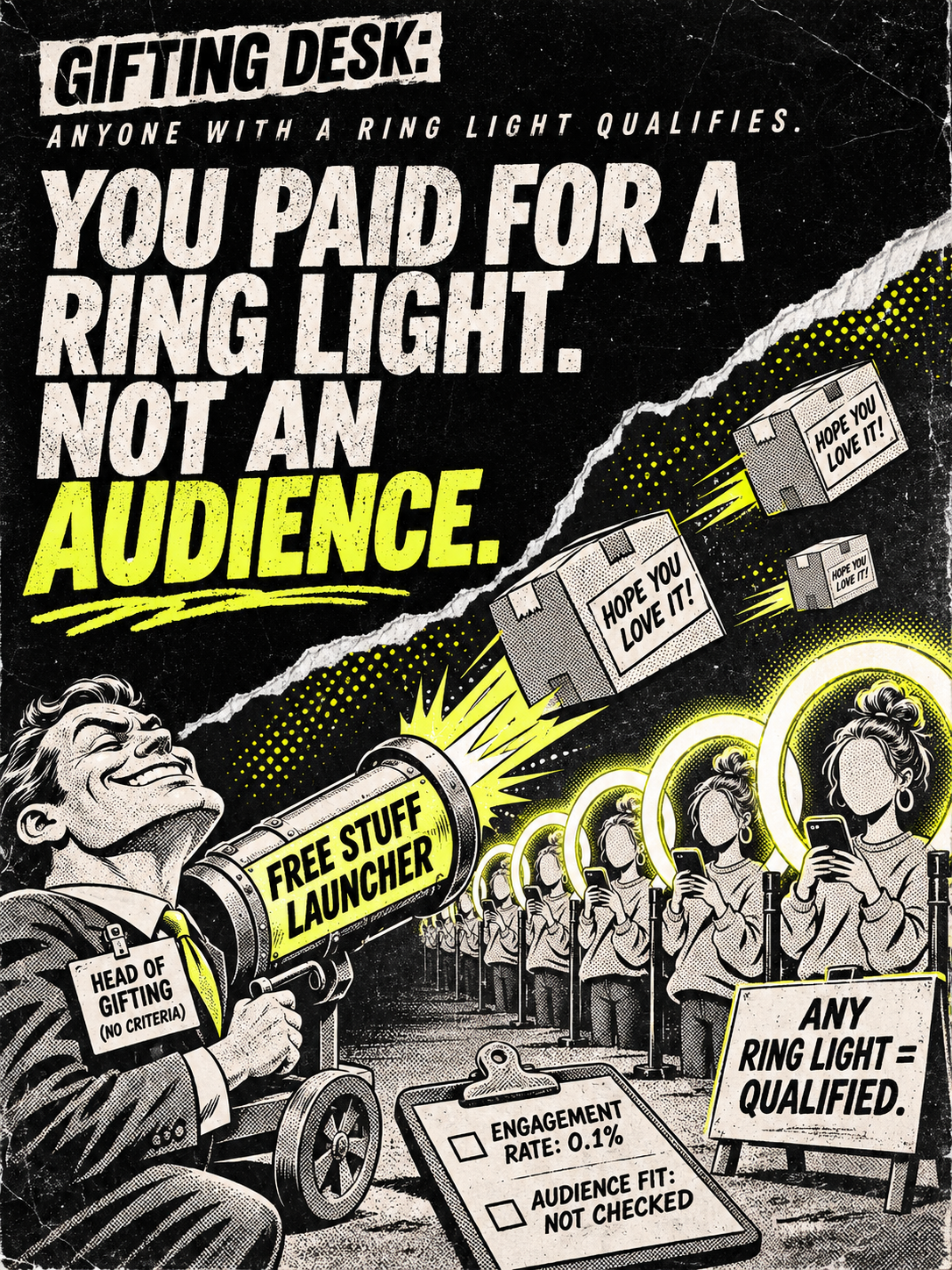
Okay so your influencer marketing strategy is… sending free stuff to anyone with a ring light and hoping one of them posts about it?
Wait. That's the whole plan?
You've probably also heard that "90% of consumers trust influencers over ads." Be so serious right now. Real research says something way messier. A National Advertising Division report covered by eMarketer found 58% of consumers have bought something because of an influencer, but 26% don't trust influencer marketing, compared with just 11% who don't trust advertising overall.
So yes, influencers can sell. They can also make people roll their eyes so hard it hurts. The difference is whether you actually know what you're doing. (Spoiler: right now, you don't. That's why you're here.)
What Is Influencer Marketing in PR? (Yes, We're Starting There)
Influencer marketing in PR means partnering with creators who already have an audience's attention so they can talk about your brand in their own voice. It's word of mouth, just at scale and with better lighting.
Done right, it builds brand awareness, gets people talking, and drives real sales. Done wrong, it looks like an ad pretending not to be an ad, and everyone can tell.
And people are watching for that. Clutch's research found 53% of consumers trust a recommendation less when they know the influencer was paid. So the bar isn't "posting about my product." It's "make people believe in you."
Brands that ignore creators are going to get left behind. Brands that do it badly will get roasted. Pick your poison. Or, you know, just do it right.
Micro-Influencers vs Macro vs Mega: Pick the Right Type of Influencer
Not all influencers are the same. Shocking, I know.
Micro-influencers (about 1K to 100K followers) are the underground bands of the creator world. They're niche experts with loyal, close-knit communities who actually listen to them. They're usually more affordable, more authentic, and perfect for reaching a specific audience. Clutch found nearly 20% of consumers prefer product recommendations from micro-influencers.
Macro-influencers (about 100K to 1M followers) are established names with big reach across lots of demographics. They can drive serious engagement and brand awareness, even if the connection feels a little less personal.
Mega-influencers (1M+ followers) are basically celebrities. They're glamorous, they're expensive, and everyone will see your brand. Will everyone care? Different question. If you want a close connection with a specific audience, this probably isn't your move.
Also, trust varies a lot by age. Clutch found 55% of Gen Z trusts influencer recommendations, compared with only 28% of Baby Boomers. So if you're selling retirement plans through a 19-year-old's TikTok… did we think this through or…?
How to Plan an Influencer Marketing Campaign That Doesn't Flop
Step 1: Set Clear Goals (Brand Awareness, Engagement, or Sales)
What's the payoff here? "Going viral" isn't a goal. It's a fantasy.
Pick what you actually want:
- Brand awareness: getting your brand in front of a bigger audience
- Engagement: more comments, shares, saves, and buzz
- Conversions: real sales, sign-ups, or leads
Different goals need different influencers, different content, and different metrics. Choose one, or at most two. You can't have everything. Sorry.
Step 2: How to Find the Right Influencers for Your Brand
Stop picking influencers because they have a lot of followers. Followers can be bought. Bots exist. Wake up.
Look at their engagement rate instead: the likes, comments, and shares compared to their follower count. A high engagement rate means their audience is actually into what they post.
Then check whether their audience matches yours: age, gender, location, interests. You want creators who can talk to your people for you. Their content style should fit your brand without needing a personality transplant.
Step 3: How to Create an Influencer PR Package People Actually Post
A boring box with a product and a generic "Hope you love it!" card? I'm actually embarrassed for you.
A PR package should be exciting enough that the influencer wants to film the unboxing. Here's what goes in a good one:
- Personalization: tailor it to the creator. A handwritten note or a custom item goes a long way.
- Quality samples: your best products, beautifully presented, and actually relevant to their content.
- Shareable packaging: unique design, exclusive products, or limited-edition items that make people want to hit records.
- An exclusive offer: a discount code for their followers, which gives the audience a reason to engage and gives you a way to track sales.
- Your brand story: a short intro to your mission and values so the creator can talk about you naturally. Short. Not a manifesto.
Gisou is a good example. The haircare brand sent influencers a retro-style mini-fridge filled with its products, and the eye-catching packaging blew up on TikTok. That's the energy. Not a padded envelope.
Step 4: Build the Partnership (and Put It in Writing)
Influencers aren't billboards. Work with them so your message fits naturally into their content, whether that's a review, a tutorial, or an unboxing. Let them sound like themselves. Their audience follows them for a reason.
Then get crystal clear on the terms. In writing. Please. Cover:
- Deliverables: how many posts, stories, or videos
- Content approval: whether you review posts before they go live
- Partnership length: a one-off post or a long-term ambassador role
- Compensation: a flat fee, commission, free product, or a mix
Vague agreements create awkward DMs later. You don't want awkward DMs.
Step 5: Make Sure the Partnership Is Disclosed
This one's not optional, and it's wild how many brands skip it.
In the U.S., the FTC's Disclosures 101 for Social Media Influencers guide makes it clear that the responsibility to disclose sits with the influencer, and that influencers can't assume followers already know about their brand relationships. As Loeb & Loeb notes, the guide also warns against vague tags like "#spon" or "#collab." So write disclosure into your agreements. Clear, visible, every time. Hiding the partnership doesn't make it more authentic. It makes it sketchy.
How to Measure Influencer Marketing Results
If you're not tracking it, you're just vibing. Vibing isn't a strategy.
- Engagement: likes, comments, shares, and saves show whether people actually care.
- Reach and impressions: reach is how many people saw the content, and impressions are how many times it was shown. Bigger reach means more visibility. High impressions mean repeated exposure.
- Conversions and sales: the big one. Use unique discount codes, affiliate links, or UTM tracking to see exactly how much each partnership brought in.
Daniel Wellington: The Influencer Marketing Case Study Everyone Copies
Daniel Wellington built a massive watch brand without relying on big ad budgets. How? They sent influencers free watches and gave them unique discount codes to share.
It worked because followers felt like they were getting an inside deal from someone they trusted, not a sales pitch from a corporation.
What they did right:
- They used lots of micro- and macro-influencers instead of betting everything on one celebrity.
- They used discount codes, so they could track exactly what each partnership earned.
- They made a product that was easy to show off. Clean, stylish watches fit naturally into almost any influencer's content.
This is basic. And yet brands keep skipping all three steps.
Influencer Marketing Trends That Actually Matter
Authenticity Isn't Optional Anymore
People can smell fake marketing from a mile away. Audiences want honest, relatable creators who actually use what they promote. Overly scripted posts? Instant scroll. Want people to trust you? Here's why brand trust is quietly rewriting every PR trend worth watching.
Micro-Communities Beat Massive Audiences
Brands are chasing smaller, highly engaged niche communities instead of giant general audiences. Influencers deeply connected to a specific group often deliver more targeted and more effective campaigns. Quality over quantity. Wow, groundbreaking.
Long-Term Partnerships Beat One-Night Stands
One random post and then never speaking again? Very situationship of you. Brands are moving toward long-term creator partnerships, which build consistency, trust, and support that actually looks genuine because it is.
So… Are You Ready to Stop Embarrassing Yourself?
Influencer marketing isn't hard. People just make it hard by skipping the boring parts: picking the right creators, setting goals, putting it in writing, disclosing properly, and tracking results.
Do those things, and creators become one of the strongest brand awareness tools you've got. Skip them, and you've basically paid someone to post an ad nobody believes.
Need creator partnerships that feel credible, not forced? Don't Be A Little Pitch can help you build a campaign that actually fits.
FAQ
What is influencer marketing?
Influencer marketing is when brands partner with social media creators to promote products or services to the creator's audience. It can include sponsored posts, product reviews, unboxings, tutorials, and long-term ambassador partnerships.
How do I find the right influencers for my brand?
Look for creators whose audience matches your target market in age, location, and interests. Check their engagement rate, content quality, and brand fit, and review past partnerships to make sure they're credible and consistent.
What's the difference between micro-influencers and macro-influencers?
Micro-influencers typically have around 1,000 to 100,000 followers and smaller, highly engaged niche audiences. Macro-influencers have roughly 100,000 to 1 million followers and offer broader reach, though their connection with followers may feel less personal.
How much do influencers charge for a sponsored post?
Rates vary widely depending on follower count, engagement, platform, content type, and usage rights. Smaller creators may accept free products or modest fees, while larger influencers usually charge significantly more. Always confirm rates and deliverables in a written agreement.
Do influencers have to disclose sponsored posts?
Yes. In the United States, the FTC requires influencers to clearly disclose material connections with brands, including payments, free products, or other benefits. Disclosures should be easy to see and understand, and vague tags like "#spon" should be avoided.
How do you measure the ROI of influencer marketing?
Track engagement, reach, impressions, and conversions. Unique discount codes, affiliate links, and UTM parameters help you see how many sales or sign-ups each influencer generated compared with what you spent.
60-Day Performance Guarantee
PR only works if it builds momentum fast. If we do not secure 2 meaningful earned media features and line up 3 additional opportunities within 60 days, you get a full refund.

Free Authority Score Checker
Check your online reputation and authority score for free and see how you stack up and get custom tips to improve instantly.