Crisis Management Examples: 9 PR Disasters Brands Actually Survived

TLDR:
- Crisis management decides whether a mistake becomes a bad week or a permanent part of your brand reputation.
- Most PR disasters start the same way: someone approved it, nobody pushed back, and the timing was awful.
- The brands that recovered moved fast, apologized like humans, pulled the problem, and actually changed something.
- The ones still haunted by their marketing fails stalled, deflected, or doubled down.
- The best crisis plan gets written before the crisis. Not during. Definitely not at 3 a.m.
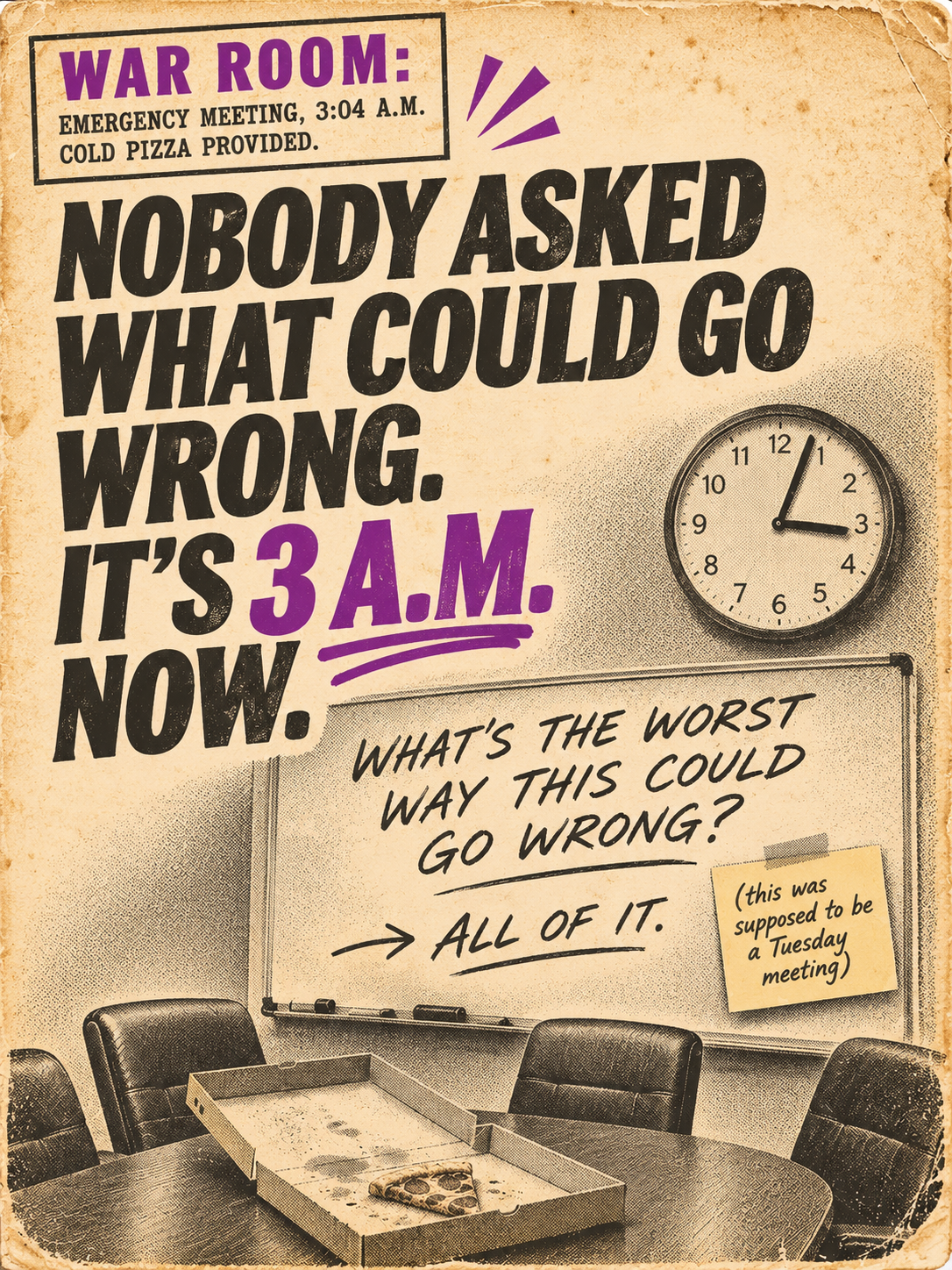
Real talk from inside the industry: crisis management is mostly the art of explaining to a room of executives why the thing they all approved is now trending.
I sat through that meeting. Everyone pretends they have doubts. Nobody had doubts. There's a Google Doc titled "Holding Statement v7 FINAL (2)" and four people editing it at the same time. Someone suggests "maybe we just don't say anything?" and the comms lead slowly closes their eyes.
That's the job.
So let's look at nine real PR disasters, how each brand actually handled the crisis, and what you should steal (or avoid like your life depends on it) before your own brand ends up as example number ten.
9 Crisis Management Examples From Real PR Disasters
1. Pepsi Number Fever: Crisis Management When a Promo Goes Nuclear
Pepsi ran a bottle cap promotion in the Philippines. Find the winning number under your cap, win cash. Simple. Fun. What could go wrong?
EVERYTHING.
According to Mental Floss, Pepsi had somehow printed 800,000 caps carrying the winning number. Holders were told it was a mistake and turned away. Barbed wire went up around the plants, and riots, boycotts, and picketing followed. Executives in the Philippines and the U.S. reportedly gathered for an emergency meeting at 3 a.m.
(Every crisis has a 3 a.m. meeting. Nobody's at their best. Somebody's eating cold pizza. Somebody's dog is barking on an unmuted line. This is where billion-dollar decisions get made. Sleep well.)
Time reported that more than 22,000 people with the number filed 689 civil suits and 5,200 criminal complaints. The fallout included riots and at least five deaths.And yet Pepsi is still very much in business.
The crisis management lesson: stress-test every promotion. Ask "what's the absolute worst way this could go wrong?" and have a plan for it before launch. Because the moment the TV announcer reads the number, it's too late.
2. H&M's Hoodie: When Your Review Process Is the Crisis
H&M listed a hoodie reading "Coolest Monkey in the Jungle" modeled by a Black child.
Now here's what fascinates me. That image passed through designers, stylists, a photographer, merchandisers, and whoever uploaded it to the site. NOBODY stopped it. Or (and this is worse) somebody noticed and didn't feel safe saying so.
The backlash was instant. H&M apologized and removed the product, but the hit to its brand reputation was real.
What they meant to say was: "Our process didn't have enough different perspectives to catch this."
The crisis management lesson: a lot of crises start long before launch, in review processes with blind spots. Diverse teams and a culture where anyone can say "stop" are crisis prevention, plain and simple.
3. Dove's Body Wash Ad: Crisis Management When Context Disappears
Dove ran a short ad showing women pulling off a shirt to reveal another woman underneath. One transition showed a Black woman turning into a white woman.
That one moment got screenshotted and shared on its own, and many people read it as racist, especially given the long, ugly history of soap ads built on exactly that idea. The model later spoke publicly about how the ad was received, but by then the conversation had moved on without her.
Dove apologized, acknowledged it had missed the mark, and pulled the ad.
Let me translate the lesson for you: your full campaign doesn't exist online. Only the screenshot does. No one's watching your thirty-second spot with the creative brief in hand.
The crisis management lesson: review every frame as if it'll be shared alone, with zero context, by someone who's already annoyed. Because it will be. Trust takes a long time to rebuild after that, which is why brand trust is quietly rewriting every PR trend worth watching.
4. McDonald's Grief Ad: A Crisis Response That Actually Worked
McDonald's UK ran an ad where a boy searches for a connection to his late father and finds it in… a shared love of the Filet-O-Fish.
Critics, including bereavement charities, accused the brand of using childhood grief to sell burgers. McDonald's pulled it.
And that was basically it. They moved fast, they didn't fight it, and the ad faded from memory.
(Quick rant, sorry. Not every crisis needs a CEO video shot in front of a carefully curated bookshelf. Some just need the thing to disappear. The urge to "say something meaningful" has turned plenty of small fires into big ones. Okay. I'm back.)
The crisis management lesson: sometimes the smartest response is the quietest one. Acknowledge it, remove it, move on.
5. Burger King Russia: Decoding a Corporate Apology
Burger King's Russian team offered cash and free Whoppers to women who got pregnant by World Cup players. Yes. Really.
SBS News reported that the promo framed the reward around getting "the best football genes." Burger King later said the offer didn't reflect its brand or values, and that it was taking steps to prevent anything similar.
Let me translate that apology: "A regional team posted this without anyone senior seeing it, and our approval process is about to get extremely interesting."
Honestly? As crisis apologies go, it did its job. It was fast, it took ownership, and it promised a process fix.
The crisis management lesson: your brand is only as safe as its least-supervised social account. Global brands need the same approval standards in every market, not just at headquarters.
6. SpaghettiOs and the Pearl Harbor Tweet: The Content Calendar Crisis
On the anniversary of the Pearl Harbor attack, SpaghettiOs tweeted its smiling pasta mascot holding an American flag.
People were horrified. SpaghettiOs apologized.
Here's how I'd bet this happened. Someone had "Pearl Harbor Remembrance" on the content calendar. They felt pressure to post. The only brand asset they had was a grinning noodle. Sent. Regret.
The crisis management lesson: you don't have to post about everything. Content calendars cause more PR disasters than villains do. Serious historical moments aren't brand opportunities, so keep it respectful, or stay quiet.
7. Malaysia Airlines' "Bucket List" Contest: Marketing in the Middle of a Crisis
After two devastating aircraft disasters, Malaysia Airlines launched a contest asking people to share their "ultimate bucket list." As in, things to do before you die.
The New Daily reported that critics on social media were quick to call it a "marketing disaster," and the airline pulled the competition and apologized. (I swear, in that brainstorm, everyone thought it. Everyone. And nobody said it, because the senior person loved it. This is the single most common cause of marketing fails I've ever seen, and it should be printed on a mug.)
The crisis management lesson: when you're already in a crisis, every new campaign gets read through that crisis. Keep your marketing far away from anything that could echo it, or pause big campaigns entirely until things settle.
8. Kenneth Cole's Cairo Tweet: Never Turn Someone Else's Crisis Into Content
During the Arab Spring protests, Kenneth Cole joked on social media that the uproar in Cairo was really about the brand's new spring collection going online.
The backlash was swift and global. The brand apologized, and the tweet still turns up on every "worst brand tweets" list ever written. (Hi. This is one of those lists.)
The crisis management lesson: social media has no borders. If people are being hurt, it isn't a punchline. The fastest way to create your own crisis is to joke about someone else's.
9. Ea-nāṣir: Proof That Brand Reputation Damage Lasts Forever
And now, the original PR disaster, courtesy of ancient Mesopotamia.
Ea-nāṣir was a copper merchant whose customers really didn't like his copper. We know this because archaeologists found complaint tablets connected to him, including one from a furious customer named Nanni that's often called the oldest customer complaint on record.
Thousands of years later, that's all anyone knows about him. Bad copper. Angry clay.
The crisis management lesson: your brand reputation is a permanent record. You can't delete the past, but you can bury it under better work, better service, and better behavior.
What These Marketing Fails Reveal About Crisis Management
Line all nine up and the same patterns show up every single time:
- Somebody approved it. These weren't accidents. They passed real meetings with real people in them.
- Nobody felt safe saying "wait." Or the people who would have said it weren't in the room.
- The timing was catastrophic. Tragedy, grief, political unrest. None of it is content.
- Context vanished. One image, one tweet, one line. That's what people judged.
- Recovery came down to the response. Fast, sincere, and action-backed work. Defensive and slow..
Notice something? Most of these crises were preventable. The brands didn't lack talent. They lacked process.
How to Build a Crisis Management Plan Before You Need One
Here's the boring stuff that saves careers. (Boring is good. Boring means you're prepared.)
- Decide who's in charge. Who responds, who approves statements, who talks to the media? Write it down while everyone's calm.
- Draft holding statements in advance. A short "we're aware and looking into it" message buys you time without saying something you'll regret.
- Build a real review process. Diverse reviewers, a "worst possible interpretation" check, and authority for anyone to stop a launch.
- Watch the calendar. Know which dates, events, and topics are off-limits for promotions.
- Monitor constantly. Social listening and media alerts let you catch a fire while it's still small.
- Run a practice drill. Simulate a crisis once in a while. The first time you use your plan shouldn't be during an actual crisis.
How to Protect Your Brand Reputation After a PR Disaster
It happened anyway. Okay. Breathe. Here's what the survivors on this list did right:
- Respond quickly. Silence gets read as guilt or indifference.
- Apologize like a person. "We got this wrong, we're sorry, here's what we're changing." Not a statement that clearly went through eleven lawyers. (We can always tell.)
- Remove the harm. If it's hurting people, take it down. Don't defend it.
- Fix the cause. Change the process that let it happen, and show people you did.
- Keep showing up. Steady, good work is what eventually rebuilds brand reputation.
Already in the middle of it? Here's how to handle reputation management after bad press without making it worse. And if your crisis started with a joke or tone that totally misfired, it might be time to admit your brand voice is giving cringe, not confidence.
Every brand on this list had a nightmare moment. Most are still standing. Good crisis management won't stop every mistake, but it decides whether a mistake defines you.
Don't Be A Little Pitch steps in when the message lands wrong, and helps you take bold swings without becoming the next cautionary tale. Something on fire? Let's talk.
FAQ
What is crisis management in PR?
Crisis management is how a company prepares for, responds to, and recovers from events that threaten its reputation, such as offensive campaigns, product failures, or public backlash. It includes planning, communication, and steps to rebuild trust.
What are some examples of crisis management?
Examples include McDonald's quickly pulling a UK ad criticized for using childhood grief, Burger King apologizing and removing a World Cup promotion in Russia, and Malaysia Airlines withdrawing its "My Ultimate Bucket List" contest after public criticism.
What are the main steps of crisis management?
The main steps are preparing a crisis plan, monitoring for issues, responding quickly with accurate information, taking corrective action, and following up to rebuild trust. Reviewing what happened afterward helps prevent future crises.
What should a crisis management plan include?
A crisis management plan should include roles and responsibilities, an approval process for statements, prepared holding statements, media and stakeholder contact lists, social media guidelines, and a monitoring process.
How do you protect brand reputation during a PR crisis?
Respond quickly, communicate honestly, apologize when appropriate, remove harmful content, and explain the specific changes you're making. Consistent follow-through over time is what rebuilds trust.
What causes most PR disasters?
Common causes include insensitive or poorly timed messaging, jokes about serious events, weak review processes, a lack of diverse perspectives, and content that can be easily misread when shared out of context.
60-Day Performance Guarantee
PR only works if it builds momentum fast. If we do not secure 2 meaningful earned media features and line up 3 additional opportunities within 60 days, you get a full refund.

Free Authority Score Checker
Check your online reputation and authority score for free and see how you stack up and get custom tips to improve instantly.