Newsjacking: What a Denim Feud Taught the PR Industry About Relevance

TLDR:
- Two jean campaigns, one cultural moment, one very online comparison nobody asked for
- The winner did not shout the loudest, it just understood the room
- This is newsjacking in its purest form, and most brands will still manage to screw it up
- Pay attention. There will not be a quiz, but there should be
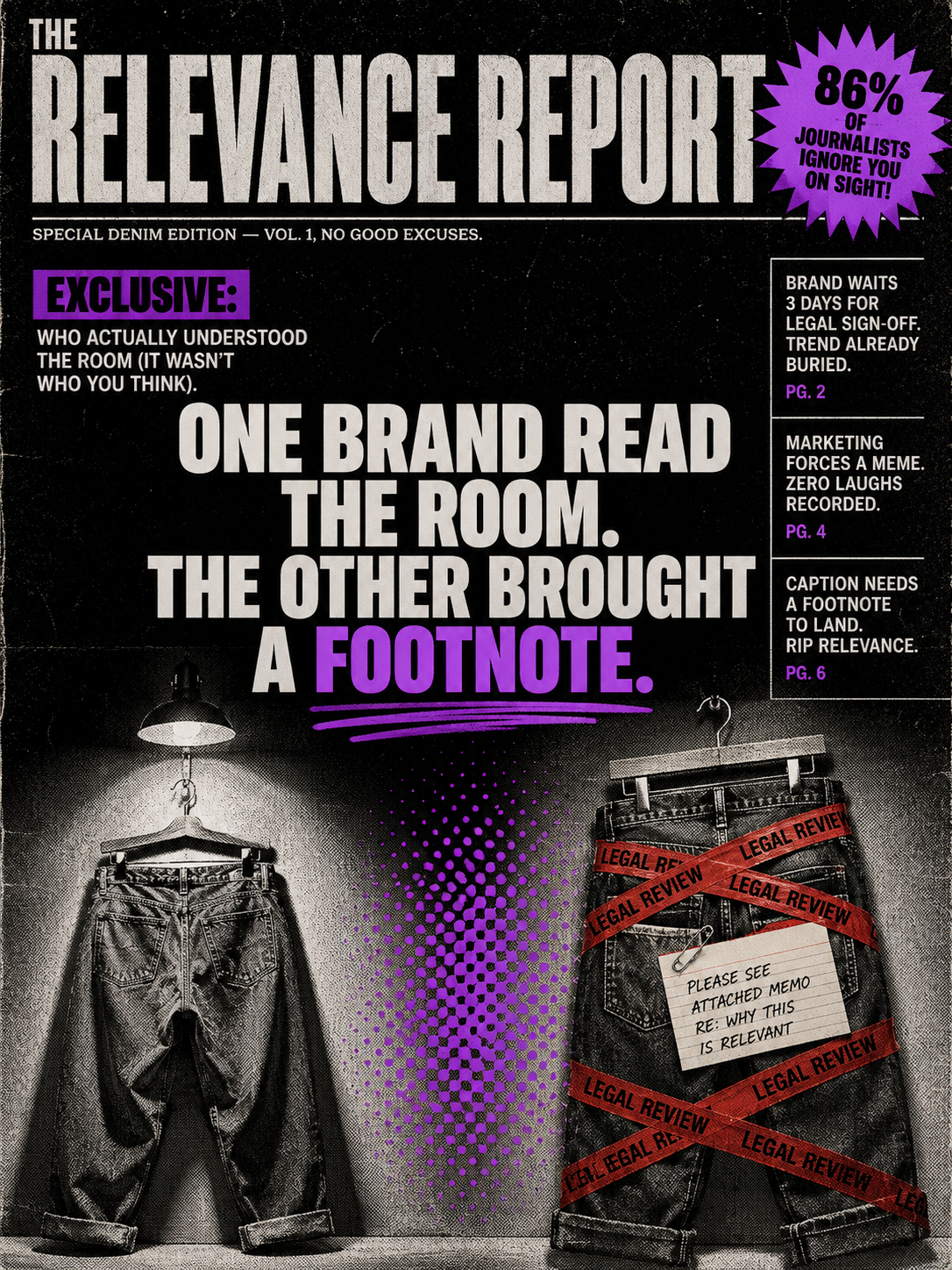
A pair of celebrity denim campaigns landed in the same news cycle and the internet, predictably, turned it into a competition. Sydney Sweeney's jeans campaign and Katseye's jeans campaign started circulating side by side, and within days, commentators, marketers, and at least one very online cousin had declared a winner. The debate itself was forgettable. What happened around it was not.
This is newsjacking in its purest form. Not a scandal, not a controversy, just two brands riding the same cultural wave at the same time, and only one walking away looking like it meant to. Pop culture PR rewards brands that recognize a moment. It punishes brands that force one.
Why Newsjacking Works (And When It Backfires)
Newsjacking works because it borrows attention that already exists. Nobody has to be convinced to care about a trending topic. They already do. A brand's job is to show up inside that attention with something worth noticing, not to explain why the moment matters.
Three things make it work:
- It creates instant context. The audience already understands the reference, so the brand does not have to build one from scratch.
- It lowers the barrier to entry. People share things that are easy to understand at a glance.
- It rides existing momentum instead of manufacturing its own, which is cheaper and faster than any paid campaign.
Interestingly, the brands that pull this off rarely look like they are trying. That is not an accident. It is the entire strategy.
The Denim Debate as a Case Study in Cultural Marketing
The Sydney Sweeney and Katseye jeans comparison worked because both campaigns were already culturally legible before the comparison existed. Sweeney's audience and Katseye's audience overlap just enough to make the debate feel organic, and different enough to make it feel like an actual argument rather than a manufactured one.
Sources might interpret the timing as coincidental. It probably was not, and it did not need to be. What matters is that neither brand had to explain itself. The audience filled in the narrative on its own, which is the entire point of good cultural marketing. A brand that has to caption its own relevance has already lost the moment.
This is also where our field guide on newsjacking without the cringe becomes required reading, because the difference between this denim moment landing and a brand's next attempt landing badly usually comes down to one thing: whether the brand actually understood the room before it walked in.
When a Brand Should Skip a Trend Instead of Newsjacking It
It remains unclear whether some brands read any of this before hitting publish. The failure mode is consistent enough to name. If a trend does not already align with the brand's audience, forcing a connection reads as exactly what it is. If the moment requires a paragraph of context before the joke lands, the moment is already over. If legal needs three days to approve the caption, the caption should not exist.
Brands skip the read entirely and default to volume, treating relevance like a numbers game instead of a timing game. It rarely works. Consumers now split their attention across more platforms and more moments than at any point before, which means the tolerance for a forced reference has gotten smaller, not bigger.
Nearly 90 percent of consumers rely on social platforms just to keep up with what is trending, according to trendjacking research published by SHNO, which means the audience already knows what a genuine moment looks like before a brand ever shows up to explain it to them.
How to Newsjack Without Looking Desperate
The brands that get this right treat pop culture PR as a listening exercise before it becomes a publishing one. They watch a moment build before they touch it. They ask whether the connection is obvious or whether someone will have to defend it in a meeting later. And they accept that skipping a trend is not a missed opportunity, it is often the smarter move.
Brand relevance is not built by being everywhere. It is built by showing up in the right place with the right read on the room. Journalists have made this painfully clear on their end of the equation too: 86 percent immediately disregard pitches that are not relevant to their beat, according to Muck Rack's newsjacking research. Relevance is not a nice-to-have. It is the entire filter.
For brands trying to figure out where their own cultural instincts sit, this breakdown of pop culture PR is worth the read before the next trending topic tempts anyone into a rushed caption.
The Real Newsjacking Lesson: Brand Relevance Over Volume
This was never actually about denim. It was about which brand understood the difference between joining a conversation and interrupting one. Newsjacking done well looks effortless because the work happened before the post went live, not during the scramble to catch up with it.
Trust, as it turns out, is not built by chasing every trend. It is built by choosing the right ones and skipping the rest without apology. That restraint is the actual skill, and it is the part most brand teams underinvest in.
Don't Be A Little Pitch exists because most brands can spot a trend but freeze the moment they have to decide whether it is actually theirs to touch. If a cultural moment just landed on your radar and nobody on the team can agree whether to run with it, that conversation is worth having before the window closes, not after.
FAQ
What is newsjacking in PR?
Newsjacking is the practice of inserting a brand's message or perspective into a breaking news story or trending cultural moment to earn attention, media coverage, or social engagement without paying for it.
Is newsjacking still effective for brands?
Yes, when the moment genuinely fits the brand's audience and voice. It becomes ineffective, and often damaging, when a brand forces a connection that was not there to begin with.
How do I know if a trend is right for my brand?
Ask whether the audience already associates the brand with the topic in some way. If the connection needs to be explained, it is usually not a fit.
What is the risk of newsjacking gone wrong?
A poorly judged newsjack can damage brand trust and invite public criticism, particularly if the trend involves a sensitive or controversial event. Timing and tone matter as much as the decision to participate at all.
Do small brands benefit from newsjacking the same way big brands do?
Smaller brands often benefit more, since a well-timed cultural moment can generate visibility that would otherwise require a much larger media budget.

60-Day Performance Guarantee
PR only works if it builds momentum fast. If we do not secure 2 meaningful earned media features and line up 3 additional opportunities within 60 days, you get a full refund.

Free Authority Score Checker
Check your online reputation and authority score for free and see how you stack up and get custom tips to improve instantly.




.png)