Brand Positioning Can't Be Fixed With a Discount

TLDR:
- Your brand positioning is the problem. The discount is just how you've been hiding it.
- Buyers in a crowded market aren't looking for louder. They're looking for clearer. These are opposites.
- Returning customers convert faster and trust more easily, so maybe stop spending everything on strangers.
- Press coverage earned early is credibility your sales team gets to use later. Wild concept.
- If nobody can say what you do without opening your site, that's not a traffic problem.
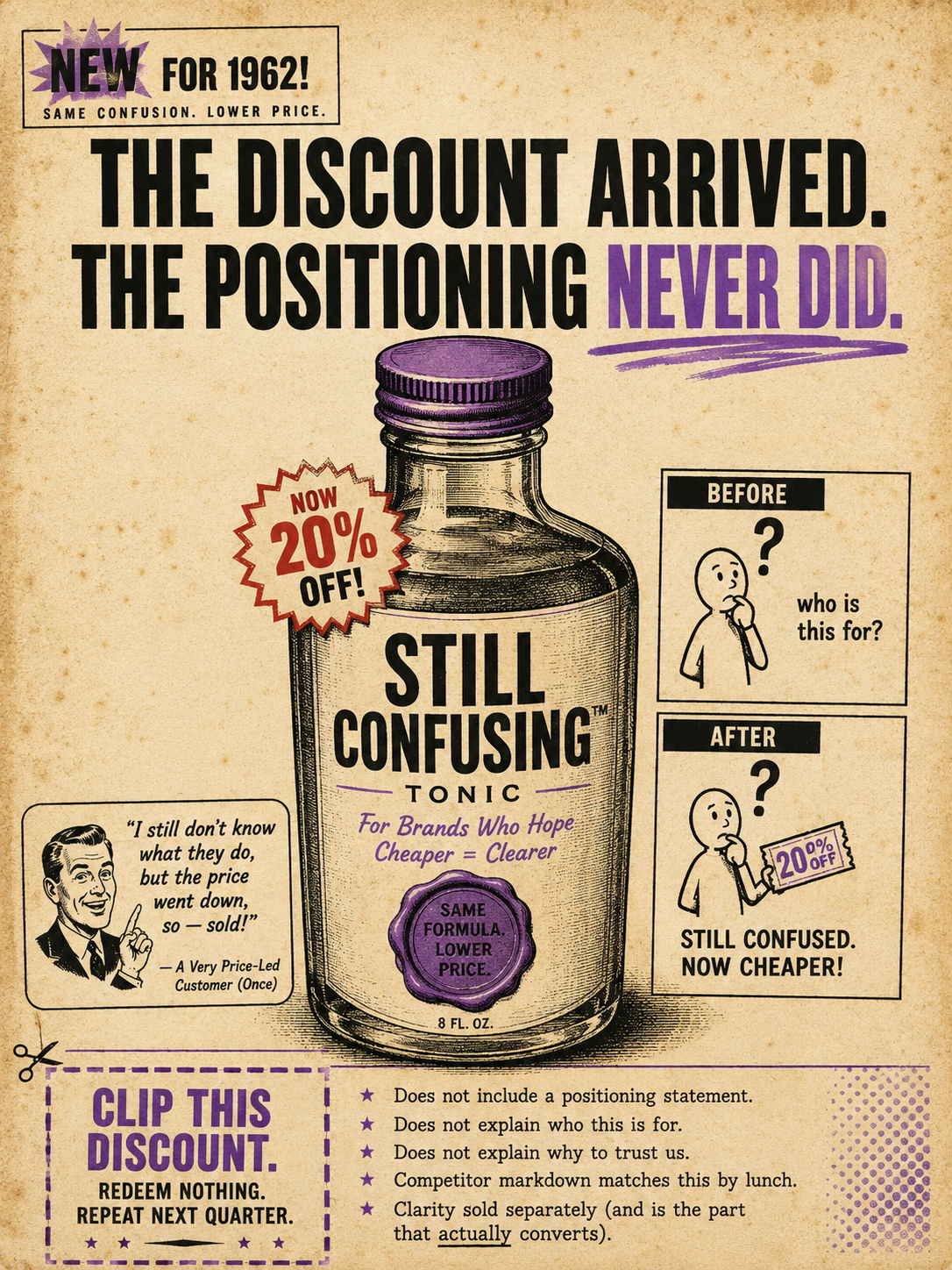
So the plan is a discount.
That's it. That's the whole plan. The market gets busy, everyone panics, and the response is to take 20% off and hope somebody notices you in a feed where every single competitor is also taking 20% off.
Did we think this through or did we just copy what the company next to us did last time?
Here's what's actually happening: your brand positioning was never clear, and a discount doesn't clarify anything. It just makes the confusion cheaper. Buyers in a loud market aren't scanning for the best deal, they're scanning for the thing they can understand fastest. Those are not the same search and you keep answering the wrong one.
What Brand Positioning Actually Does When the Market Gets Loud
Positioning is the answer to three questions a buyer resolves in about four seconds. Who is this for? What problem does it solve? Why would I trust them?
That's it. That's the entire job.
When a category gets crowded, every brand in it gets louder simultaneously, which cancels out, because that's how volume works. What doesn't cancel out is comprehension. The brand that can be understood immediately wins by default while everyone else is busy being emphatic.
The trust math backs this up, unfortunately for anyone hoping vibes would carry it. The Edelman Trust Barometer, drawing on roughly 34,000 respondents across 28 countries, found seven in ten people are unwilling or hesitant to trust someone whose values, background, or information sources differ from their own. People are pulling into circles they already trust. Showing up loud and unfamiliar isn't neutral. It's actively worse than showing up quiet and recognizable.
If your positioning is still vague, brand awareness without a point of view covers exactly why visibility without clarity does nothing.
Why Discounts Don't Fix Bad Brand Positioning
A discount communicates one thing: this costs less than it did before.
That's not differentiation. That's arithmetic. And it's arithmetic your competitor can copy within the hour, at which point you've both lowered your margin and neither of you has said anything.
Context differentiates. Discounts don't.
Context means tying your message to something real. A behavior your buyers are actually exhibiting. A decision they're actually making. The reason this matters to them specifically, right now, isn't "the price went down."
When someone understands why this, why now, the conversion gets easier without you paying for it in margin. When they don't, the discount is doing all the work and it will need to keep doing all the work forever. Enjoy that.
Why Customer Loyalty Converts Faster Than New Acquisition
Every plan I've ever seen is about acquisition. New eyeballs. New audiences. New people who have never heard of you and have no reason to care.
Meanwhile the people who already bought from you, already trust you, and already understand your brand positioning are sitting right there, being ignored, because they're not exciting.
Customer loyalty isn't a soft metric. Returning buyers convert faster and need less convincing, because the trust work is already done. Reinforcing it costs a fraction of what acquiring a stranger costs.
And customer loyalty is downstream of positioning, not of perks. People stay loyal to brands they can describe, not to brands that emailed them a coupon.
What actually reinforces it:
- Reliability, demonstrated rather than claimed
- Specific past outcomes, with real details
- Values that stayed the same when it was inconvenient
None of that is a discount. All of it is positioning.
How to Reduce Choice Paralysis With Clear Positioning
When there's too much noise, buyers don't evaluate more carefully. They evaluate less. They pick whatever's easiest to understand and stop thinking about it, because thinking is expensive and they're tired.
So ambiguity isn't a small aesthetic problem. It's a disqualification.
Go through your own messaging and answer, honestly: who is this for, what does it solve, why should they trust us. If any answer takes more than a sentence, a buyer scanning at speed isn't getting there either.
This is basic. And yet an enormous number of brands cannot pass it, usually because being specific means excluding someone and nobody wants to do that. The version of this that shows up in brand voice is worth reading, particularly on performed authenticity.
How Press Coverage Makes Your Sales Team's Job Easier
PR and sales operating as separate departments with separate goals is a structural mistake that somehow survived decades of everyone noticing it.
Press coverage builds credibility. Credibility is what a sales conversation runs on. When a prospect has already seen your name somewhere legitimate, the conversation starts warmer and shorter. That's not a soft benefit, that's a shorter sales cycle.
The reverse also holds. Press coverage earned by saying something useful outlives the campaign entirely, which is more than any discount has ever managed. Muck Rack's analysis of more than a million cited links found earned media accounts for the overwhelming majority of AI citations, not brand-owned pages. So the credibility keeps compounding inside AI-generated answers long after anyone stopped tracking it.
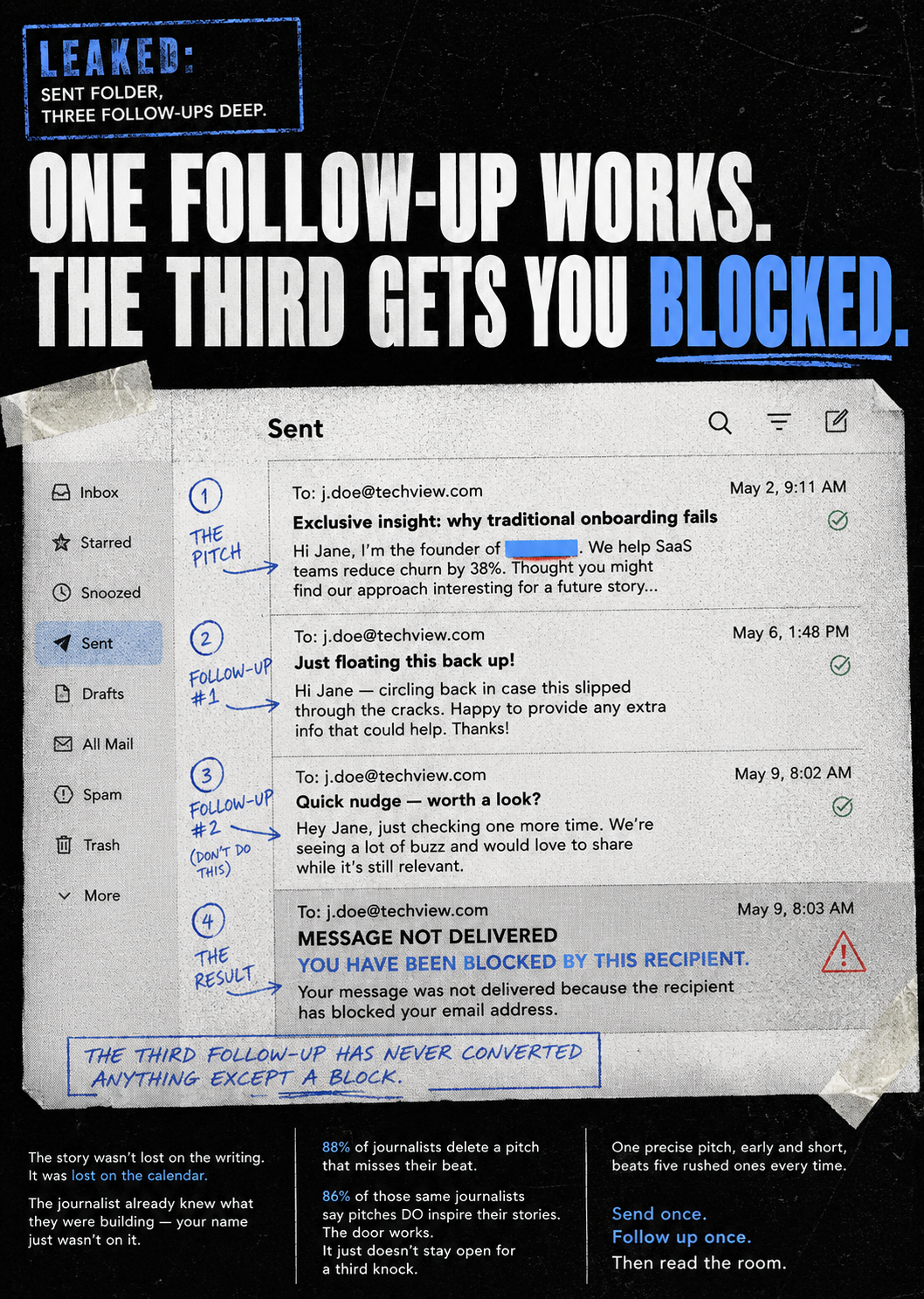
Getting that coverage requires the same clarity everything else here requires. Muck Rack's State of Journalism 2026 report found 88% of journalists delete pitches that miss their beat, and Cision's research across 3,000-plus journalists found over half get 50-plus pitches a week. A vague PR strategy doesn't survive that filter any better than vague messaging survives a buyer. Same failure, different inbox. Your PR strategy and your positioning are the same document whether you wrote it that way or not.
What Happens After the Rush (Nobody Plans This Part)
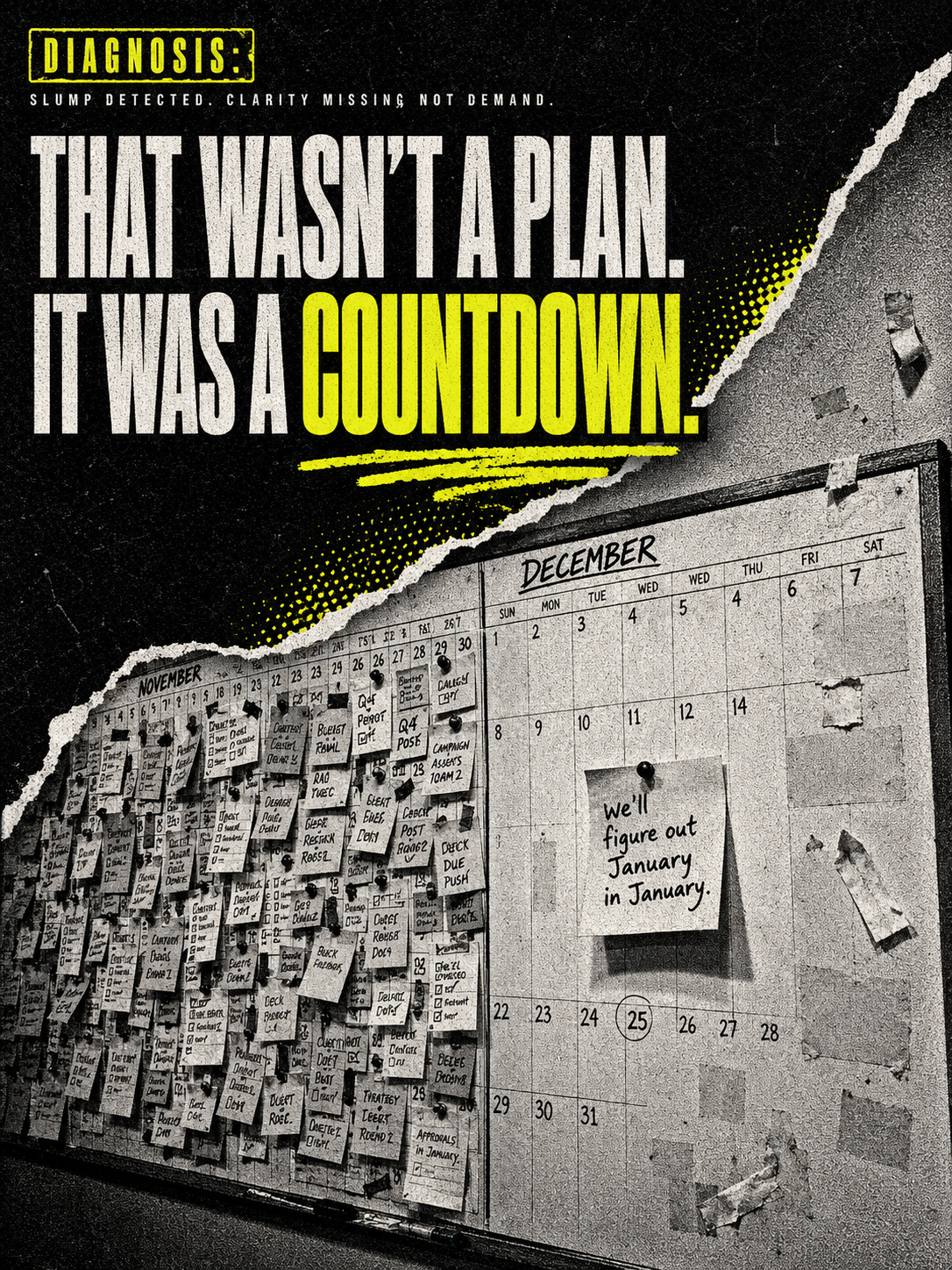
The peak ends. Then what?
Genuinely, what? Because most teams have no answer. All that visibility, all that attention, and no plan for converting it into anything that lasts past the spike.
Visibility should feed momentum, not evaporate into it. That means knowing which placements actually did something, which messages landed, and which audiences stuck around. Here are the signals worth tracking instead of impressions, which measure how many people had the opportunity to ignore you.
Context beats discounts. Trust beats urgency. Preparation beats panic. None of that is complicated, which is what makes it slightly embarrassing that it needs saying.
A discount buys one transaction. Clear brand positioning buys the next five. Don't Be A Little Pitch works on the second one.
FAQ
What is brand positioning and why does it matter?
Brand positioning is the specific place your brand occupies in a buyer's mind: who you're for, what you solve, and why you're credible. It matters because buyers in crowded markets choose what they understand fastest, not what they see most often.
Why don't discounts build customer loyalty?
Because a discount gives someone a reason to buy once, not a reason to prefer you. Price-led purchases attract price-led buyers who leave for the next cheaper option. Loyalty comes from consistent value and trust, which discounting actively undermines by reframing the relationship around cost.
How do I position a brand during a busy sales period?
Lead with context rather than urgency. Tie your message to the decision your buyer is actually making and make it obvious who the product is for. Clarity outperforms volume when everyone in the category is competing for the same attention.
How does PR support a sales team?
It shortens the trust-building part of the conversation. A prospect who has seen your brand covered by a credible third party starts from a warmer position, which reduces friction and cycle length. Coverage also produces citations that keep surfacing in search and AI answers.
Is it better to focus on new customers or existing ones?
Both, but existing customers are chronically underweighted. Returning buyers convert faster and cost less to reach because the trust already exists. Most teams over-invest in acquisition simply because it's more visible in reporting.
How do I keep momentum after a sales peak?
Track which placements and messages produced actual outcomes rather than reach, then keep publishing against whatever worked. Visibility that isn't converted into a repeatable position disappears when the spike ends.
60-Day Performance Guarantee
PR only works if it builds momentum fast. If we do not secure 2 meaningful earned media features and line up 3 additional opportunities within 60 days, you get a full refund.

Free Authority Score Checker
Check your online reputation and authority score for free and see how you stack up and get custom tips to improve instantly.




.png)