Pop Culture PR: Why Your Brand Keeps Missing the Newsjacking Window

TLDR:
- You had the right idea. You had the wrong approval chain. The window closed at 7am.
- Gratitude content tied to whatever month it is right now is not pop culture PR. It is a content calendar in a costume.
- The brands landing media coverage right now are not smarter than you. They are just allowed to ship.
- Your PR pitch is getting deleted in three seconds. Not because of AI. Because it sounds like AI.
- Below is what actually works, why most teams will read this and still miss it, and what to do instead.
I once watched a brand spend three days drafting a pitch about gratitude in the workplace and send it to a tech reporter who had not written about gratitude (or workplaces) in six years. They got a mention in a roundup the following quarter on a completely unrelated topic and decided their pop culture PR strategy was working.
I am still emotionally recovering from this.
This is what most teams call pop culture PR. It is not. It is wishful thinking with a Slack channel and a brand voice doc nobody reads.
I know why you are here. Someone in your last planning meeting said "let's ride a cultural moment" and now your content calendar is reactive graphics and a creeping suspicion that none of it is going to land. (Correct. None of it will.) Let me explain before the next news cycle eats everything.
How to Newsjack a Cultural Moment Without Your Internal Process Killing It
Newsjacking only works if your brand can move at the speed of the actual story. Not your monthly content review. Not your "let's circle back tomorrow" calendar invite. The speed of a journalist on deadline who needs a quote or a data point before lunch.
The optimal newsjacking window, per BuzzStream's data, is roughly 4 to 24 hours from when a story breaks. After that, the angle is dead. Buried. You cannot pitch a take on a Monday news event by Thursday. (Yes, you can technically email it. No, it will not be read.) This is where most brands lose. Their approval flow was designed for a brand magazine, not the news cycle as it actually exists.
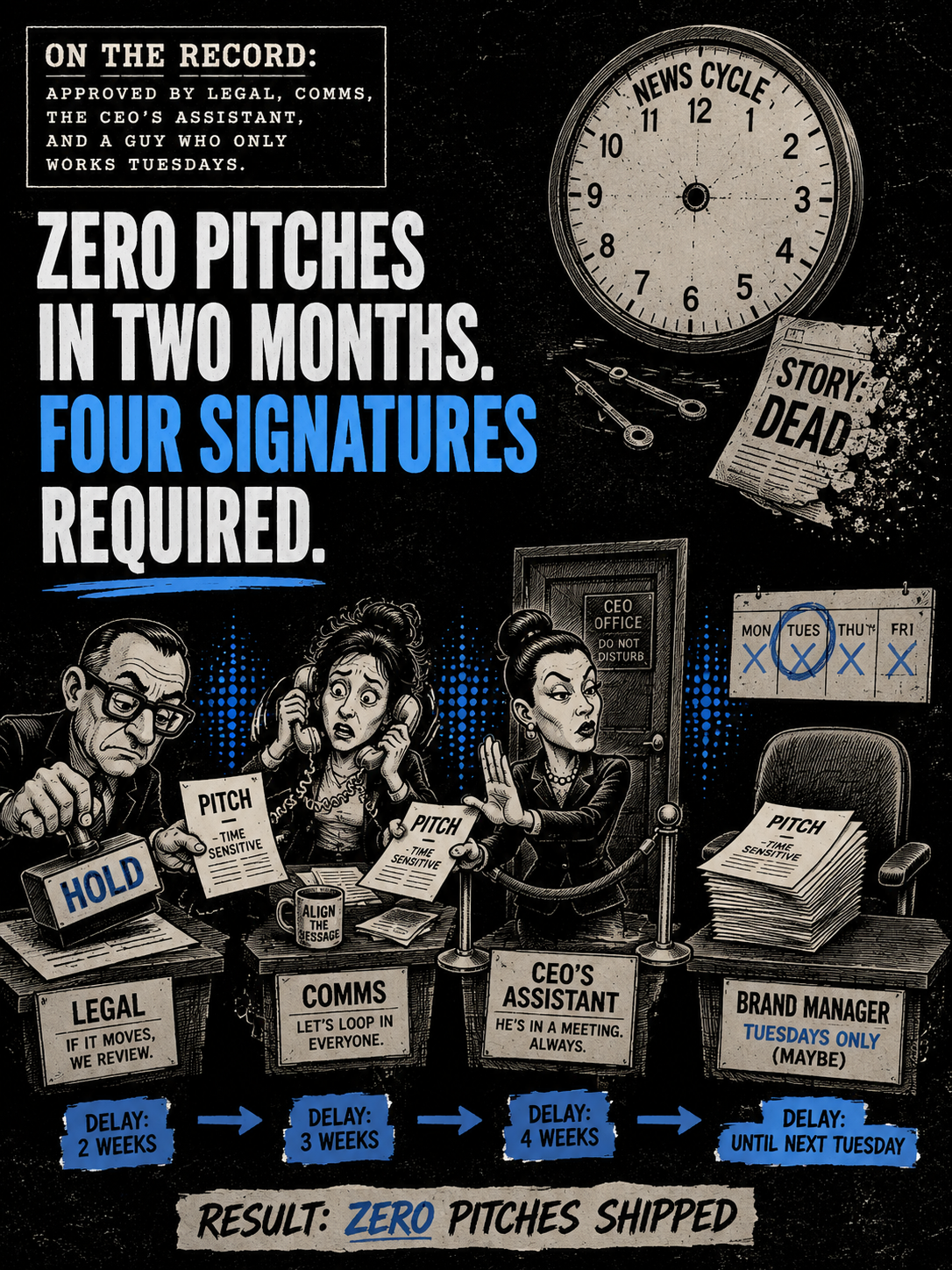
Side note. I once worked with a founder who required every pitch to clear legal, comms, the CEO's assistant, and a brand manager who only worked Tuesdays. Zero pitches in two months. They asked why earned media coverage was so hard. I did not answer. I was at the bar.
If your plan does not include a written rule about who can approve a same-day pitch, you do not have a newsjacking plan. You have a content calendar in a costume.
Anyway, back to it.
Newsjacking Examples That Worked
Every PR blog from the past five years has the phrase "subtlety wins" in it. What they meant to say was: stop making your pitch about your product launch and make it about a real angle the journalist can actually use. The first sounds like a fortune cookie. The second is an actual PR pitch strategy.
Here is what useful newsjacking looks like. A reporter is writing an industry trends piece. They need three or four data points and an expert quote that does not sound like it came from a chatbot. You have 48 hours to become one of them. The pitch is one paragraph: a stat from your internal data nobody else has, a quote from your founder that takes a real position (not a hedged one), a link to the underlying numbers. That is the entire pitch. No "amazing opportunity." No filler opener. Just the thing they need.
Per Muck Rack's 2026 State of Journalism report, 86% of journalists ignore pitches that are off their beat, and 47% rarely receive pitches that are relevant at all. The bar is on the floor. You are somehow tripping over it.
If you want to understand the actual mechanics of landing media coverage before you pitch anything, this guide on newsjacking without being cringe covers the line between a timely hook and a desperate one better than a single paragraph can.
PR Strategy for Brands That Actually Want to Win the News Cycle
The Oreo Super Bowl blackout tweet is the case study every PR person has been quoting for over a decade and still has not learned from. It was conceived, drafted, approved, and posted in under a minute. ONE MINUTE. It generated roughly $525 million in earned media coverage impressions. Your last cultural moment post took eleven business days. Just sitting with that.
The reason brands keep losing the newsjacking game is structural. Your competitors are not smarter. They are just allowed to ship.
PRLab's 2026 PR Trends report shows 73% of pitches get rejected for being irrelevant, and 49% of journalists rarely or never respond. The angle was cold by the time you sent it. Pop culture PR is not a creative problem. It is an operational one. The team that wins is not the one with the cleverest content calendar. It is the team whose head of comms can approve a same-day PR pitch without a four-person sync.
Fix that before the next news cycle eats everything.
Pop Culture Pitch Ideas for Journalists That Won't Get Deleted in Three Seconds
Here is the part nobody is going to send you in a newsletter. According to PRLab's 2026 trends report, journalist fatigue from AI-generated pitches has reached crisis levels. Reporters can spot an automated pitch in three seconds. They are deleting them at industrial scale. And that is, somehow, very good news if you can still write like a person.
Pitch with a real opinion. A real data point. A subject line that sounds like something a person typed at 9:47am after their second coffee, not something produced after being told to "sound enthusiastic and on-brand."
Most of your competitors are about to outsource their entire strategy to a prompt and a SaaS tool. The journalists are already over it. THIS IS THE OPENING. Pop culture pitch ideas that land share exactly one characteristic: they treat the journalist like a person who has a story to finish, not a target to convert.
Three things that actually work: a stat from your internal data that nobody else has published yet, a founder quote that takes a real position (not a hedge), and a subject line that explains why this story matters right now specifically. That is the whole formula. Nobody wants to print it on a poster because it sounds too simple. It is simple. Simple is not the same as easy.
Media Coverage Tactics for Teams That Can Actually Ship
Media coverage does not go to the most creative brand. It goes to the most operationally ready one.
Here is what actually gets brands picked up. Pre-drafted quote templates ready for the cultural moments they know are coming. A founder with three or four positions already on record that a journalist can reference without scheduling a callback. A clear sense of whether the PR effort is actually working before another pitch goes out into the void.
The brands that miss the window are not underprepared for ideas. They are underprepared for process. The brands that land media coverage consistently built the infrastructure before the moment arrived and can ship by Tuesday when it does.
Pop culture PR in 2026 is not about finding the cleverest angle. It is about being operationally capable of executing on a good angle before the window closes. The brands winning right now are not doing anything you do not know how to do. They are just doing it faster than their approval chain can stop them.
Your coverage problem is probably an operations problem. Don't Be A Little Pitch fixes both.
FAQ
What is pop culture PR and how does it work?
Pop culture PR is the practice of connecting your brand to cultural moments, trending conversations, or breaking news to earn media coverage without paying for placement. The mechanics are simple: a story breaks, you have something real and relevant to add, and you pitch it to a journalist covering that story before the window closes. The difference between pop culture PR and regular PR is that pop culture PR inserts your brand into news that already has momentum, rather than asking a journalist to generate interest from scratch.
How do I newsjack a cultural moment without coming across as forced?
The test is whether your brand has something genuinely useful to contribute. A proprietary data point, a founder who can take a real position on the issue, or a connection to your expertise that a reporter covering this moment would find credible. If the link between your brand and the story requires more than one sentence to explain, it is probably a stretch. Forced newsjacking is how brands end up in screenshot threads for the wrong reasons.
How fast do I need to respond to make newsjacking work?
Per BuzzStream data, the effective window is 4 to 24 hours from when a story breaks. After that, journalists have sourced what they need and moved on. Speed is not a competitive advantage in newsjacking. It is the prerequisite. If your internal approval process takes longer than a news cycle, newsjacking is not currently available to you as a tactic.
What makes a PR pitch actually get a response from a journalist?
Relevance to their beat, brevity, and a real angle. According to Muck Rack's 2026 State of Journalism report, 86% of journalists ignore pitches that do not match what they cover. The PR pitch format that works is one paragraph: one specific data point, one quote from a named person with a real position, and a clear reason why this is the story right now. No greeting, no background, no "hope this finds you well."
How do I know if my pop culture PR strategy is actually generating media coverage?
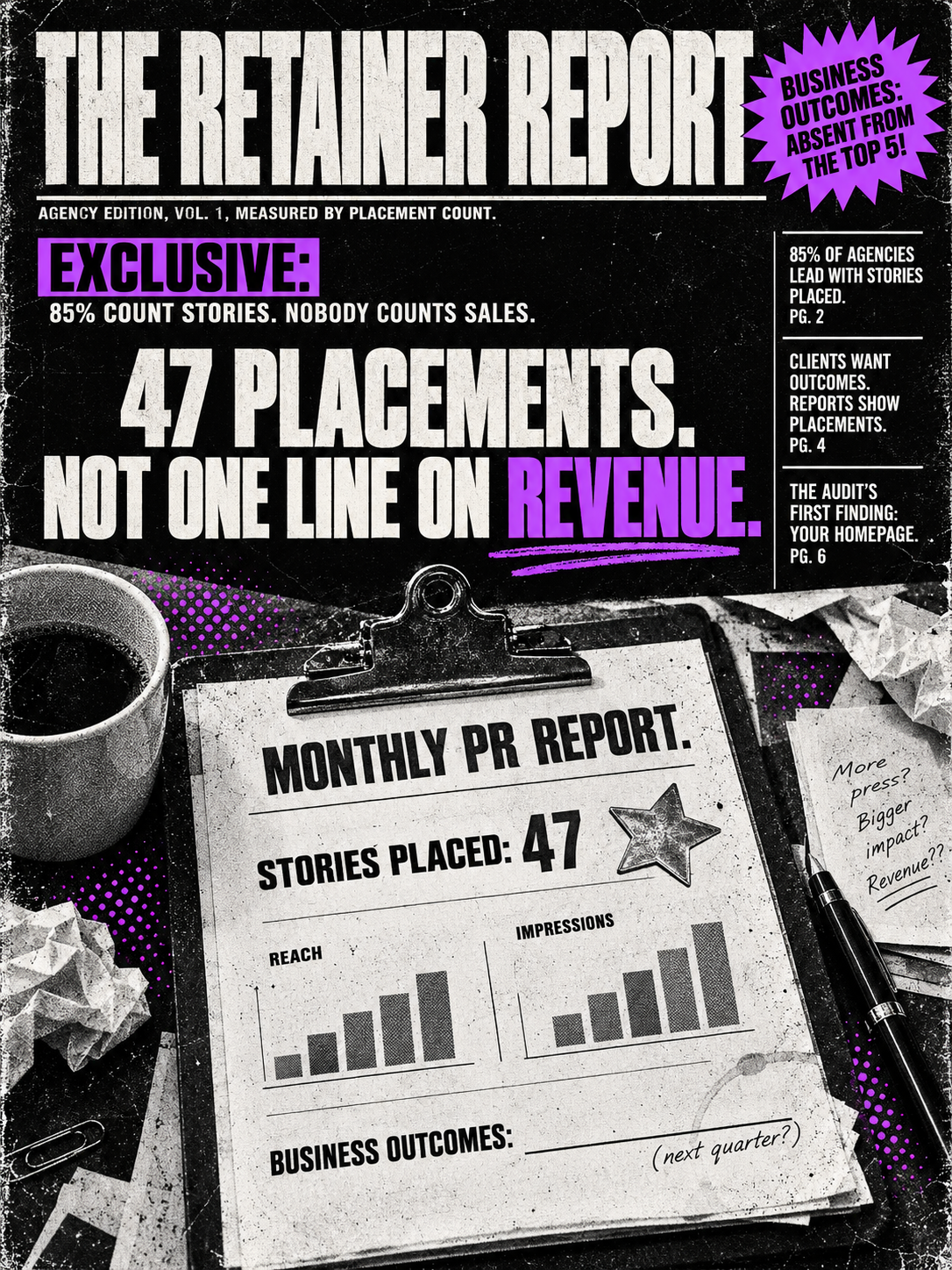
Track direct traffic from specific placements, inbound leads that reference a particular article or interview, and whether your share of voice within target publications is growing over time. Impressions and reach tell you how far a piece traveled. Attribution tells you whether it moved anything in the business. If you cannot draw a line between a piece of media coverage and a business outcome, that is useful information before the next pitch goes out.

60-Day Performance Guarantee
PR only works if it builds momentum fast. If we do not secure 2 meaningful earned media features and line up 3 additional opportunities within 60 days, you get a full refund.

Free Authority Score Checker
Check your online reputation and authority score for free and see how you stack up and get custom tips to improve instantly.




.png)