You Can't Buy Earned Media, and You Clearly Can't Earn It Either

TLDR:
- Earned media isn't luck, it isn't magic, and it definitely isn't what you get from mass-blasting a contact list
- A PR pitch gets ignored for one boring reason almost every time: nobody checked if the journalist actually covers this
- Media pitching that works is short and specific, not impressive and long
- Pitching journalists successfully means treating relevance like the whole assignment, not a nice bonus
- Following up once is fine. Following up five times is a personality flaw
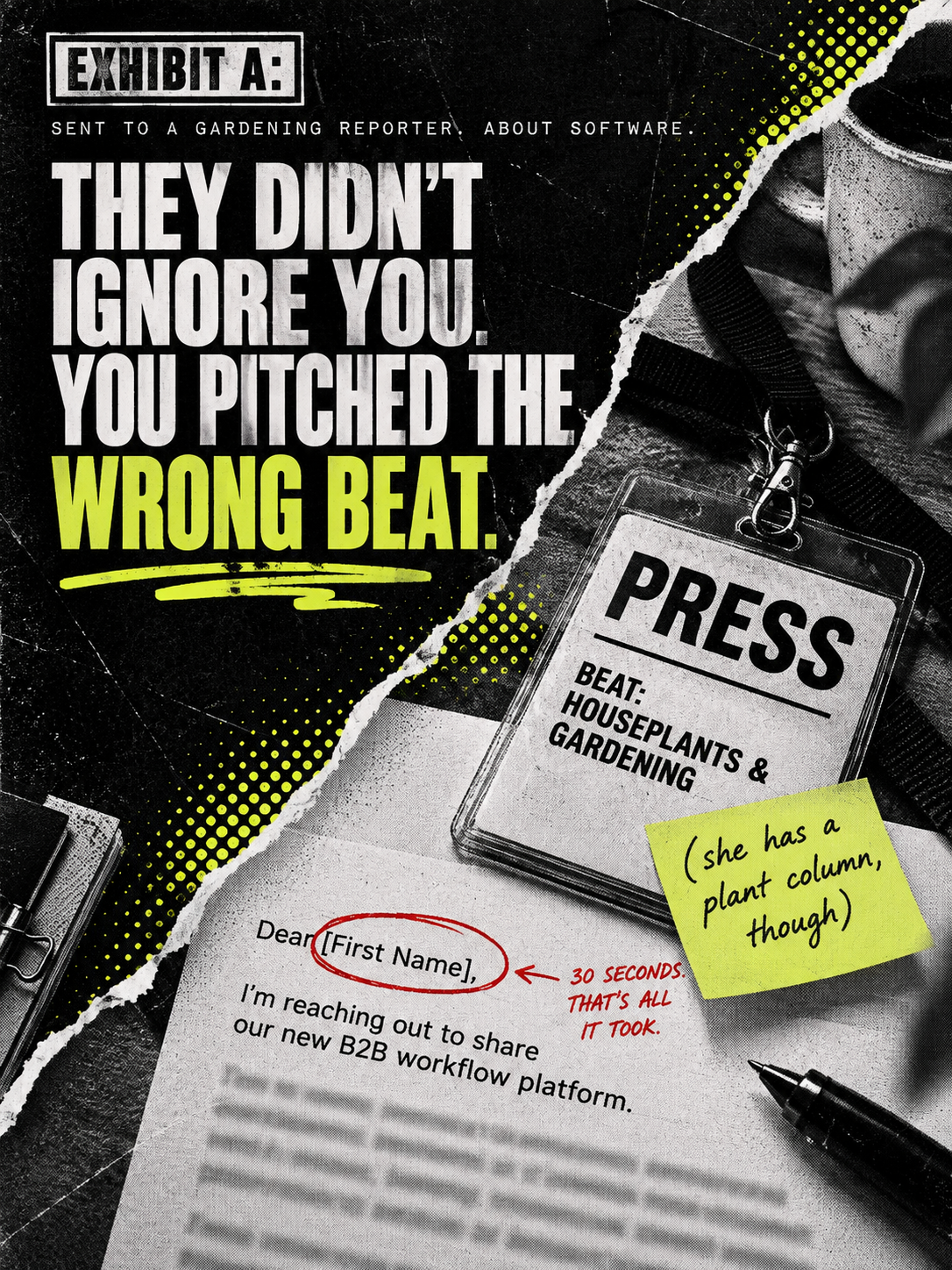
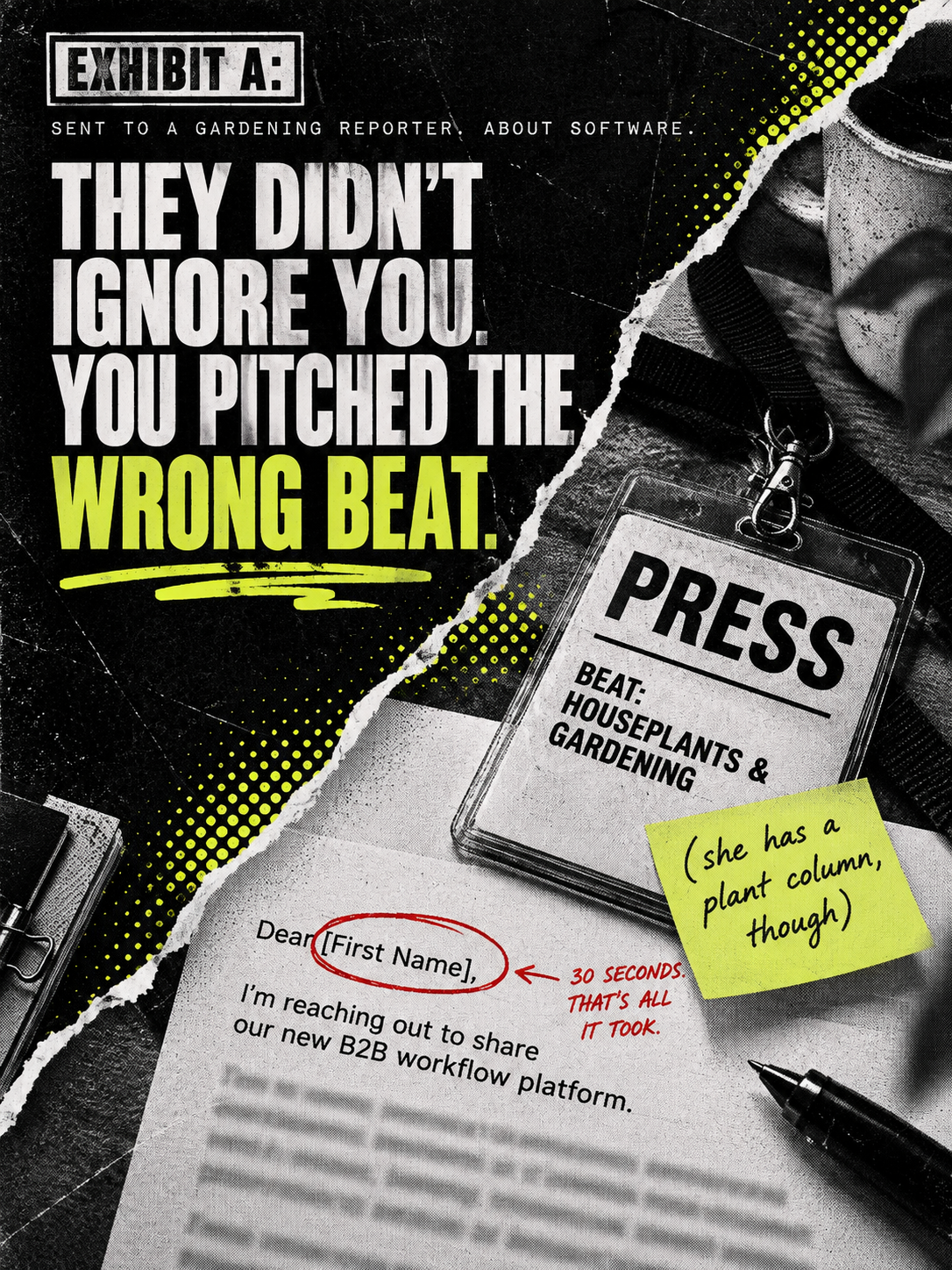
Wait. You thought earned media just happens if you send enough emails? Be so serious right now. Coverage doesn't fall out of the sky because you were persistent. It happens because someone did the unglamorous work of figuring out who to pitch, what to say, and when to stop.
I'm going to explain this slowly because apparently it needs explaining. Pitching isn't hard because journalists are mean. It's hard because most pitches are generic, long, and aimed at literally anyone, which means they land with literally no one, and then everyone acts shocked when the coverage never comes.
Earned Media Doesn't Happen by Accident, It Happens by Relevance
Here's the part that should be obvious and somehow isn't. 79 percent of journalists say a lack of relevance is the single biggest reason they deny a pitch, according to PR Daily's survey of over 1,100 journalists. Not a bad subject line. Not bad timing. Relevance. The thing you could've checked in thirty seconds before hitting send.
Did we think this through, or did we just copy the same pitch into forty inboxes and hope one of them stuck? Half of journalists get six or more pitches a day, and some get twenty-one or more, per that same research. Your pitch needed to earn its spot in that inbox. It didn't, and now you're wondering where the coverage went.
Wait, You Thought a Generic PR Pitch Would Work?
This is basic. Short pitches work. Long pitches don't. A PR pitch under 150 words gets a 5.89 percent response rate, while one running 500 words or longer gets 1.46 percent, which researchers at Everything PR and 5W PR's pitch response rate study describe as a short pitch earning roughly four times the response of a long one. Four times. And somewhere out there, someone's still attaching a full press kit to the first email.
69 percent of journalists say they prefer pitches under 200 words, according to Muck Rack's State of Journalism research. That's not a suggestion. That's most of your audience telling you, in writing, to stop padding.
If your pitches are technically short but still somehow saying nothing, this breakdown of what a real PR pitch hook looks like is worth reading before the next one goes out.
Media Pitching Means Personalizing, Not Mass-Blasting
I'm actually embarrassed for whoever is still sending "Dear [First Name]" with the brackets left in. 62 percent of journalists say they prefer being pitched one-to-one over a mass send or a cold call, per the same Muck Rack research. One-to-one. Meaning they can tell the difference, and they're telling you which one they want.
Relevance to their actual beat is what they value most, and 70 percent say exactly that. Not creativity. Not a clever subject line. Whether you bothered to check what they actually cover before emailing them about something they don't.
Pitching Journalists Still Requires Knowing When to Stop
There's a version of persistence that's professional, and a version that's unhinged. 69 percent of journalists say one follow-up is appropriate, while 24 percent say to never follow up at all, according to the same pitch response rate research from Everything PR and 5W PR. One. Maybe two if there's actual new information. Not a weekly check-in until they block your domain.
If they said no, or said nothing at all after a reasonable follow-up, that's an answer. Reading it as "they just need one more email" is how pitches stop getting opened at all, from anyone, ever again.
Be Authentic, Not a Try-Hard With a Press Release
If your messaging keeps reading like it came out of a template nobody bothered to update, this piece on why your pitch sounds like a bot covers exactly why that happens and what it's quietly costing you.
The Bottom Line on Earned Media, Since Someone Had to Say It
Earned media was never about sending the most emails. It's about sending the right PR pitch, to the right person, written like an actual human who checked their beat first. Media pitching that works is short, relevant, personal, and doesn't need six follow-ups to get a response.
If your pitch keeps getting deleted, that's not a mystery. That's feedback. Act on it.
Don't Be A Little Pitch exists because most brands keep making the same pitching mistakes and somehow keep acting surprised when earned media never shows up. If that sounds familiar, that's usually the exact thing worth fixing next.
FAQ
Why do journalists ignore my PR pitch?
The most common reason is a lack of relevance to what that journalist actually covers. Research consistently shows irrelevance, not timing or subject lines, as the top reason journalists deny or ignore a pitch.
How long should a PR pitch be?
Shorter pitches perform significantly better. Pitches under roughly 150 to 200 words see notably higher response rates than longer ones, and most journalists say they prefer pitches well under 200 words.
How many times should you follow up on a media pitch?
Most journalists say one follow-up is appropriate, with a smaller share saying follow-ups shouldn't happen at all. Multiple repeated follow-ups tend to hurt a brand's relationship with that journalist rather than help it.
What do journalists actually want in a pitch?
Journalists consistently cite relevance to their beat, access to real sources, and genuine story ideas as what matters most, ahead of polished language or a clever angle.
How is earned media different from paid or owned media?
Earned media is coverage a brand receives because a journalist or publication independently chose to feature it, rather than through payment or a brand's own channels. It tends to carry more credibility because it reads as third-party validation.
60-Day Performance Guarantee
PR only works if it builds momentum fast. If we do not secure 2 meaningful earned media features and line up 3 additional opportunities within 60 days, you get a full refund.

Free Authority Score Checker
Check your online reputation and authority score for free and see how you stack up and get custom tips to improve instantly.




.png)