Brand Positioning: Why the Moves That Look Bold Are Actually Just Clear

TLDR:
- Brands described as bold after the fact were almost never described that way at the time. The boldness is retrospective. The brand positioning strategy, however, was not.
- Generosity, humor, and quiet positioning are categorized as risky moves. They work most consistently when the brand actually knows who it's talking to.
- Narrative-first brand storytelling is cited regularly as the modern approach. It works when the narrative is specific. It doesn't when it's a general founder story dressed as a point of view.
- Pitching the "unpitchable" requires reframing, not reinventing. The story was usually already there.
- The common thread across every case below isn't courage. It's clarity.
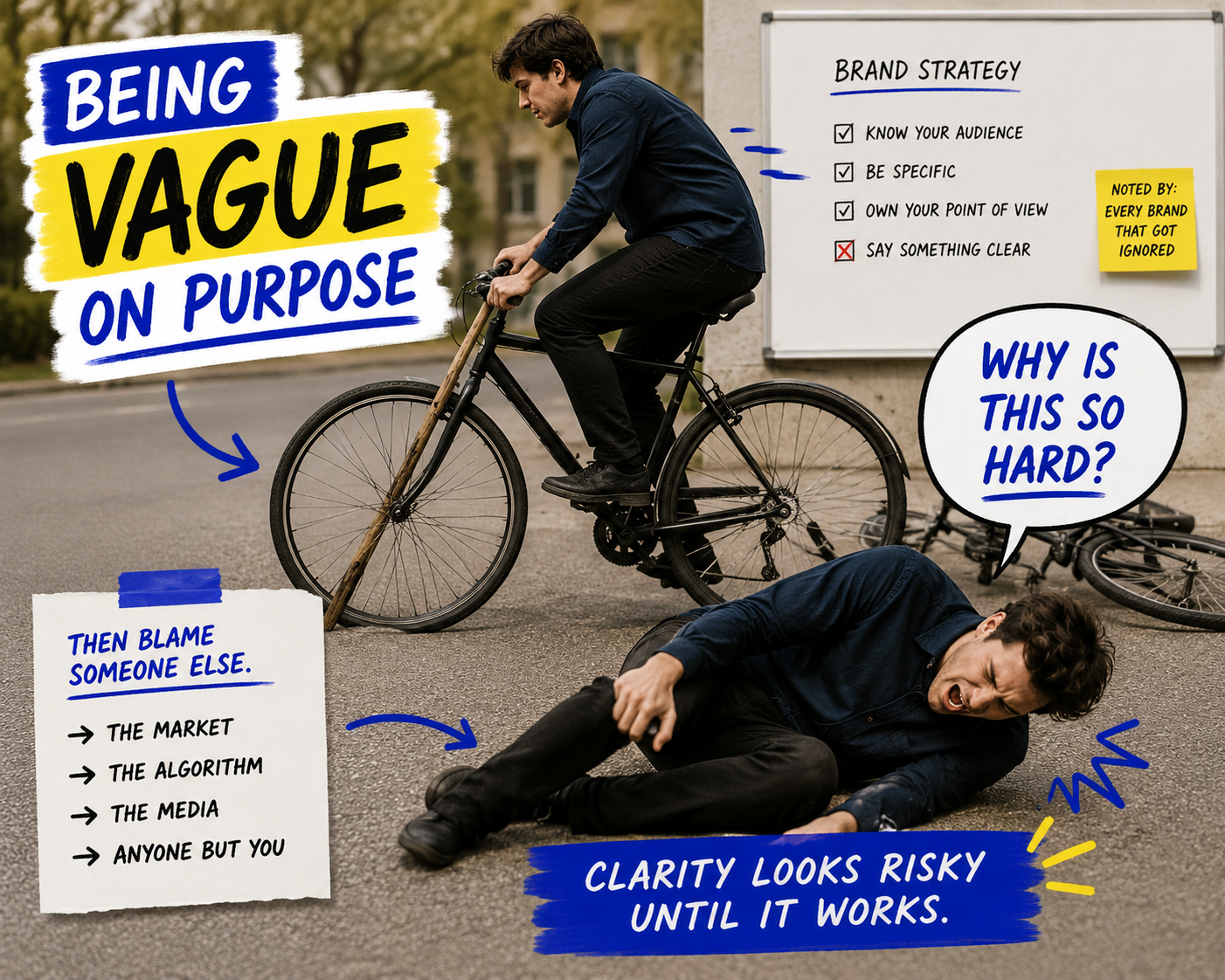
A pattern has emerged in how the brand positioning decisions of successful companies get described after the fact. At the time of execution, the same decisions are characterized by peers, investors, and trade publications as unusual, premature, or financially inadvisable. Several years later, the same decisions are cited as visionary. The reframing is consistent enough to deserve examination.
What follows is a review of seven documented approaches, what they looked like in practice, and what the outcomes suggest about how brand storytelling actually functions when it generates real coverage not just impressions.
Brand Positioning That Starts With Generosity: What the Freemium Case Actually Shows
Valentin Radu, founder of Omniconvert, launched a freemium SaaS model when prevailing advice was to protect revenue from the outset. Industry observers described the decision as unusual. Radu described it differently: he was building trust before asking for a transaction.
The logic holds under scrutiny. According to data compiled by First Page Sage from 86 SaaS companies, freemium models achieve a visitor-to-signup conversion rate of around 13%, despite converting only 2.6% of those users to paid. The math works because volume is high enough and the trust accumulated during free use creates a different kind of customer relationship than a cold conversion sequence typically produces.
The takeaway isn't that freemium is universally correct. It's that Radu understood his product and his audience well enough to calculate what giving away value would cost versus what it would build. Most brands that describe this as a bold move are describing a decision they couldn't make because they hadn't done that calculation.
Good brand positioning, applied to a product strategy like this, isn't about generosity as a narrative. It's about understanding your customer's trust threshold before you ask them to cross it. If you're still figuring out what story your brand should actually be telling, The PR Glow-Up covers what positioning needs to be in place before any of this compounds.
How Quiet Brand Positioning Can Outperform Loud Branding
Carla Niña Pornelos, General Manager of Ward-Nasse Gallery, oversaw a rename from Studio 84 to Murmur. Critics noted the new name lacked obvious punch. The gallery's position in its market strengthened after the change.
The critics were technically correct that the name wasn't built to impress. It was built to evoke a specific emotional register in a specific audience. That's a different objective, and it's one the standard framework for naming memorable, distinctive, scalable doesn't always account for.
Interestingly, the Lucidpress brand consistency research found that brands presented consistently are three to four times more likely to achieve visibility at all, and brands that commit to a single presentation see a 23% revenue lift. The Murmur case is a precise illustration of this principle. A name chosen for resonance with the right audience, sustained consistently, outperforms a name chosen for maximum surface-area appeal that nobody actually holds onto.
Brand positioning that appears quiet from the outside is often the most deliberately built. The brands that seem to whisper are usually the ones that knew exactly who they wanted to hear them.
Creative PR and Brand Positioning: What Dr. Squatch Actually Did
Dr. Squatch identified an audience that major personal care brands had decided was either not interested in natural grooming products or not worth the cost of converting. The brand designed its entire brand positioning, tone, and distribution strategy around proving that assessment wrong.
The results are documented. Since partnering with creative agency Raindrop, Dr. Squatch grew revenue by more than 30 times to over $100 million annually. In 2025, Unilever acquired the brand for approximately $1.5 billion.
The mechanism wasn't simply humor, though the brand's comedic advertising is what gets cited most often. The mechanism was that humor became the delivery system for a brand positioning argument: that men who cared about what they put on their skin had been underserved by every major brand in the category, and that acknowledging this directly with a hook that opened with "your soap is sh*t" was more honest than anything else on the shelf.
This is what creative PR looks like when it actually earns coverage. The story wasn't constructed after the fact. It was the product strategy. Brands that find this kind of positioning don't stumble onto an unclaimed audience. They identify one that's been systematically ignored and build everything around talking to it directly. If you want to understand what that pitch looks like when it reaches a journalist, How to Newsjack Without Being Cringe covers the line between a specific angle and one that reads as opportunistic.
Narrative-First Brand Storytelling: The Condition Nobody Mentions
The recommendation to build narrative before product to share a point of view publicly before the offering exists has become standard advice in founder-facing PR strategy circles. It circulates reliably through startup content and brand storytelling conversations.
The advice is correct under specific conditions. Founders who build audiences through public narrative before launch tend to arrive at launch with a base of people who feel invested in the outcome. The product, when it arrives, isn't an announcement to strangers. It's a delivery on something people were already following.
What the recommendation doesn't address is that the narrative has to be specific. A general founder story about building something meaningful doesn't create that dynamic. A consistent, precise point of view about a problem the brand uniquely understands does. Brand storytelling that generates a following before the product exists is the output of clarity about who the audience is and what they're not getting anywhere else. It isn't the output of showing up consistently with relatable content.
It remains unclear whether the brands most frequently cited as examples of this approach built their audience because of the narrative, or because the narrative was the first honest signal that the product was genuinely going to be different.
How to Pitch the Unpitchable: Brand Positioning as a Reframing Tool
A founder's rebrand. A quiet product update. A data point buried in an internal report. These are regularly described as stories that "aren't ready" or "don't have a hook."
Most of the time, they have a hook. It just hasn't been located yet.
The PR strategy work involved in pitching a story that looks unpitchable isn't manufacturing newsworthiness. It's identifying the tension, irony, or cultural relevance already present in the story and bringing it to the surface. A quiet product update becomes newsworthy when it's framed against a broader shift in how customers are behaving. A rebrand becomes a story when it's positioned against the narrative the brand was stuck inside before the change.
The brands and founders who consistently land coverage from stories that look unready don't have more interesting businesses. They have a clearer understanding of what a journalist needs to make the piece useful to their audience. That's a reframe, not a reinvention. And it's the part of brand positioning work that most playbooks skip entirely.
What Every Bold Brand Positioning Decision Actually Has in Common
The common description for each of these decisions is that they were bold. The more accurate description is that they were specific.
Brand positioning built on generosity works when you know exactly what trust is worth in your category. Quiet positioning works when you know exactly which audience you're willing to lose everyone else to reach. Humor works when it's the most honest expression of what your brand actually is. Narrative before product works when the brand storytelling is precise enough to attract the right people before anything launches.
None of these required courage as a prerequisite. They required clarity. The brands that frame clarity as boldness after the fact are doing something understandable. They're also, perhaps inadvertently, making the strategy sound harder to replicate than it is.
If your PR strategy still depends on waiting for a moment dramatic enough to pitch itself, the wait will be long. The stories that compound coverage are already in your business. They just need to be read differently.
Most brands are sitting on a better story than the one they're telling. Don't Be A Little Pitch helps you find it.
FAQ
What is brand positioning and why does it matter for PR?
Brand positioning is how a brand defines its specific place in a market relative to its audience's needs and its competitors' gaps. It matters for PR because journalists cover stories with a clear angle, and a well-positioned brand offers that angle more readily than one trying to appeal to everyone. Brands that are positioned precisely meaning they know which audience they're most relevant to and why consistently generate more pitchable stories than brands competing on general quality or broad appeal.
What makes brand storytelling effective for earning media coverage?
Effective brand storytelling in PR is specific, not general. A founder's journey told broadly generates little traction. The same story, focused on a precise audience problem and a particular point of change, becomes pitchable. The specificity is what makes the story useful to a journalist, who needs to understand within a few sentences why their readers will care.
How do I pitch a story that doesn't seem newsworthy?
Most stories that seem unpitchable have a hook that hasn't been located yet. The reframe usually involves finding the tension between what the brand is doing and what the industry expects, the contradiction between what the audience wants and what they've been getting, or the relevance that makes a quiet story suddenly timely. A journalist doesn't need a dramatic announcement. They need a reason the story serves their audience today.
Does humor actually work as a brand positioning and PR strategy?
For the brands it works for, yes. Dr. Squatch's case demonstrates this clearly: humor was used as the delivery mechanism for a specific brand positioning argument, not as a tonal default. The brands that fail with humor tend to use it to signal personality without attaching it to a clear argument. Humor that converts and earns coverage has a point underneath it.
What's the difference between brand storytelling and brand positioning?
Brand positioning defines where your brand sits in a market and who it's for. Brand storytelling is how you communicate that position consistently across channels and over time. They're related but not interchangeable. A brand can have a clear position and tell it badly, or tell compelling stories that don't add up to a coherent position. The brands that earn consistent media coverage tend to have both locked in, and they tend to be saying the same thing regardless of the platform or format.


60-Day Performance Guarantee
PR only works if it builds momentum fast. If we do not secure 2 meaningful earned media features and line up 3 additional opportunities within 60 days, you get a full refund.

Free Authority Score Checker
Check your online reputation and authority score for free and see how you stack up and get custom tips to improve instantly.




.png)