UGC Is Not Optional Content, It's Free Money You're Leaving on the Table

TLDR:
- UGC is not some soft, feel-good marketing concept, it's one of the most measurable conversion levers that exists right now
- Social proof more broadly is not a vibe, it's one of the most consistently cited conversion levers in marketing
- Customer testimonials do more heavy lifting than most of your paid ad spend, and nobody wants to admit it
- Earned media is social proof with a credibility multiplier attached
- An empty review section and an ignored UGC pipeline are not neutral. They are actively costing you sales right now
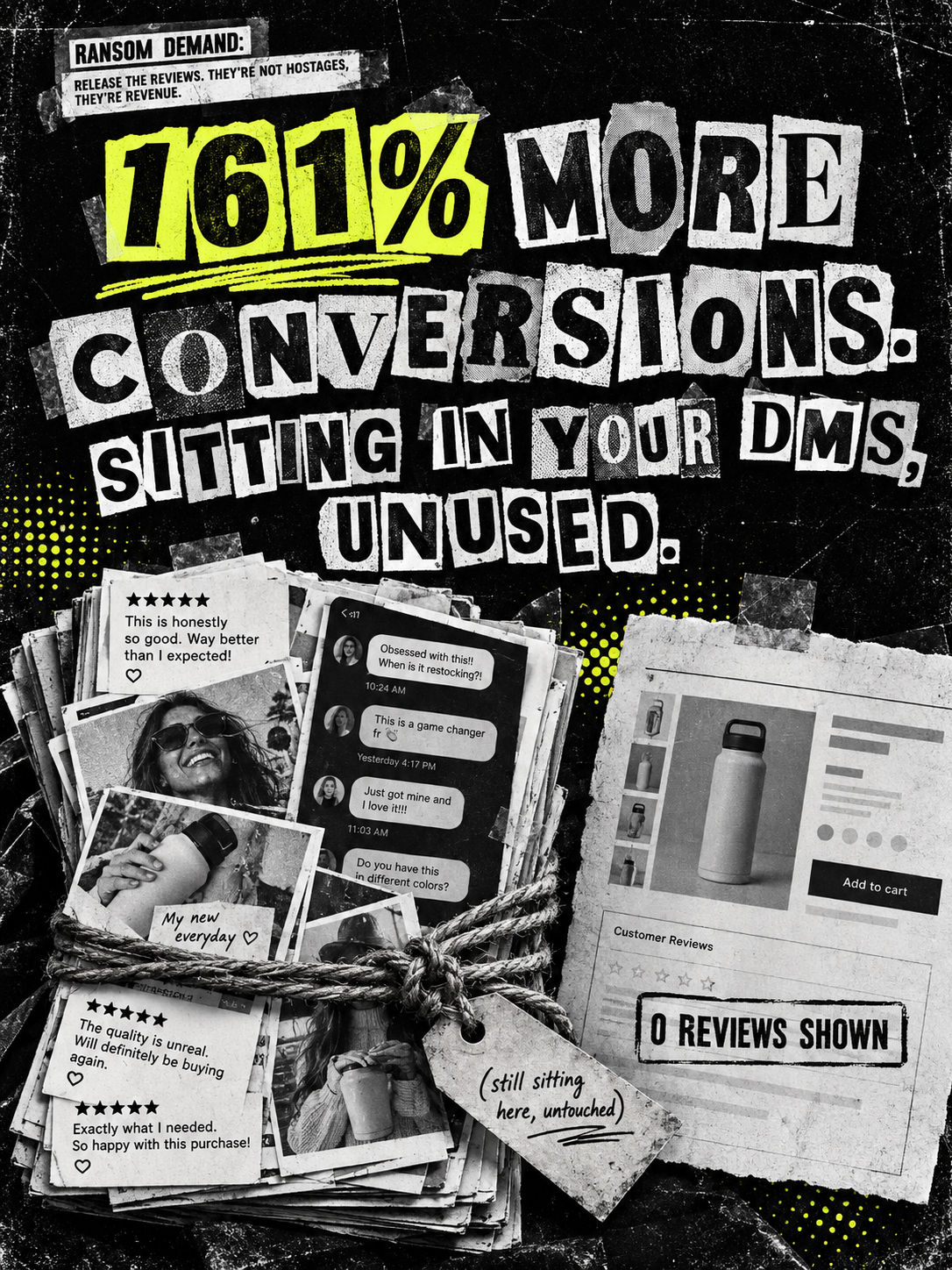
Let me translate something for you, because apparently it still needs translating: UGC is not some bonus content your customers occasionally hand you for free. It is one of the highest-converting assets most brands already have sitting in their DMs and comment sections, completely untouched.
Here's the part that should actually bother you. UGC-enabled product pages see up to 161 percent higher conversion rates than pages without it, according to UGC statistics from Salesgenie. That's not a marginal lift. That's the difference between a page that converts and one that quietly doesn't, sitting on the exact same traffic.
UGC Is Not Optional Content, It's Free Trust
What they meant to say in every half-baked content meeting where someone calls customer photos "a nice bonus" is this: UGC performs better than almost anything your creative team produces on a budget, because audiences can tell the difference between a real customer and a studio shoot from across a feed. 82 percent of consumers say they're more likely to buy from a brand that actually uses UGC in its marketing, according to the same Salesgenie research.
Fenty Beauty built an empire partly on this exact mechanic, leaning hard into real customer content instead of exclusively polished studio shots. If your brand still treats UGC like an afterthought instead of a growth channel, that gap is the actual problem, not your product.
Social Proof Is Not a Vibe, It's a Conversion Lever
Social proof more broadly is one of the most consistently cited conversion levers in existence. 76 percent of marketers say social proof directly boosts conversion rates, according to social proof research from SHNO, which is not a marginal number, that's basically every marketer who's bothered to measure it agreeing on the same thing.
Products that carry visible proof, whether reviews, UGC, or press, see purchase likelihood jump by 270 percent, according to social proof statistics from NotificationX. Two hundred and seventy percent. That's not a rounding error, that's a purchase decision flipping entirely based on whether strangers vouched for you first.
Why Customer Testimonials Do More Than Your Ad Budget
I need to say this slowly for the people in the back: customer testimonials are not decoration. They are doing actual persuasion work that your ad copy cannot replicate, because an ad is you talking about yourself, and a testimonial is someone else doing it for free, with zero incentive to lie (ideally).
72 percent of consumers trust customer reviews more than a brand's own product description, per the same NotificationX data. Your own words about your own product get trusted less than a stranger typing three sentences on your website at 11pm. Make it easy for happy customers to leave reviews. Ask. Follow up. Put the review widget somewhere a human eye will actually land on it.
Earned Media Is the Social Proof Nobody Bothers to Flex Right
Here's a secret most brands quietly ignore: earned media is social proof with a trust multiplier built in, because a journalist choosing to cover you is a completely different signal than you choosing to talk about yourself. Showing off genuine press coverage, awards, or third-party recognition does more for credibility than another self-written caption ever will.
Brands like Casper and Airbnb put their press and reviews front and center for a reason. It's not vanity, it's leverage. If you've landed real coverage and it's sitting buried on an "As Seen In" page nobody scrolls to, this breakdown of protecting your reputation online covers how to actually put that proof to work instead of letting it quietly rot.
How to Actually Get More UGC for a Brand Nobody's Heard Of
Referrals still work, and they work better with an actual incentive attached instead of a vague "tell your friends" ask. Reward both sides, the way PayPal famously did early on, and watch word of mouth, and the UGC that comes with it, do what paid acquisition can't do nearly as cheaply.
Authenticity matters more than polish here. A slightly messy, real piece of UGC outperforms a suspiciously perfect one, since audiences have gotten extremely good at spotting fake reviews, and over half lose trust instantly the moment they spot one. If your pitch and brand story still sound like they were written by a committee instead of a real person, this breakdown of what a real PR pitch hook looks like covers the exact same authenticity problem from the media side.
The Bottom Line on UGC
UGC was never optional, it was just easy to ignore until the numbers got impossible to pretend away. Social proof, earned media, and customer testimonials aren't three separate nice-to-haves, they're the same trust mechanism showing up in different formats, and brands skipping all of them are leaving conversions on the table every single day.
Don't Be A Little Pitch exists because most brands can spot a trust gap in someone else's empty review section instantly and somehow don't notice their own.
FAQ
What is UGC and why does it matter for marketing?
UGC, or user-generated content, is any content customers create about a brand, such as photos, reviews, or social posts. It matters because audiences generally trust it more than brand-produced marketing content.
Does UGC actually increase conversion rates?
Yes. Multiple studies show UGC-enabled product pages convert significantly higher than pages without it, with some showing increases well over 100 percent compared to pages using only brand photography.
What's the difference between UGC and customer testimonials?
UGC refers broadly to any content customers create, such as photos or social posts, while testimonials are specifically written or recorded statements of approval, often solicited directly by the brand.
How can a new brand get more UGC with no customer base yet?
Early-stage brands can request content directly from first customers, offer incentives for referrals and shares, highlight any early press coverage prominently, and make it easy for customers to tag or share their experience.
Does social proof actually increase conversion rates?
Yes. Multiple studies show measurable conversion lifts from adding reviews, testimonials, or user-generated content, with some formats showing increases well over 100 percent compared to pages without it.



60-Day Performance Guarantee
PR only works if it builds momentum fast. If we do not secure 2 meaningful earned media features and line up 3 additional opportunities within 60 days, you get a full refund.

Free Authority Score Checker
Check your online reputation and authority score for free and see how you stack up and get custom tips to improve instantly.




.png)