The Press Release Headline Nobody Bothered to Test Before Sending

TLDR:
- A press release headline gets roughly three seconds of a journalist's attention before a decision gets made
- Headline writing in the 51 to 75 character range consistently earns the highest open rates
- Headlines containing a specific number outperform vague ones by a wide margin
- Press coverage depends on clarity long before it depends on cleverness
- Writing for genuine earned media and writing for clicks are not the same exercise, and conflating them tends to backfire
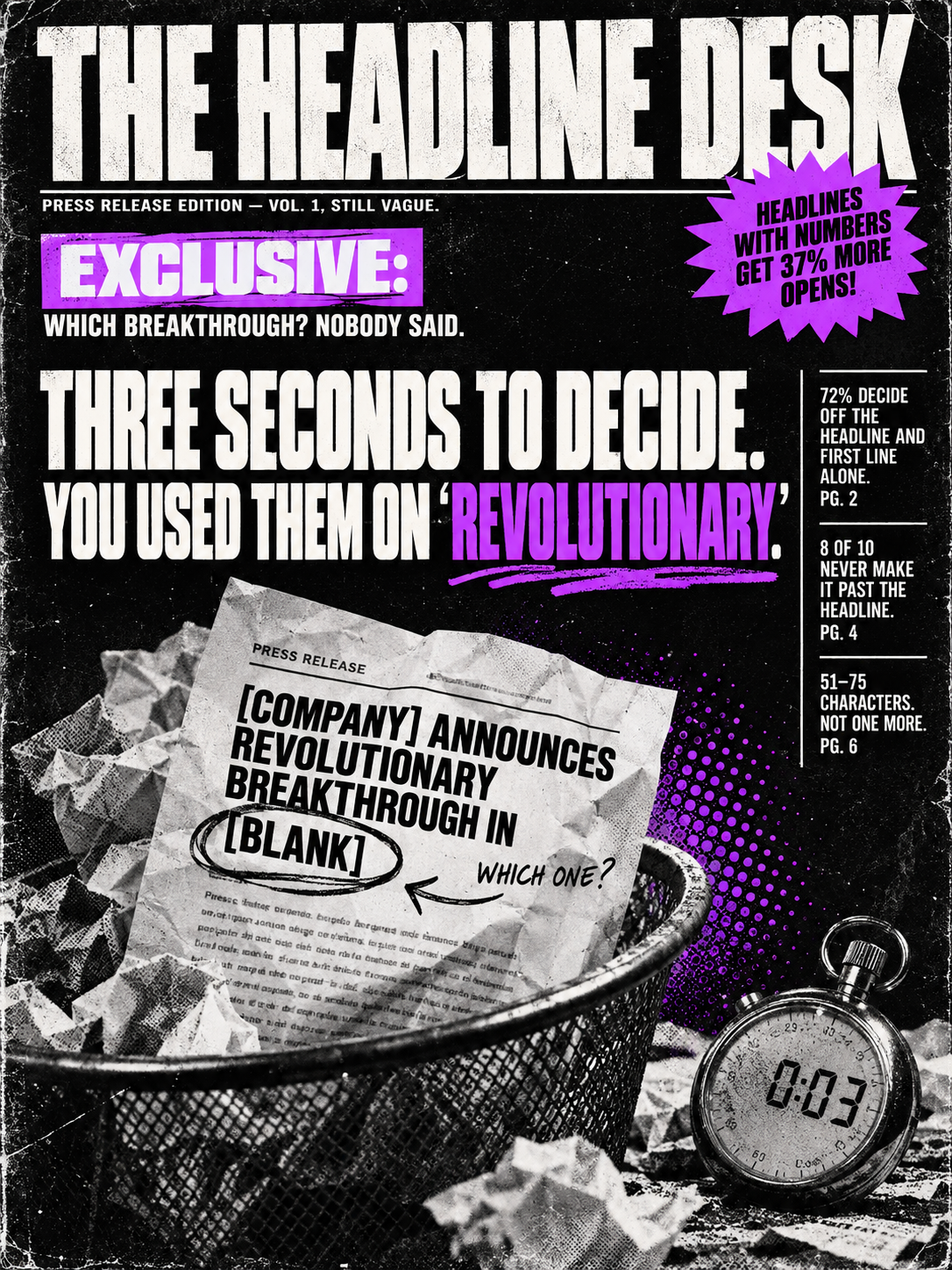
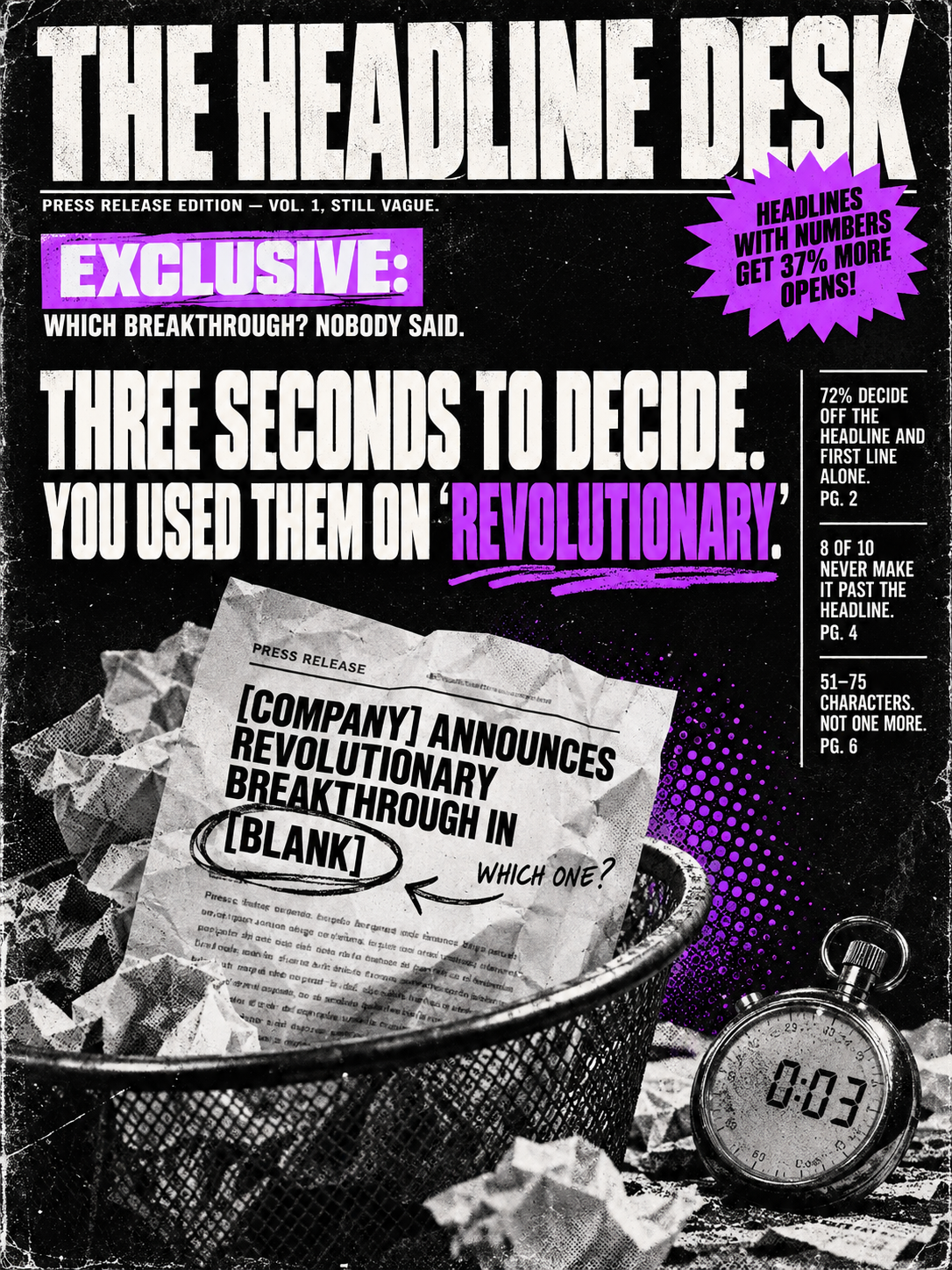
A press release went out recently with a headline promising a "revolutionary breakthrough." It remains unclear what, specifically, was breaking through, and the release itself never quite answered the question either. The story that should have run did not, and the headline is the most obvious place to start looking for why.
Press release performance is, in large part, decided before the body copy is ever read. 72 percent of journalists decide whether to pursue a story based solely on the headline and first paragraph, according to a 2026 Muck Rack survey covered by Shadow, which makes the headline considerably more consequential than most press release writers treat it.
What a Press Release Headline Is Actually Competing Against
Interestingly, the competition a headline faces is not other press releases specifically. It's every other demand on a journalist's attention that morning, most of which arrived faster and with less effort required to understand. Journalists spend under three seconds evaluating a headline before moving on, according to research on press release headlines from AnnounceChain, a window short enough that cleverness has to arrive at the same time as clarity, not instead of it.
A headline that requires a second read to understand what happened has already lost, regardless of how accurate or well-intentioned it is.
How Long Should a Press Release Headline Actually Be
Sources might interpret the data here as surprisingly specific. Headlines in the 51 to 75 character range consistently earn the highest open rates, with longer headlines frequently cut off in email previews and search results before the point is even reached. The instinct to cram every selling point into the headline tends to produce the opposite of the intended effect, a headline nobody finishes reading, let alone opens.
8 out of 10 people never make it past the headline at all, according to research on press release structure from PRSA, which puts a fairly hard ceiling on how much persuasion a headline can reasonably attempt to do in one line.
Engagement drops further from there with each additional paragraph, roughly 70 percent of readers reach the first paragraph, half reach the second, and interest thins considerably after that, which means the headline is carrying more of the actual communication burden than most writers assume when they treat it as a formality to be finished last.
Why Headline Writing With Numbers Outperforms Everything Else
Headline writing that includes a specific figure performs measurably better than headline writing built on adjectives. Headlines containing numbers receive 37 percent higher open rates than headlines without them, according to the same Shadow analysis of press release data, a gap too large to attribute to coincidence.
The mechanism isn't mysterious. A number signals that a claim can be checked, while a word like "revolutionary" signals nothing beyond the sender's own enthusiasm. Journalists, understandably, trust the former considerably more than the latter.
If the writing throughout the release still leans on vague superlatives instead of specifics, this breakdown of what a real PR pitch hook actually looks like covers the same problem from the pitch side of the equation.
Writing for Earned Media Versus Writing for Clicks
There is a meaningful difference between a headline built to earn genuine earned media and one built purely to generate a click, and the two strategies reward different behavior. A headline aimed at a general consumer audience can afford to lean on curiosity.
A headline aimed at an industry publication or a C-suite reader tends to perform better with confidence and specificity instead, since that audience has typically seen every curiosity trick already.
Clickbait phrasing can produce a short-term spike in traffic, but it tends to erode trust with the exact readership a brand actually needs long-term, and journalists in particular are unusually quick to notice when a headline oversold what the release actually delivered. That reputation follows a sender into every future pitch.
For a broader read on whether a stronger headline is actually translating into measurable press coverage instead of just a better-looking inbox, this breakdown of protecting your reputation online covers the same question from the angle of what happens after a story runs.
The Bottom Line on Press Release Headlines
None of this requires reinventing how a company announces news. A working press release headline states the news plainly, fits comfortably within the 51 to 75 character range, leads with a specific figure wherever one genuinely exists, and resists the urge to oversell a story the body copy can't actually back up.
Don't Be A Little Pitch exists because most brands can spot a vague, overpromising headline instantly in someone else's inbox and somehow still send one of their own the same week.
FAQ
How long should a press release headline be?
Headlines in the 51 to 75 character range tend to earn the highest open rates, since longer headlines are often cut off in email previews and search results before the message is fully communicated.
Do press release headlines need numbers or statistics?
Not always, but headlines containing a specific number or statistic consistently see significantly higher open rates than headlines relying on vague descriptive language.
What makes journalists decide whether to read a press release?
Journalists typically decide within a few seconds based on the headline and first paragraph alone, which is why clarity and a clear news value matter more than clever phrasing.
Should a press release headline be different for general media versus trade publications? Yes.
General audiences often respond to curiosity-driven headlines, while industry or executive audiences tend to respond better to confident, specific, data-backed headlines.
Is clickbait effective for press release headlines?
It can produce short-term attention, but headlines that overpromise relative to the actual story tend to damage credibility with journalists, who are quick to notice the gap and remember it for future pitches.


60-Day Performance Guarantee
PR only works if it builds momentum fast. If we do not secure 2 meaningful earned media features and line up 3 additional opportunities within 60 days, you get a full refund.

Free Authority Score Checker
Check your online reputation and authority score for free and see how you stack up and get custom tips to improve instantly.




.png)