Growth Hack Your Fall: Quick-Win PR Moves That Actually Work

TLDR:
- A working PR strategy is not a mystery, it's just the basic stuff most brands skip because they're in a rush
- Journalists reject pitches that ignore their beat, their inbox, and the actual season we're living in
- One sharp statistic beats a thirty page deck nobody's opening
- Media pitching works better with fewer, better targeted journalists, not two hundred identical emails
- Press coverage rewards authority over volume, every time, and one real case study proves it
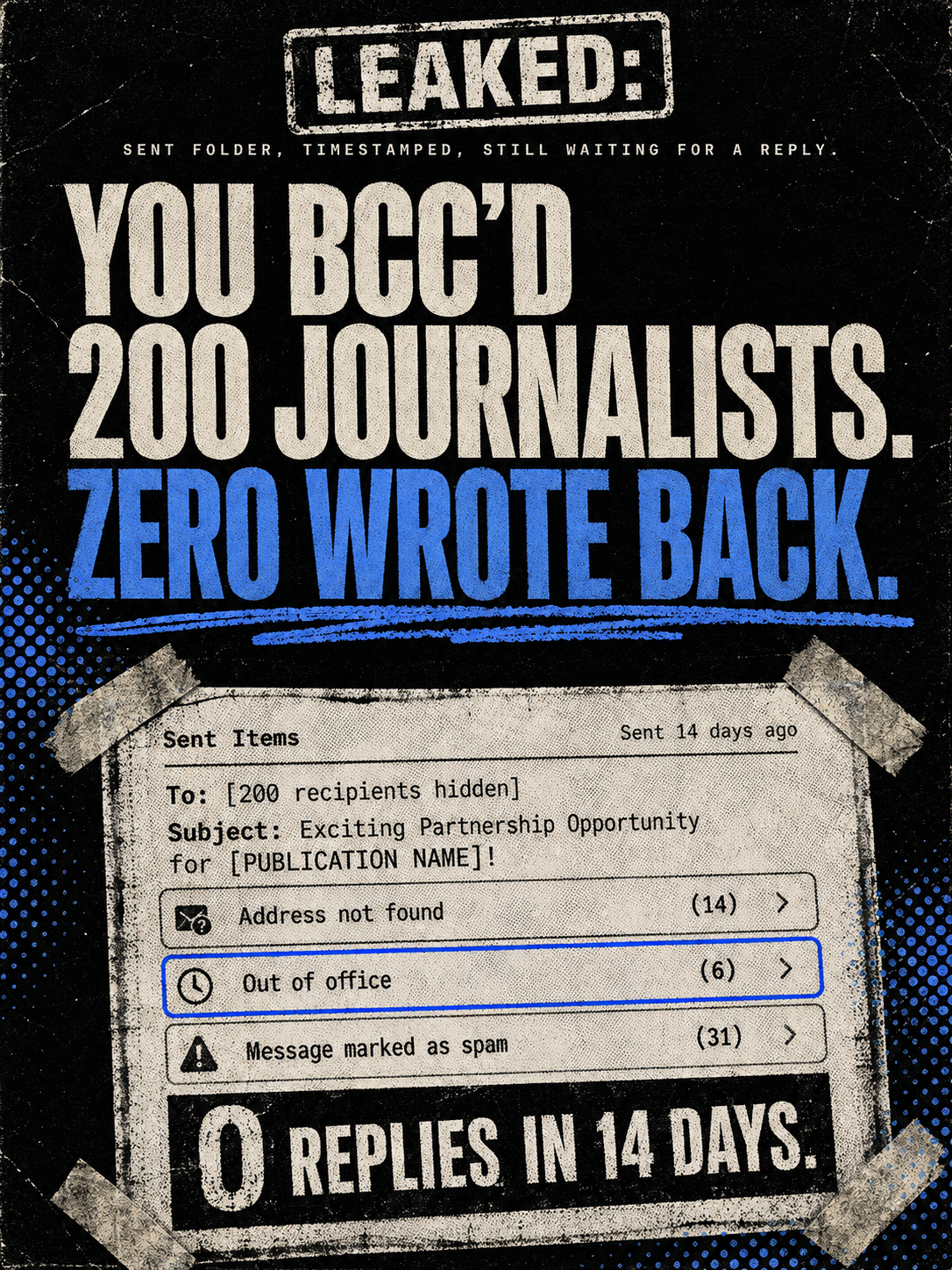
Wait, you sent the same pitch to two hundred journalists and you're confused why nobody wrote back? Be so serious right now. A working PR strategy is not some secret unlock code. It's just the obvious moves that most people skip because they'd rather blast an inbox than think for four minutes first. Let's fix that.
How to Build a PR Strategy That Isn't Just Vibes
Editors are drowning. Genuinely drowning. They don't want a random pitch that has nothing to do with what their audience is actually thinking about right now, and they definitely don't want it competing with gift guides, trend roundups, and forty corporate year-end announcements all landing the same week. Did we think this through, or did someone just copy-paste last quarter's press release and hope for the best?
Here's the part that should embarrass a few people: you don't need a six-month campaign to earn real coverage. Some of the best moves are sprints, not marathons.
86 percent of journalists reject pitches that don't fit their beat, and personalized pitches see a 24 percent higher response rate than mass emails, according to media relations research from AMW. That's not a hunch. That's the data confirming what should've been obvious the first time someone hit send on a mass blast and called it a strategy.
Your Fall PR Strategy Starts With Reading the Room
Editors do not want a random pitch that has nothing to do with the season everyone's actually living in. Tying your product to what's already culturally happening isn't forcing relevance, it's meeting people where they already are, which is somehow still a controversial idea to some of you.
Look at how this actually plays out. A wellness brand can talk about avoiding burnout as the busy season closes in. A fintech startup can connect its own data to spending habits before the big shopping rush. A productivity app can lean into the back-to-routine transition everyone's already thinking about. None of that requires inventing a new angle, just paying attention to what your audience is already dealing with and showing up in that conversation.
This is basic. And yet half the pitches editors get during this window still read like they were written for any other week of the year.
Small Business PR Strategy Doesn't Need a Celebrity
You don't need a blockbuster partnership to make noise. Micro-collaborations work faster, feel more authentic, and don't require six rounds of approvals through someone's management team. The size of the influencer matters less than the alignment.
Here's the actual playbook: find a partner whose audience genuinely overlaps with yours, co-create two or three pieces of content around a timely hook, then hand editors the results as proof once it lands.
Engagement spikes, impressions, an actual audience reaction, whatever you've got. Editors like evidence. A tiny collaboration with real numbers beats a hypothetical celebrity deal every time, and I'm actually embarrassed for anyone still holding out for the deal that was never coming.
How to Get Journalists to Actually Respond to Your Pitches
Nobody's reading your thirty page white paper. Journalists want one sharp, quotable nugget they can drop straight into a story, not a research deck they have to excavate for meaning. Something like "seventy-two percent of parents said they'd pay more for tech that makes weeknights easier," or "usage jumped 150 percent the week schools reopened." One clean number does more work than five vague paragraphs about your platform's mission.
91 percent of journalists say original research and data make a pitch more compelling, and pitches under two hundred words consistently outperform longer ones, according to the same AMW media relations data. This is basic. Genuinely basic. And still routinely ignored.
If your pitches read like they were generated by a very tired robot, this breakdown on why your pitch sounds like a bot explains exactly why nobody's opening them.
Speed matters just as much as substance. Journalists post sourcing calls constantly, on X, on LinkedIn, on platforms built specifically for it. Respond fast and effective media pitching gets you a direct line into coverage that's already happening in real time, instead of waiting on your perfectly polished pitch to land somewhere it might get lost. Real-time beats perfectly-timed. Every time.
This Is Still Part of Your PR Strategy, Not a Loophole
Old blog nobody read the first time? It's not dead, it's just waiting for a better hook. Take something you published months ago on, say, workplace productivity, and pitch it again with a timely spin, something like "Fall Reset: Productivity Tips for a Busy Season." Same core content, different framing. The audience that missed it the first time genuinely never saw it, so recycling it isn't lazy, it's just acknowledging not everyone was paying attention back in spring.
This saves time and creates the perception of fresh insight without reinventing an entire argument. Stop treating that like cheating.
Press Coverage Rewards Authority, Not Volume
Chasing every outlet is not a strategy, it's a coping mechanism. One placement in a high-authority publication does more for press coverage and credibility than five scattered minor mentions.
Only about 8 percent of pitches ever result in published coverage, and 88 percent of journalists immediately delete pitches that don't match what they cover, according to PR and comms statistics from Truescope. Pick fewer, better targets. It is not that complicated.
A Small Business PR Strategy Case Study, Since You Need Proof
At Don't Be A Little Pitch, we ran this exact playbook for ToDo Robotics, a female-led company on a mission to redefine robotics as a collaborative force and highlight Latina leadership in a male-dominated industry. The headlines around robotics were all fear-driven, and the product category was niche enough that mainstream attention wasn't just sitting there waiting.
The fix wasn't complicated, it was targeted. We built a newsworthy hook around CEO Marianela Nanninga as a Latina leader breaking barriers in robotics, expanded outreach beyond tech outlets into business, hospitality, and diversity-focused media, and followed up persistently, tying pitches to timely industry events. The result: 20 high-impact media features, millions of impressions, and Marianela positioned as a trusted voice in automation and inclusion. Not from blasting two hundred journalists. From picking the right ones and giving them something worth writing about.
For more on how to tell whether coverage like this actually moved the needle, this breakdown of measuring PR effectiveness is worth a read before your next campaign wraps.
The Bottom Line on PR Strategy, Since You Clearly Needed the Recap
A working PR strategy was never a secret. It's relevance, brevity, timing, and picking targets that actually make sense, done consistently instead of occasionally. If you're still measuring success by how many emails you sent instead of how many actually landed, that's not a hack problem. That's a strategy problem wearing a hack costume.
Don't Be A Little Pitch exists because most brands can spot bad PR from a mile away and somehow still keep doing it themselves. If that sounds familiar, it might be time for a second opinion.
FAQ
What makes a good PR strategy?
A good PR strategy targets relevant journalists with timely, data-backed pitches rather than mass outreach, and prioritizes fewer high-authority placements over volume.
How do I get journalists to respond to my pitch?
Keep pitches short, relevant to the journalist's specific beat, and include a clear data point or angle. Personalized, targeted pitches consistently see higher response rates than mass emails.
What makes a media pitch successful?
Successful pitches are typically under 200 words, include original data or research, and are sent to journalists whose existing coverage area genuinely matches the story.
Is seasonal timing important for small business PR?
Yes. Tying a pitch to a relevant seasonal or cultural moment increases the odds a journalist sees it as timely and worth covering, rather than random outreach.
How many journalists should I pitch for one story?
PR professionals typically pitch dozens of relevant journalists to secure a single response, so a small, poorly targeted list will underperform compared to a focused, relevant one.




60-Day Performance Guarantee
PR only works if it builds momentum fast. If we do not secure 2 meaningful earned media features and line up 3 additional opportunities within 60 days, you get a full refund.

Free Authority Score Checker
Check your online reputation and authority score for free and see how you stack up and get custom tips to improve instantly.




.png)